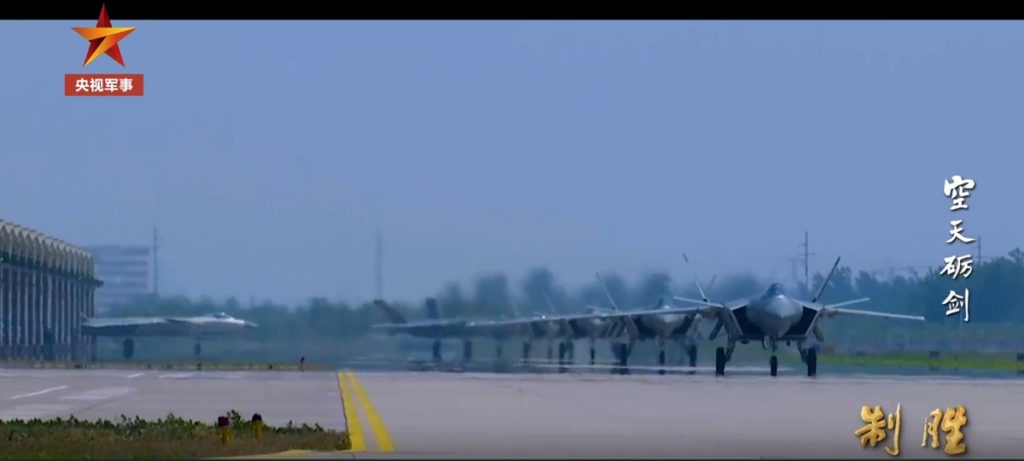
China's state broadcaster has aired footage of the People's Liberation Army (PLA) Air Force's intelligent strike-planning system, showing more than 100 tactical units conducting coordinated strikes with split-second precision after it passed its final live-fire test. Chinese military experts said the technology reflects the PLA's accelerating shift from platform-centered operations toward AI-enabled, system-of-systems warfare.
The system was featured on Sunday in Zhisheng (Victory) - an ongoing documentary series highlighting the PLA's latest developments. According to CCTV News, a team led by Deng Jianping at a PLA Air Force base developed the system to address the growing complexity of large-scale, multi-domain exercises.
As large formations become increasingly common, commanders may need to select targets from hundreds of possibilities, coordinate dozens of formations, allocate firepower and arrange successive waves of attack — calculations that conventional planning methods cannot perform quickly enough, the report said.
After sustained research and development, the system underwent its final live-fire test, during which the missiles and bombs successfully struck their designated targets. It was later used in a large-scale Air Force exercise, enabling more than 100 tactical units to carry out precisely synchronized strikes. The system has now been put into use in multiple Air Force missions, according to CCTV.
The intelligent strike-planning system reflects the PLA's operational need to speed up its transition toward system-based, intelligent and unmanned warfare, Zhang Junshe, a Chinese military affairs expert, told the Global Times on Sunday.
By deeply integrating AI with battlefield logic, the system can turn advanced individual weapons into coordinated combat power, marking a shift from calculations performed primarily by personnel to AI-assisted computation and planning, Zhang said.
AI can assist decision-making by calculating battlefield developments in real time, assigning the most suitable targets to different weapons and determining when and in what order munitions should be used, Zhang noted. This can increase strike precision, maximize the effectiveness of available weapons and reduce unnecessary resource consumption.
The system can also combine real-time situational awareness with intelligent force allocation, shortening the process from target detection and decision-making to strike execution, Zhang said. Compressing this sensor-to-strike cycle could translate a technological advantage into an operational advantage at the campaign level, he added.
The CCTV footage showed several major types of aircraft and weapons currently in PLA Air Force service, including J-20 stealth fighter jets, J-16 and J-10C fighter jets, H-6K bombers and multiple missile systems.
"These hardware platforms can realize their full potential in coordinated operations only when they are brought together under an intelligent planning system, rather than operating independently," Zhang said.
The program also features an airborne early-warning aircraft independently directing and controlling a system-of-systems engagement. In the exercise, the aircraft operated amid a complicated low-altitude environment involving both real and decoy targets, as well as intermittent, intense electromagnetic interference.
The early-warning aircraft identified the enemy's intentions and guided friendly aircraft in an attack on a command node, according to the footage. The exercise demonstrated the central role of airborne early-warning platforms in collecting, processing and distributing battlefield information.
Intelligent Air Force operations depend on the rapid acquisition and processing of information, and China's airborne early-warning system serves as a key command and information hub in this process, Song Zhongping, another Chinese military affairs expert, told the Global Times on Sunday.
As the PLA advances toward its centenary goals in 2027, the integration of mechanization, informatization and intelligentization will become increasingly important, Song said. The capabilities shown in the program suggest that an intelligent command system could not only provide accurate early warning and coordinate strikes, but also help commanders make faster decisions in a high-intensity conflict, he noted.
The Zhisheng documentary series, released around China's Army Day, which falls on August 1, has featured equipment from the PLA Army, Navy and Air Force since Thursday. Previously aired footage has included Type 191 long-range rocket artillery, the Type 076 amphibious assault ship, new reconnaissance-strike drones and robotic "wolves." The series is continuing to present recent developments across the PLA.
The Long March was a military maneuver carried out by the Red Army (forerunner of the People's Liberation Army) from 1934 to 1936 that laid the foundation for the eventual victory of the Communist Party of China (CPC).
This epic feat in human history gave rise to the enduring Long March spirit - a priceless source of inspiration for the Chinese nation. It embodies unwavering commitment to the fundamental interests of the Chinese people and the nation, steadfast ideals and convictions, courage in the face of overwhelming hardships, independence and a pragmatic approach to solving problems, strict discipline and unity, and a deep reliance on the people. The Long March spirit is an essential component of the CPC's revolutionary heritage and broader spiritual lineage. It has become deeply woven into the fabric of the Chinese nation and continues to inspire generations of Chinese people to overcome challenges and strive for new victories.
Each generation has its own "long march," and they should proceed in their own way.
The year 2026 marks the 90th anniversary of the victory of the Long March. To explore its historical significance and enduring relevance, the Global Times launches the series "Journey: when post-90s meets 90th anniversary." Through personal memories, the descendants of Long March veterans reflect on the original ideals of the marchers and pose questions to today's youth. The post-90s respond with their own stories tied to the Long March spirit.
The first installment focuses on Huawu village in Ganzhou city, Jiangxi Province, the departure point of the Long March, where 17 young men planted pine trees in 1934 before heading to war. Through the stories of a post-90s volunteer guide, a 90-year-old descendant, and the Chinese People's Armed Police Force Ruijin squadron's 77-year red tradition, the article shows how the Long March spirit endures in this revolutionary base. "In 1934, Huawu village, home to only 43 households, devoted all its manpower and material resources to support the revolution. Seventeen passionate young men answered the call to expand the Red Army. They resolutely bid farewell to their hometown and marched toward the battlefield of the Long March."
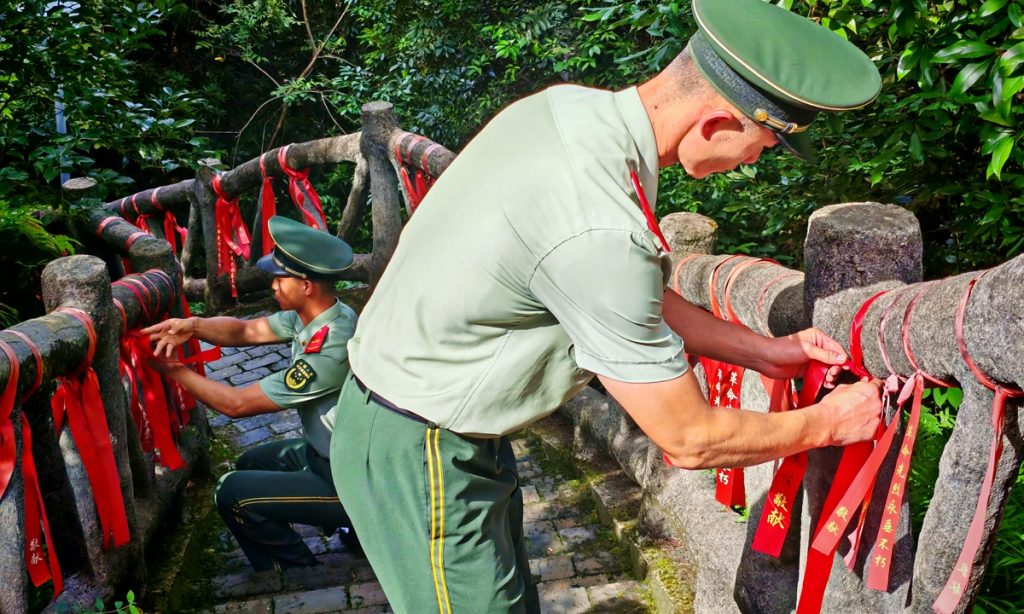
Cui Liguang, a post-90s soldier with the Ruijin squadron of the Chinese People's Armed Police Force's Ganzhou detachment, serves as a voluntary red tour guide. He emotionally recounted these glorious yet arduous years while the squadron was organizing officers and soldiers to visit Huawu for on-site teaching.
"On the eve of their departure, they collectively planted pine trees on the hill behind the village, using the green pines to declare their aspirations and pledging their original mission to the nation," Cui told the Global Times.
The 17 pine saplings have now grown into towering trees. But all 17 brave warriors sacrificed their lives along the Long March route.
The forerunner of the People's Republic of China, the Provisional Central Government of the Chinese Soviet Republic, was founded in Ruijin in 1931. Ruijin, located at the junction of East China's Jiangxi Province and East China's Fujian Province, is known as the "red capital" and the "cradle of the republic," as well as the departure point of the Central Red Army's Long March, according to the Xinhua News Agency.
And Huawu, widely known as the "Red Army village," has become a spiritual pilgrimage site for people from all walks of life because of the heroic stories behind these pine trees. How have the seeds of ideal conviction and the genes of red tradition been passed down from generation to generation in Ruijin? The Global Times reporter came here to explore the answer to this question. Newly grown pine tree
Initially, Cui never thought about becoming a red tour guide.
When this young soldier first arrived at the Ruijin squadron in 2018, he had only one thought on his mind: improve his military skills. At that time, in his view, running fast and shooting accurately were the complete proof of being a good soldier.
"I was too hard on myself - pushing for extreme strictness and constant tension in my squad," Cui told the Global Times.
"The squadron leader noticed my state of mind, talked with me and encouraged me to learn how to give explanations at the local red tourism sites," Cui said. "I felt it wasn't suitable for me."
When Cui first followed the veteran guide to study at various historical sites, he would always find excuses to slip away and rest in the pavilion. The veteran guide did not criticize him. Instead, in the pavilion, he shared his own story - from a soldier who spoke unclearly to becoming the squadron's top red tour guide, and then willingly transferring to the cooking squad to prepare meals for his comrades.
Cui was touched by these stories, so he decided to give it a try. Through practice, his mindset shifted further.
Early on, once while at the Shazhouba scenic area, he explained to tourists the story of Mao Zedong leading soldiers and civilians to dig the well. Halfway through, a tourist asked, "Why did Chairman Mao choose to work in Shazhouba at that time? Where did the other leaders live?" Cui was momentarily speechless. Seeing the slight disappointment in the tourist's eyes, his face burned with embarrassment.
From then on, he made up his mind. He devoured books, visited old sites and consulted experts, filling thick notebooks. As his knowledge deepened, so did his understanding.
Among all the stories he encountered, none left a stronger impression than that of Hua Chongyi from Huawu. Hua Chongyi set out on the Long March at age 13 - the youngest among the 17 young men from Huawu. Two years later, news of his sacrifice arrived; he never returned.
"I was just starting junior high at age 13. I can hardly imagine how much determination and inner struggle it would have taken for me at that age to pick up a gun and fight the enemy," he said.
He gradually realized that historical facts alone could not fully convey the meaning of the Long March. What truly touched people was the spirit behind those stories, the ideals that enabled ordinary young people to make extraordinary choices.
Today, many fellow soldiers say his tours no longer simply recount historical events; they bring history to life by connecting personal stories with the enduring values they represent.
Through years of practice, Cui also came to understand why his squadron commander had encouraged him to become a guide in the first place.
"The Long March spirit is not something that belongs only to history," he said. "Guarding the people, fulfilling our duties and staying true to our original aspiration are how we continue that journey."
At the many red sites in Ruijin, voluntary red tour guides like Cui are active, standing like newly planted green pines on the sentry posts of the new era. Dialogue across generations
Today, only a handful of descendants of the 17 young men who left Huawu for the Long March still live in the village. Most are now well into their nineties. Whenever Cui visits them, he finds himself wondering the same question: What do they think when they compare the hardships of their youth with the peaceful and prosperous life people enjoy today?
Ninety-year-old Hua Picai often stops for a long time in front of a sturdy green pine halfway up the hill behind Huawu. On the stone tablet at the base of the tree is inscribed: "Hua Taosheng, born in 1917, joined the Red Army at age 14. In October 1934, he followed the main force on the Long March and sacrificed his life en route."
Although not his biological father, Hua Taosheng became Hua Picai's father under the Hakka tradition of continuing the family line of a fallen relative.
The Global Times learned from Hua Picai that his biological father often used to tell him that when the Kuomintang forces pressed men into service, everyone hid. But when the Red Army arrived, young people volunteered to enlist. "I've also heard this story many times," Hua Sheng, Hua Picai's son and the Party chief of Huawu village, told the Global Times. "I came to see the CPC as the people who stood closest to ordinary families."
Every Qingming Festival - a traditional Chinese occasion for honoring ancestors and paying tribute to the dead - Hua Sheng, Hua Picai and the villagers hang red paper, light red candles and tie red silk under the trees. This faith, soaked into their bloodline, led Hua Sheng to aspire to join the CPC from a young age.
When asked what he would say if those young men who planted the pine trees could return today, Hua Picai replied: "On behalf of my father and myself, I would like to tell them: We joined the revolution so that future generations could live better lives. Today, that wish has come true."
For Hua Picai, however, the conversation with history does not end there. What matters most is whether younger generations can carry forward the qualities that sustained their predecessors - perseverance, self-discipline, integrity and a willingness to put others before themselves.
Collective inheritance
As a living testament to this city's revolutionary spirit, the Ruijin squadron has provided its answer through 77 years of unwavering action.
According to the squadron, the 129 revolutionary sites in Ruijin serve as the most vivid teaching materials for the squadron's education and an inexhaustible treasure trove of spiritual wealth for officers and soldiers. For every new recruit, the first sip of water is from the well in Shazhouba, and the first class is a micro-lecture on the Long March spirit.
On July 1, the 105th anniversary of the founding of the CPC, the squadron camp was bustling. The squadron's Party branch was commended by the Central Military Commission as an advanced grassroots Party organization.
However, during a celebration meeting organized that afternoon, squadron leader Liu Zhenxing "poured cold water" on the expectant soldiers. "We cannot just see achievements. Only by foreseeing and solving 'potential problems' can we maintain our advanced nature forever."
At Liu's initiative, the celebration meeting became a meeting to expose shortcomings and reveal flaws. Everyone stood up to point out problems and offer suggestions for the squadron.
They carry forward the fine tradition of their predecessors of widely soliciting opinions and mass supervision, insisting on handling sensitive matters fairly, justly and transparently, and integrating mass supervision throughout the entire cycle of daily management, training, duty performance and logistical support, according to the squadron.
They have also regularly completed tasks such as security duty and flood relief. Many officers and soldiers have stepped forward to provide emergency aid to people with accidental injuries or sudden illnesses. Local residents have praised them, saying, "That same team from back then is still here."
"Ninety-plus years have passed. Today, we in Huawu live happy lives. If our predecessors are watching, I am sure they are delighted that their spirit has been passed down from generation to generation. I believe it will continue to be passed on, one generation after another," said Hua Sheng.
Cui has transformed from the reckless newcomer who led his squad without regard for consequences into a mature young man who calmly thinks through difficulties. "It is red history that has tempered my character. The Long March spirit is the entrepreneurial history of our Party. It is like a lighthouse, illuminating us young people," Cui said.
China on Friday blasted fresh US tariffs imposed on China and 59 other economies over alleged forced labor concerns, and warned that trade wars do not serve any parties.
A number of economies around the world, including some US allies, have also voiced strong opposition, with some deciding to take the matter to the World Trade Organization (WTO).
Chinese analysts said that the unilateral tariffs, which came as China and the US are discussing a framework for reciprocal tariff reductions worth $30 billion on each side, are not conducive for the two sides to promote trade facilitation and the lowering of tariffs.
The Office of the United States Trade Representative (USTR) announced on Thursday that the country is imposing new tariffs of 10 percent and 12.5 percent on 60 trading partners for the vast majority of its imports over allegations of lax enforcement of forced labor bans, effective from Friday, just as a temporary 10 percent global tariff introduced earlier this year expires, Reuters reported.
China faces a 12.5 percent tariff rate, while Japan, South Korea, Switzerland and the European Union are subject to tariffs ranging from 10 percent to 12.5 percent, according to the report.
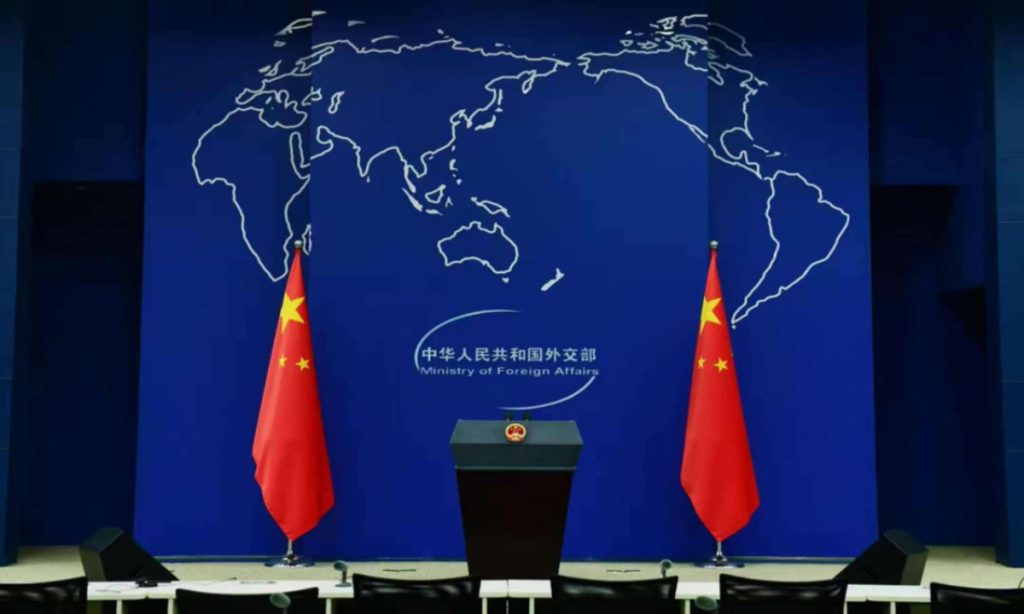
Commenting on the fresh US tariffs, targeting 60 of its trading partners with China, in particular, being hit with a 12.5 percent tariff, Chinese Foreign Ministry spokesperson Lin Jian said on Friday that China's position on China-US economic and trade issues is consistent and clear. We oppose all forms of unilateral tariffs.
Tariff wars and trade wars serve no one's interests, he added.
'No friends' when it comes to tariffs
The new tariffs, announced by the USTR on Thursday in a Federal Register notice, will cover 99.4 percent of US imports, but will exempt numerous products, such as oil and gas, fertilizer and certain food items, according to Reuters. Other goods that comply with the US-Mexico-Canada Agreement on trade will also be exempted.
"Although the new duty rate may not appear significantly higher than the original 10 percent, the scope of the products subject to these tariffs is across-the-board and a wide range of stakeholders, including those making and trading essential consumer goods and intermediate products, will be affected," Zhou Mi, a senior research fellow at the Chinese Academy of International Trade and Economic Cooperation, told the Global Times on Friday.
"Any newly imposed unilateral tariffs will disrupt corporate planning and unsettle market expectations - developments that are detrimental to the consensus reached between China and the US and to the efforts to implement that consensus," Zhou said, noting that the new move will increase the risks and costs faced by US companies in the market and hurt the interests of US consumers.
The new US duties will take effect at the exact same moment as a temporary 10-percent tariff for 150 days expires on Friday. The temporary tariffs were imposed by the Trump administration following a ruling by the US Supreme Court in February that ruled most of the administration's tariffs illegal, Reuters reported.
He Weiwen, a senior fellow at the Center for China and Globalization, said the fact that the US administration seems to be going from one type of tariff to another has revealed that the matter of trade and economic cooperation has been subjected to political manipulation.
"It is clear that the US administration has treated tariffs as a political statement and it will try to sustain its tariff agenda with any means it can find," He Weiwen said.
"The imposition of tariffs on many of its allies or trading partners in developed countries on the allegations of forced labor further exposed the absurdity of this manipulation, and it shows the world that when it comes to tariffs, the US has no friends," He Weiwen said.
Regarding the US' "forced labor" tariffs, China's Ministry of Commerce (MOFCOM) spokesperson He Yongqian urged the US to meet China halfway and maintain steady economic and trade relations between the two countries at a press conference in June.
"China's position on the Section 301 investigation has been consistent. China opposes all forms of unilateral restrictive measures, including the series of trade restrictions imposed on China under the pretext of 'forced labor.' We have repeatedly expressed our solemn position on this matter," He said.
The latest tariff move came as an official from MOFCOM disclosed on Thursday that China and the US are discussing a framework for reciprocal tariff reductions worth $30 billion on each side, while seeking input on related plans and working to finalize specific product-level tariff reduction measures for implementation as soon as possible.
Amid signs of easing trade tensions, China-US trade showed signs of recovery in the second quarter, with bilateral goods trade rebounding 13.7 percent year-on-year after an 18.7 percent decline in the first quarter, a customs official said at a press conference on July 14. However, Chinese experts said that the US needs to positively and responsibly handle bilateral trade and economic issues so that the positive trend may continue and high-level consensus are translated into concrete results.
Worldwide opposition
Faced with the Trump administration's new tariffs, countries from Brazil to New Zealand and Australia have been vocal in blasting the move.
By pushing for tariff measures under the pretext of "forced labor", the US administration is essentially employing unilateral tactics to coerce other nations. This approach undermines the trust and expectations that the world places in the US and erodes American credibility, Zhou noted.
Brazil on Thursday rejected the US decision to impose a 12.5-percent tariff on Brazilian products, saying it will pursue dispute settlement at the WTO, according to Xinhua News Agency.
Calling the Section 301 trade investigation "arbitrary and unjustified", the Brazilian government said the US had used forced labor as a pretext for a protectionist trade policy, and had "chosen to manipulate an issue of great importance to human rights and the struggles of workers worldwide."
Norway's Foreign Minister Espen Barth Eide said "there is no basis for this tariff against Norway because we already have clear rules that are intended to prevent trade in goods produced using forced labor."
New Zealand Trade Minister Todd McClay said the US levy of tariffs was unwelcome and "It's another day and another tariff story from the US", adding that "these actions create more uncertainty at a time when the world trading system is under real pressure," according to the AFP.
Australia's trade minister Todd Farrell said: "These tariffs are unjustified, inconsistent with our free trade agreement, and should be removed."
Countries around the world pay great attention to ensuring worker rights are protected and have over the years made efforts to improve working conditions. However, the US' brazen manipulation of trade as a tool to force other countries into complying with its own subjective narrative and judging system on the issue is nothing more than an act of hegemony, and it is not surprising that such acts were met with vehement protests around the world, Zhou said, noting that the US move serves only to undermine countries' trust in the US and erode the interests of its importers and consumers.
The Trump administration's new tariff also met with opposition from some US political figures.
Massachusetts Governor Maura Healey, a Democrat, criticized the duties in a statement, saying they "will result in higher costs, negative impacts to businesses and weakened American competitiveness. Nobody can afford this," Reuters reported.
On a summer's day in late June, sunlight streamed through the clouds onto a vibrant green space on the outskirts of Beijing. The Ryukyu Kingdom Cemetery Site under restoration welcomed a group of visitors from Ryukyu, which Japan calls "Okinawa."
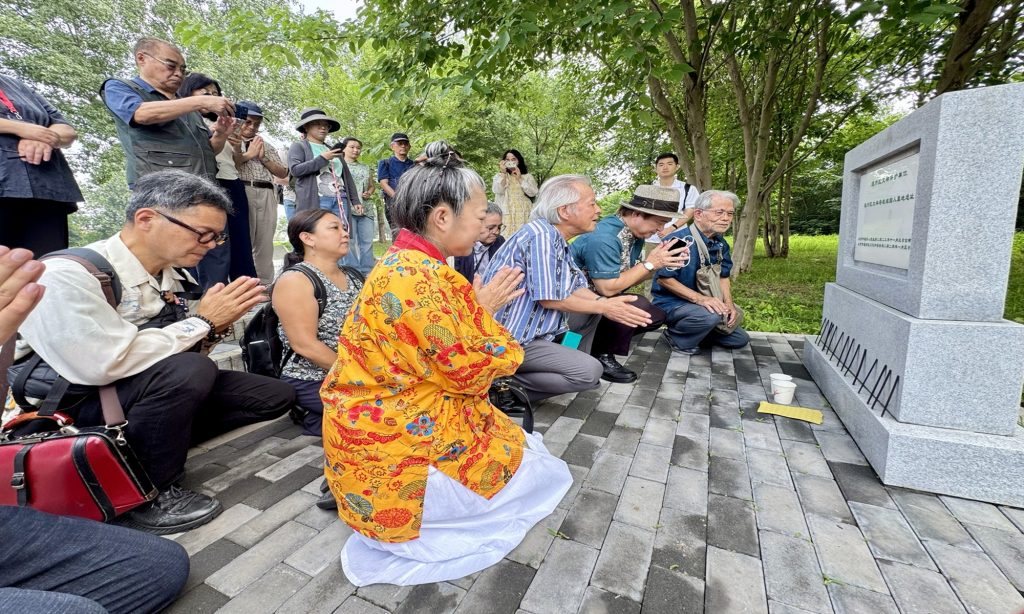
Dressed in traditional Ryukyuan attire, they neatly arranged Ryukyu's distinctive Awamori liquor and traditional incense sticks before the altar. With their palms pressed together and solemn expressions on their faces, they paid tribute to their ancestors in accordance with Ryukyuan customs.
Having traveled from afar, these descendants of Ryukyu finally completed a dialogue across the centuries with their ancestors, who have rested at the site for hundreds of years.
China and Ryukyu share a history of friendly exchanges spanning more than 600 years. Once an independent kingdom, Ryukyu maintained close official and people-to-people exchanges with China for centuries. Large numbers of Ryukyuan tribute envoys and students traveled to China for exchanges, leaving their footprints in many parts of the country.
Located on the outskirts of Beijing, the site is important historical evidence of the activities of Ryukyuan people in China during the Ming Dynasty (1368-1644) and Qing Dynasty (1644-1911), as well as the longstanding friendship between China and Ryukyu.
The Global Times reporter recently joined scholars and members of civil society from various sectors of Ryukyu on an exclusive visit to the historical site. It was the first time that a Ryukyuan group had visited the site during its restoration, and the visitors paid tribute to their ancestors there. Amid a turbulent and unpredictable regional situation, they recalled the profound friendship forged between Ryukyu and China over hundreds of years.
First Ryukyuan ancestral tribute group welcomed during heritage restoration
At noon on a summer day, Beijing unexpectedly cleared up despite forecasts of rain. A coach slowly entered Lichan'an village in Zhangjiawan township, Tongzhou district.
Before the coach had even come to a complete stop, Ryukyuan writer and part-time lecturer at Okinawa International University Ushi Chinen excitedly grasped the reporter's hand and said, "I am overwhelmed with emotion! Here, I feel as though I can hear the breathing and heartbeats of my ancestors and have formed a connection with them. This extraordinary feeling is like discovering the missing half of myself."
The Global Times reporter had visited the site before. At that time, visitors first had to navigate to a mutton soup restaurant in the village, get out of the vehicle and follow a dirt path through fields and a small grove before finding a blue sign bearing the white characters "Ryukyu Kingdom Cemetery Site."
In just three years, the historical site hidden in the countryside has undergone major changes. The former dirt road has been paved with gray-blue bricks to form an orderly walkway. Weeds have been cleared away and replaced by level lawns and flower beds. Navigation apps now also clearly mark the precise location of the Ryukyu Kingdom Cemetery Site.
New features conveying a sense of solemnity continually came into view. A platform paved with permeable bricks has been built inside the cemetery grounds, with two stone steles erected directly to its south. The eastern stele marks the site's protected status, while the western one provides information about the protected cultural relic.
The marker reads, "Lichan'an Ryukyu Kingdom Cemetery Site, Tongzhou district" and "Cultural relic protection unit of Tongzhou district." The site was designated a district-level cultural relic protection unit by the Tongzhou District People's Government on November 3, 2023, and the stele was erected by the Tongzhou District Bureau of Culture and Tourism on January 5, 2024. The explanatory stele provides a detailed account of the site's background: Located southeast of Lichan'an village, the cemetery contains the remains of more than 10 Ryukyuan tribute envoys, official students, petition envoys and chief interpreters.
Ren Deyong, an associate research fellow at the Tongzhou District Bureau of Culture and Tourism, told the Global Times that the cemetery site is located southeast of Lichan'an village. Its core area covers approximately 0.3 to 0.4 hectares. The cemetery faces south, with a stream flowing past its front.
The stream, known as Tianshi Ditch, was once a branch of the old Liangshui River. Zhangjiawan, where the site is located, lies in southern Tongzhou. During the Ming and Qing dynasties, it was an important wharf on the Beijing-Hangzhou Grand Canal and served as a gateway for travelers entering Beijing from other parts of China. Ren said that envoys and official students from the Ryukyu Kingdom generally landed in East China's Fujian Province before traveling north along the Grand Canal. They disembarked at Zhangjiawan and transferred to horse-drawn carriages for the final leg of their journey to Beijing.
Consequently, Zhangjiawan became an important center of Ryukyuan activity. Ryukyuan visitors to
Beijing stayed for several months, or even several years. Those who died from illness or lost their lives during their stay were buried in the cemetery.
'We have not forgotten them'
The Ryukyuan visitors' respect for tradition was also reflected in the memorial ceremony. They brought offerings characteristic of Ryukyu, including Awamori liquor and Ryukyuan incense. With solemn expressions, they knelt before the altar, pressed their palms together and paid tribute in accordance with traditional Ryukyuan rituals.
For the special occasion, Chinen deliberately wore traditional Ryukyuan clothing. Her bright yellow top was covered with traditional Ryukyuan patterns and paired with a plain white, lightweight cotton-linen skirt - a style entirely different from that of a Japanese kimono.
"Coming to China in Ryukyuan dress to pay tribute to my ancestors is profoundly meaningful to me," Chinen told the Global Times. "Modern Ryukyuan people have long been subjected to the powerful influence of Japanese and US cultures, while our own culture, which has roots in China, is gradually being forgotten. Tracing our origins and searching for our ancestral roots seems to have become taboo. In the past, it was difficult to truly relate to this history even when reading books about it."
"Setting foot on Chinese soil and coming to this cemetery where Ryukyuan ancestors are buried has helped me rediscover important cultural roots," she said. "I am tremendously moved. Standing before the graves of my ancestors, I feel a sense of belonging unlike anything I have ever experienced."
Midori Teruya, a businesswoman from Ryukyu, was visiting China for the first time to honor her ancestors. She gently stroked the stone stele and repeatedly wiped its surface with her hand. Fighting back tears, Teruya told the reporter, "These ancestors crossed the sea and endured countless hardships to reach China. Now that I have finally arrived at the place where they rest, I want to tell them that we have not forgotten them."
In July 2023, Okinawa prefecture governor Denny Tamaki also visited the site to pay tribute to Ryukyuan ancestors. He told the Global Times at the time that friendly exchanges between Ryukyu and China had continued for more than 600 years and expressed hope that this historical tradition would be carried forward.
Tamaki said it was something many people wished to protect and cherish, and that he would use it as a bond connecting present and future generations while working to create an era of peace and prosperity.
In addition to the site, the tombstone of Wang Daye, the petition envoy and chief interpreter of the Ryukyu Kingdom, was another historical relic the Ryukyuan visitors considered a must-see. The tombstone is believed to be the only surviving stone monument from the cemetery.
During their visit, the group also made a special trip to the Tongzhou Museum to view a rubbing of Wang's tombstone and visited Tongyun Bridge and other historical locations.
The Ryukyuan visitors interviewed by the Global Times said the restoration and protection of the site in Tongzhou not only demonstrate respect for Ryukyuan ancestors resting far from their homeland, but also provide an important opportunity to review the history of friendly exchanges between Ryukyu and China and further develop friendly relations.
The two sides will continue promoting cultural exchanges and cooperation in historical research, bringing renewed vitality to a friendship spanning hundreds of years and jointly safeguarding the hard-won peace.
Roots restored, bonds renewed
Visitors from Ryukyu could barely contain their emotion as they saw the newly renovated Ryukyuan cemetery in China. Tetsumi Takara, a professor of law at the University of the Ryukyus and a former member of Japan's Diet, told the Global Times that Ryukyuan ancestors crossed the ocean to study and engage in various exchanges in China, and some of them unfortunately passed away while living there. For many years, the Chinese people have contributed money and effort to protect their resting places, and now the site has been turned into a park-like area, which moved him deeply.
"I think this is not only a sign of respect for our Ryukyuan forebears, but also a continuation of the hopes shared by both sides - that the bond between Ryukyu and China can endure," Takara said. "Many people are still unaware of this cemetery. I hope more visitors will come here and truly understand the long history of friendly exchanges between Ryukyu and China. Particularly in today's complex and volatile international environment, such people-to-people exchanges are extremely valuable." "The historical connection between Ryukyu and China should not be forgotten, distorted or hijacked by politics," he said.
Chinen said she had heard earlier that a shopping mall was planned nearby and was worried that the cemetery might not be preserved. "Seeing the newly renovated site, I am truly grateful to the Chinese government and its people for protecting and restoring it," she said. "This not only shows respect for history, but also is a protection of our Ryukyuan cultural roots."
"The people of Ryukyu should learn more about the history of our ancestors' lives and interactions in China, and keep that memory close. I hope more Ryukyuans will come here in the future to trace our ancestors' footsteps, so that the tradition of China-Ryukyu friendship can take root and grow. I also hope that Chinese people can learn more about Ryukyu, bringing the entire East Asian region closer together and building lasting peace," she added.
Seikiyo Matayoshi, 85, a visiting professor at Okinawa University and former director of the Urasoe Museum, is one of the early researchers of the Ryukyuan cemetery. Together with the late Bu Ping, former director of the Institute of Modern History at the Chinese Academy of Social Sciences, he spent 30 years tracking and studying the cemetery. Before the renovation, he was among the first Ryukyuans to come for ancestor worship, and he used to kowtow and pay his respects among the earthen ridges and fields at the site.
This time, Matayoshi embraced the memorial stele several times at the newly restored site. He told the Global Times, "I remember when I first came here, it was an orchard. Now it has been so carefully renovated - I am deeply grateful. Our ancestors now have a better final resting place and can rest in peace. I thank the Chinese government for its care for the Ryukyuan people, and for providing a new opportunity for us to pay our respects." He stressed, "The friendship between Ryukyu and China has never been broken, and we will surely pass it on."
Reflecting on the turbulent situation in East Asia, Matayoshi said that while the current international environment is filled with conflict and confrontation, the centuries-old history of friendly exchanges between Ryukyu and China proves that peaceful coexistence and mutual benefit are the right path for human civilization. "As we widely share the story of Ryukyu-China friendship," he said, "we should tell the world that we must not create more division or conflict. Every one of us should become a guardian of peace."
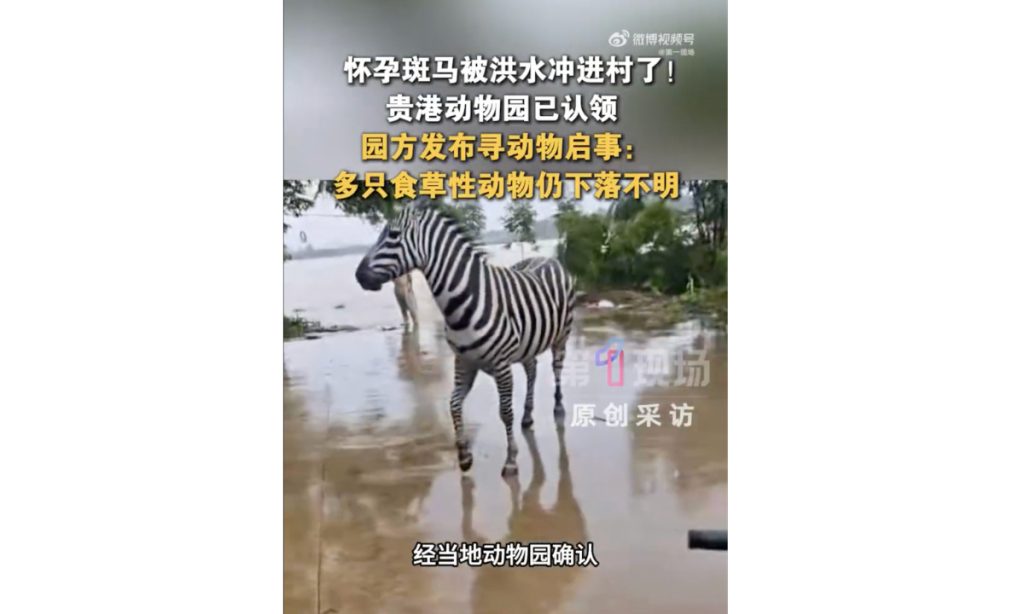
More than 100 animals of over 20 species, including zebras and sika deer, have gone missing after being washed away from a zoo in Guigang, South China’s Guangxi Zhuang Autonomous Region, during floods triggered by Typhoon Maysak. Three lions at the zoo were also killed in the flooding. The zoo is continuing search efforts and has appealed to netizens for help in locating the missing animals, the Global Times learned from the zoo on Wednesday.
The missing herbivorous animals washed away in the floods include sika deer, alpacas, miniature horses, swans, peacocks, miniature pigs and coypus, Wang Liyuan, the zoo's operator, told the Global Times.
One sika deer was rescued from a lake by local villagers on Wednesday, according to Wang.
In addition, the male of the pair of zebras in the zoo has been found dead and the female one has been spotted alive by local villagers but zoo staffers have been unable to locate it.
Apart from the three lions that died, other wild beasts such as brown bears and wolves in the beast zone were safe but in poor condition after nearly drowning in the flood, according to Wang.
"I tried to feed them pork, but they did not have much of an appetite last night," Wang said.
Wang estimated that the economic loss from the dead lions and missing animals, as well as the damaged zoo facilities amounted to more than 4 million yuan ($588,520). She appealed to netizens for help in locating the missing animals.
The zoo is continuing efforts to locate the missing animals and has urged residents not to approach any animals they find, but to contact the zoo for safe handling, Wang said.
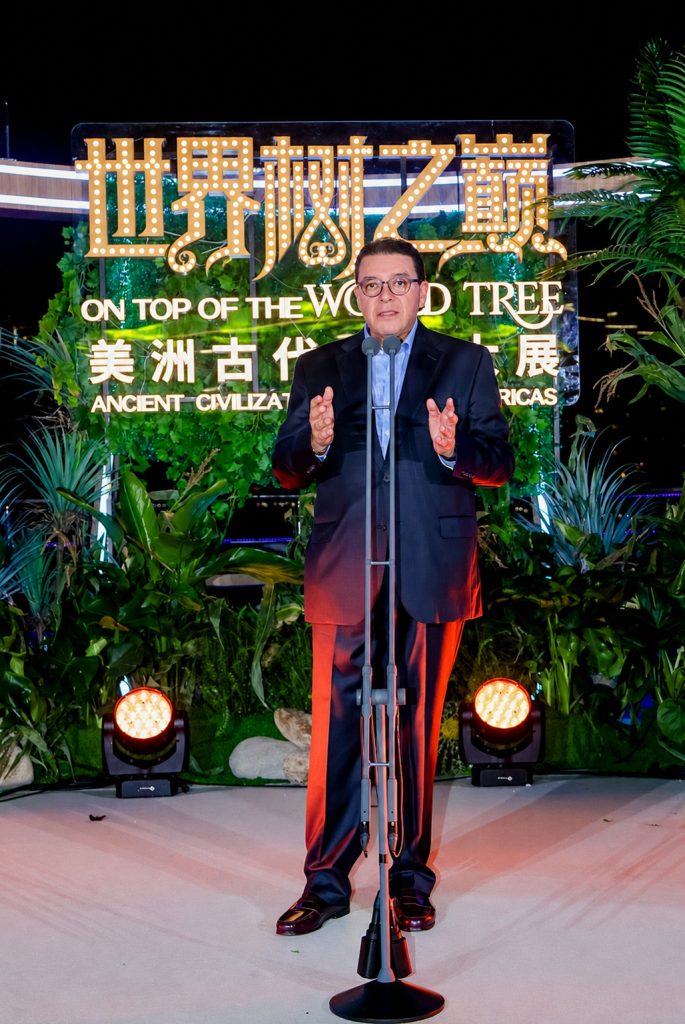
Exhibition "On Top of the World Tree: Ancient Civilizations of the Americas," which is set to be the world's largest showcase of ancient American civilizations, was inaugurated at the Shanghai Museum on People's Square on July 8, 2026. Miguel Ángel Isidro Rodríguez, consul general of the Consulate General of Mexico in Shanghai, told the Global Times that the exhibition represents far more than a display of archaeological treasures.
Although separated by vast distances, both China and Mexico developed highly sophisticated systems of knowledge, including astronomy, mathematics, architecture, agriculture, and philosophy.
"Through this exhibition, visitors will discover that our ancestors shared a common aspiration: to understand the universe and humanity's place within it," said Isidro.
Through this collection of Mexican national treasures, Isidro said that Chinese audiences will have the opportunity to appreciate the remarkable achievements of several of Mexico's great civilizations. From the Olmec civilization, often regarded as the "mother culture" of Mesoamerica, to the urban and cultural sophistication of Teotihuacan, the scientific and artistic accomplishments of the Maya, and cultural dynamism of the Mexica, the exhibition showcases the diversity, creativity, and ingenuity that characterized ancient Mexico, he elaborated.
Beyond their individual achievements, these civilizations shared a profound respect for the relationship between humanity, nature, and the cosmos, aligning with Chinese traditions stressing nature-human harmony and interconnection, said Isidro.
Additionally, the Cultural Section of the Embassy of Mexico in China told the Global Times that the major exhibitions jointly organized by Mexico and China in recent years have significantly strengthened long-term cooperation among museums, cultural heritage institutions, and universities in both countries. In his remarks, Ambassador of Peru to China Carlos Vasquez said that at a time when dialogue between civilizations is becoming crucial, the exhibition represents a significant cultural event.
"It allows us not only to admire exceptional artifacts but also to gain insight into the ideas, beliefs, technologies, and forms of organization that gave rise to some of humanity's oldest and most sophisticated cultural traditions," said Vasquez, noting that it is a source of special pride for Peru that Andean civilization occupies a central place in this grand narrative.
This exhibition also holds special significance for the relationship between Peru and China. Our countries recognize themselves as heirs to ancient civilizational traditions, and deeply value their heritage and clearly understand the role culture plays in shaping the future, said Vasquez.
Amid the 55th anniversary of diplomatic relations between Peru and the People's Republic of China, this exhibition stands as a tangible expression of the trust, closeness, and shared ambition that characterize our ties, he stressed.
This exhibition in Shanghai is in series with "The Maya: Ceiba and Cosmos, Maize, Gold and Jaguar," which opened at the Capital Museum in Beijing on May 17.
Moving forward, there is considerable potential to further deepen this cooperation through new joint exhibitions, professional exchanges, training programs, and the application of innovative technologies for heritage conservation, according to Cultural Section of the Embassy of Mexico.
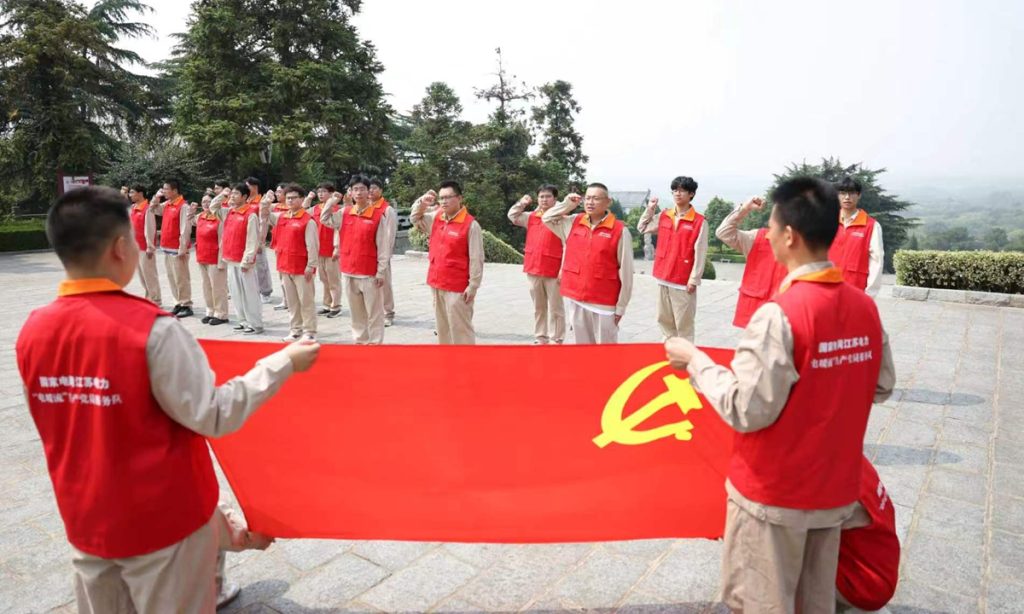
As the Communist Party of China marks its 105th founding anniversary, the Global Times launches a special series focusing on young Party members who are "honorer," "striver" and "torchbearer" that inherit ideals, shoulder responsibilities and carry forward the spirit of the Party in their own ways, showing how faith continues to pass from generation to generation.
This installment tells the story of "striver" Wang Tao, head of China's Qinling Station in Antarctica as well as a member of the Youth Commando Team at Polar Research Stations, a collective which was awarded the 2026 May Fourth Youth Medal.
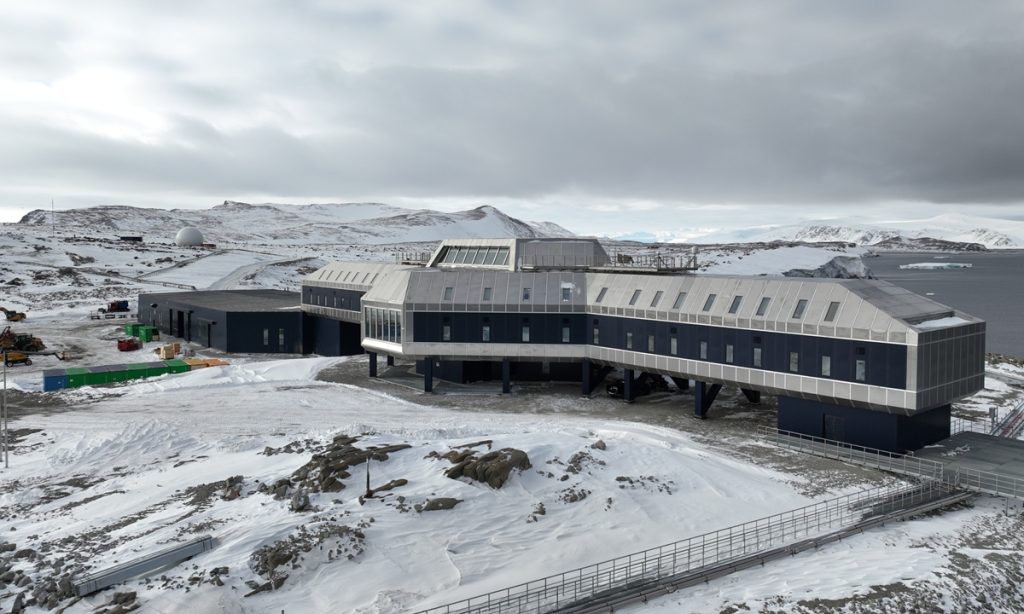
Outside China's Qinling Station in Antarctica, the sun has disappeared below the horizon for months. The polar night stretches for 97 days, leaving only darkness, biting winds and the extensive frozen wild. For the 18 members spending the winter at China's newest Antarctic research station, life carries on much like anywhere else - breakfast around 7 am, routine inspections, scientific support and maintenance work, with unexpected equipment failures demanding immediate attention regardless of the hour. Leading the team is the station's chief, Wang Tao, who arrived in Antarctica last November as part of China's 42nd Antarctic expedition and is expected to remain there until at least early 2027. For him, however, keeping the station running through the harsh polar winter is only the latest chapter of a journey that began more than a decade ago - one that allowed him to witness Qinling Station from lines on engineering drafts into a fully operational scientific outpost.
"It has now entered regular operation," Wang told the Global Times. "Most of the station's core functions are complete, and our work today focuses on ensuring its stable daily operation while supporting scientific research."
As the CPC marks its 105th founding anniversary, Wang shared with the Global Times his journey together with the development of the station, showcasing the Antarctica spirit that features patriotism, truth-seeking, innovation and perseverance.
Building a station against the wind
Wang first visited the Qinling Station during China's 39th Antarctic expedition in 2022, when he led the team responsible for constructing the station's underground foundation. "What people see today is the building above the ground," he said. "What our team built first was everything underneath."
Those invisible foundations laid the groundwork for later construction. After returning to China, he continued participating in the station's design and construction before leading follow-up work during the latest expedition, when supporting facilities were completed and Qinling Station officially entered regular operation.
Yet few construction projects face conditions comparable to those in Antarctica.
Among China's five Antarctic stations, Qinling is neither the highest nor the southernmost. But in Wang's eyes, it presents perhaps the most challenging environment. The station experiences strong winds on around 28 days every month, while construction can only take place during the brief Antarctic summer, when weather conditions are relatively favorable.
At one point during construction, weather forecasts predicted winds exceeding Force 12 before the station's outer walls had been fully enclosed. Team members raced against time to install the final wall panels before the storm arrived.
"Normally, three or four people could install one panel," he recalled. "That day, it took more than 10."
The team completed the task just before the powerful winds swept across the site.
Another memory dates back to the foundation work, when gusts reach more than 40 meters per second - roughly equivalent to Force 14 winds. As they poured concrete into the excavated foundations, sand and cement were blown directly onto their clothing. "I looked at my fellows, everyone appeared as if they had just climbed out of a pile of cement," he said.
Despite the physical hardship, no one backed down. "Everyone understood that this was a national mission. That sense of responsibility gave us the resolve to overcome every challenge."
Today, the station stands as China's first permanent research station in the Ross Sea region, supporting marine science while expanding the country's scientific presence across West Antarctica. The station also represents a new chapter in China's efforts to build greener Antarctic infrastructure.
Its integrated microgrid combines wind, solar, hydrogen, battery storage and diesel generation to ensure a stable power supply while reducing fuel consumption. During the Antarctic summer, clean energy provides more than 60 percent of the station's electricity. Even during the polar night, when solar power is unavailable, wind energy still allows renewable sources to account for about half of total electricity generation, saving more than 200 tons of diesel each year, all thanks to the team's years of work. Carrying the mission forward
While the station itself has entered a new stage, daily life is still shaped by Antarctica's unforgiving environment. Unlike coastal stations where neighboring international bases can sometimes be reached, Qinling Station becomes effectively cut off during winter because of sea ice, dangerous crevasses and persistent storms.
The prolonged darkness also presents psychological challenges. Even experienced expedition members are not immune to concerns from home. He recalled one teammate who spent several sleepless nights waiting for his daughter's high school entrance examination results. When news finally arrived that she had been admitted to a key high school, everyone at the station celebrated together.
The station organizes regular conversations with team members, while psychological counseling from specialists based in China is also provided online. As station leader, Wang pays close attention to subtle changes in mood or behavior.
However, not a single person who has come to Qinling Station has ever asked to quit. For Wang, the most enduring legacy of China's Antarctic program lies not in buildings or technology, but in its people and the Antarctica spirit they pass on. When Wang first traveled south in 2011, veteran expedition members patiently taught him everything from operating vehicles to coping with blizzard conditions. Many of those mentors have since retired. Today, he finds himself passing those lessons on to a new generation, including members born after 2000.
"They [the predecessors] taught us everything without reservation," Wang said. "Now it's our responsibility to continue that tradition."
Looking ahead, Qinling Station will complete its final construction work later this year before shifting its focus increasingly toward scientific research and international cooperation. Wang believes the station's greatest value will ultimately be measured not by the buildings themselves, but by the discoveries they help make possible.
For those spending another long Antarctic winter in darkness, keeping that mission moving forward remains reason enough to face whatever challenges lie ahead.
China and the United States should remove disruptions, overcome obstacles, and stay firmly on the right course toward building a constructive bilateral relationship of strategic stability, Chinese Foreign Minister Wang Yi has said.
Wang, also a member of the Political Bureau of the Communist Party of China Central Committee, made the remarks in a phone conversation with US Secretary of State Marco Rubio on Tuesday.
In May this year, Chinese President Xi Jinping and US President Donald Trump reached a series of common understandings in Beijing, including on building a constructive bilateral relationship of strategic stability, which has provided strategic guidance and set the direction for the development of bilateral ties over the next three years and beyond, Wang said.
Building a constructive bilateral relationship of strategic stability reflects the aspirations of the two peoples, meets the expectations of the international community, and serves the fundamental interests of both countries, Wang said.
Wang said that both sides should always uphold the spirit of equality, respect and mutual benefit, and translate the important consensus reached by the two heads of state into specific policies and practical measures.
Building a constructive bilateral relationship of strategic stability is not just a slogan and it requires action, Wang said, calling for both sides to move in the same direction and make persistent efforts.
To this end, Wang said, both sides should extend the cooperation list, create more positive agendas, and at the same time narrow the list of problems and manage various risks and hidden dangers.
Noting that the Taiwan question has far-reaching implications, Wang urged the US side to handle Taiwan-related issues with extra prudence.
Both sides agreed that the phone conversation between the two foreign ministers was positive and constructive, and agreed to jointly implement the important consensus reached by the two heads of state and continue to maintain communication in a flexible manner.
The Communist Party of China (CPC) had more than 101.28 million members as of the end of 2025, up by nearly 1.01 million from 2024, according to a report issued on Tuesday by the Organization Department of the CPC Central Committee ahead of the Party's 105th founding anniversary.
According to the report, the total number of Party members has maintained moderate growth in 2025, the composition of the Party membership has kept optimizing, education and management of Party members have been steadily strengthened, and primary-level Party organizations have become stronger and more robust.
Data from the report showed that the total number of Party members rose by 1 percent year-on-year in 2025, with over 2.086 million new members developed during the year. Among them, 51.4 percent were from the forefront of production and work, 54.8 percent held diplomas of junior college or above, and 84 percent of them aged 35 or below, per the report.
At the end of 2025, there were 20.864 million CPC membership applicants and 10.64 million active applicants for Party membership.
Besides, composition of Party membership has continuously optimized. The latest report revealed that at the end of 2025, about 59.77 million Party members, or 59 percent of the overall membership, held junior college degrees or above, 1.4 percentage points higher than the level recorded at the end of the previous year.
By the end of 2025, the CPC had more than 31.91 million female members, accounting for 31.5 percent of its total membership, up 0.6 percentage points from the previous year. The proportion of members from ethnic minority groups stood at 7.8 percent with a total number of about 7.88 million.
Workers and farmers remain the mainstay of the CPC membership, accounting for 32.4 percent of the total.
According to the report, education and management of Party members have continued to improve, with the number of Party members receiving training in 2025 rising by 3.7 percent compared with the previous year.
In 2025, Party organizations at all levels honored 108,000 advanced primary-level Party organizations, 583,000 outstanding CPC members and 165,000 exemplary Party affairs workers. A total of 939,000 commemorative medals for CPC members with 50-year Party standing were conferred over the year.
Su Wei, a professor at the Party School of the CPC Chongqing Municipal Committee, told the Global Times on Tuesday that since the 18th National Congress of the CPC, the development of CPC membership has balanced quantity with greater emphasis on quality. This adjustment is highly aligned with China's strategic shift from rapid economic growth to high-quality development.
Against a backdrop of a growing pool of Party membership applicants and active candidates, the Party has enforced stricter criteria and standardized procedures for recruiting new members. The share of scientists, technicians and intellectuals joining the Party has kept climbing, steadily upgrading the overall structure of Party membership, according to Su.
According to the report, efforts were also made to strengthen primary-level Party organizations. At the end of 2025, there were 314,000 primary-level Party committees nationwide, an increase of 8,000 from 2024. The numbers of primary-level general Party branches and Party branches increased to 333,000 and over 4.78 million, respectively.
Village-level Party organizations have been further strengthened to fuel nationwide rural vitalization. By the end of 2025, China had nearly 483,000 village Party branch secretaries. Of them, 56.5 percent held a junior college degree or above, an increase of 8.9 percentage points from 2024.
"A closely woven organizational system constitutes the CPC's unique institutional strength," said Su, "With the centralized, unified leadership of the CPC Central Committee, and numerous basic-level Party organizations engaging the general public, the CPC has streamlined the full chain of governance."
Such an extensive network also enables the Party to recruit outstanding pioneers from all sectors of society, he added.
In 2017, the CPC has given shape to the Thought on Socialism with Chinese Characteristics for a New Era, a long-term guide to action that the Party must adhere to and develop. It sets out 14-point fundamental principles that underpin the endeavors to uphold and develop socialism with Chinese characteristics in the new era, with the first principle being "ensuring Party leadership over all works" and the 14th on "exercising full and rigorous Party governance."
"These two principles centered on Party building constitute the core thread of China's national governance," Su said, "All initiatives in economic, political, cultural, social and ecological development are underpinned by the Party's leadership and advanced through comprehensive Party governance. This fully proves that strengthening Party building serves as the fundamental guarantee for advancing the cause of socialism with Chinese characteristics and national development."