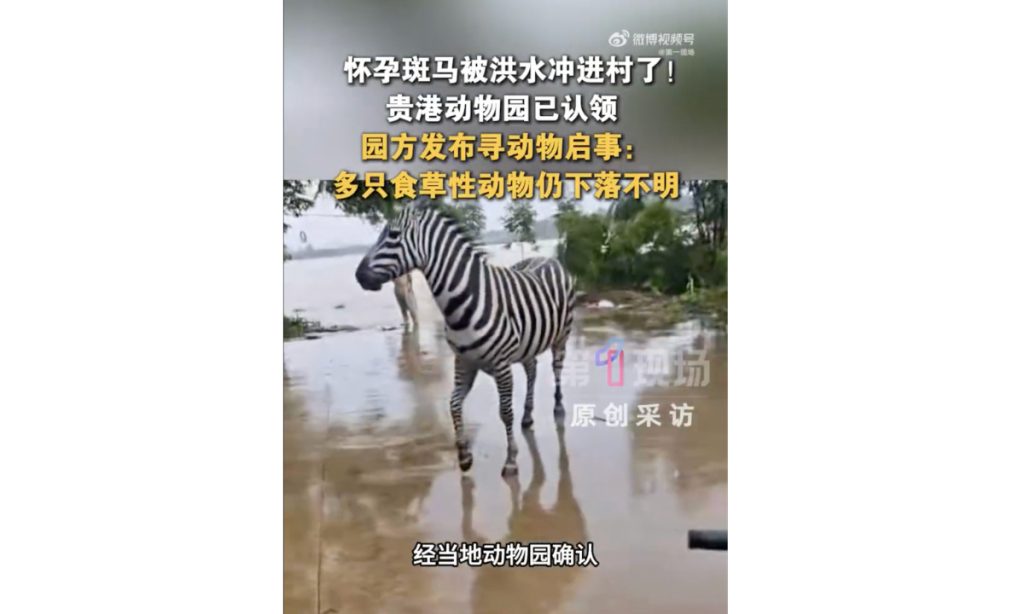
More than 100 animals of over 20 species, including zebras and sika deer, have gone missing after being washed away from a zoo in Guigang, South China’s Guangxi Zhuang Autonomous Region, during floods triggered by Typhoon Maysak. Three lions at the zoo were also killed in the flooding. The zoo is continuing search efforts and has appealed to netizens for help in locating the missing animals, the Global Times learned from the zoo on Wednesday.
The missing herbivorous animals washed away in the floods include sika deer, alpacas, miniature horses, swans, peacocks, miniature pigs and coypus, Wang Liyuan, the zoo's operator, told the Global Times.
One sika deer was rescued from a lake by local villagers on Wednesday, according to Wang.
In addition, the male of the pair of zebras in the zoo has been found dead and the female one has been spotted alive by local villagers but zoo staffers have been unable to locate it.
Apart from the three lions that died, other wild beasts such as brown bears and wolves in the beast zone were safe but in poor condition after nearly drowning in the flood, according to Wang.
"I tried to feed them pork, but they did not have much of an appetite last night," Wang said.
Wang estimated that the economic loss from the dead lions and missing animals, as well as the damaged zoo facilities amounted to more than 4 million yuan ($588,520). She appealed to netizens for help in locating the missing animals.
The zoo is continuing efforts to locate the missing animals and has urged residents not to approach any animals they find, but to contact the zoo for safe handling, Wang said.
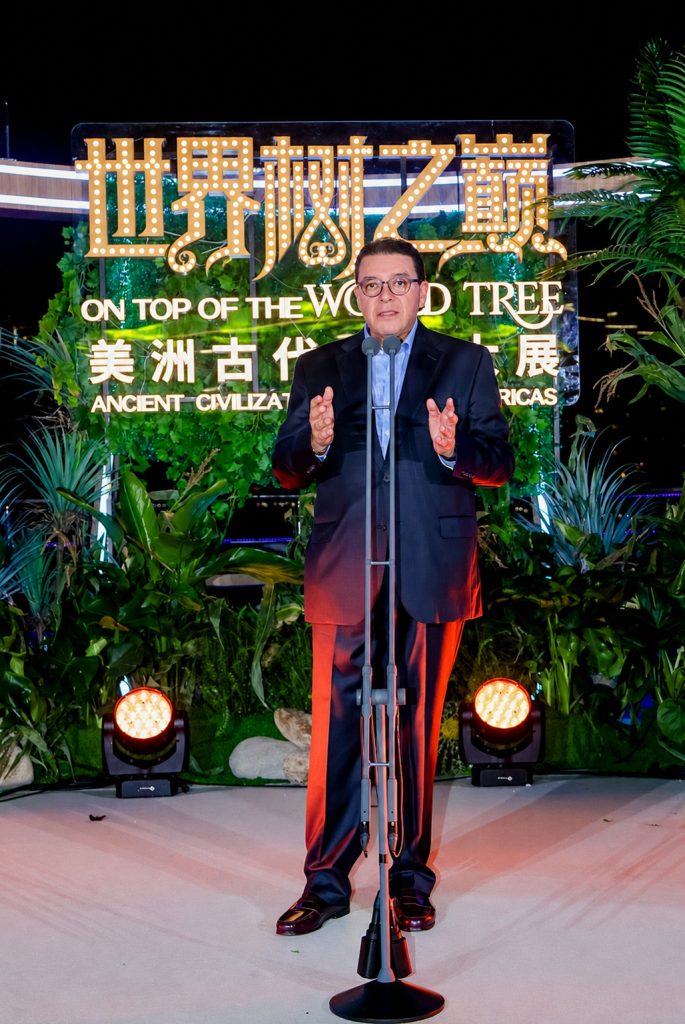
Exhibition "On Top of the World Tree: Ancient Civilizations of the Americas," which is set to be the world's largest showcase of ancient American civilizations, was inaugurated at the Shanghai Museum on People's Square on July 8, 2026. Miguel Ángel Isidro Rodríguez, consul general of the Consulate General of Mexico in Shanghai, told the Global Times that the exhibition represents far more than a display of archaeological treasures.
Although separated by vast distances, both China and Mexico developed highly sophisticated systems of knowledge, including astronomy, mathematics, architecture, agriculture, and philosophy.
"Through this exhibition, visitors will discover that our ancestors shared a common aspiration: to understand the universe and humanity's place within it," said Isidro.
Through this collection of Mexican national treasures, Isidro said that Chinese audiences will have the opportunity to appreciate the remarkable achievements of several of Mexico's great civilizations. From the Olmec civilization, often regarded as the "mother culture" of Mesoamerica, to the urban and cultural sophistication of Teotihuacan, the scientific and artistic accomplishments of the Maya, and cultural dynamism of the Mexica, the exhibition showcases the diversity, creativity, and ingenuity that characterized ancient Mexico, he elaborated.
Beyond their individual achievements, these civilizations shared a profound respect for the relationship between humanity, nature, and the cosmos, aligning with Chinese traditions stressing nature-human harmony and interconnection, said Isidro.
Additionally, the Cultural Section of the Embassy of Mexico in China told the Global Times that the major exhibitions jointly organized by Mexico and China in recent years have significantly strengthened long-term cooperation among museums, cultural heritage institutions, and universities in both countries. In his remarks, Ambassador of Peru to China Carlos Vasquez said that at a time when dialogue between civilizations is becoming crucial, the exhibition represents a significant cultural event.
"It allows us not only to admire exceptional artifacts but also to gain insight into the ideas, beliefs, technologies, and forms of organization that gave rise to some of humanity's oldest and most sophisticated cultural traditions," said Vasquez, noting that it is a source of special pride for Peru that Andean civilization occupies a central place in this grand narrative.
This exhibition also holds special significance for the relationship between Peru and China. Our countries recognize themselves as heirs to ancient civilizational traditions, and deeply value their heritage and clearly understand the role culture plays in shaping the future, said Vasquez.
Amid the 55th anniversary of diplomatic relations between Peru and the People's Republic of China, this exhibition stands as a tangible expression of the trust, closeness, and shared ambition that characterize our ties, he stressed.
This exhibition in Shanghai is in series with "The Maya: Ceiba and Cosmos, Maize, Gold and Jaguar," which opened at the Capital Museum in Beijing on May 17.
Moving forward, there is considerable potential to further deepen this cooperation through new joint exhibitions, professional exchanges, training programs, and the application of innovative technologies for heritage conservation, according to Cultural Section of the Embassy of Mexico.
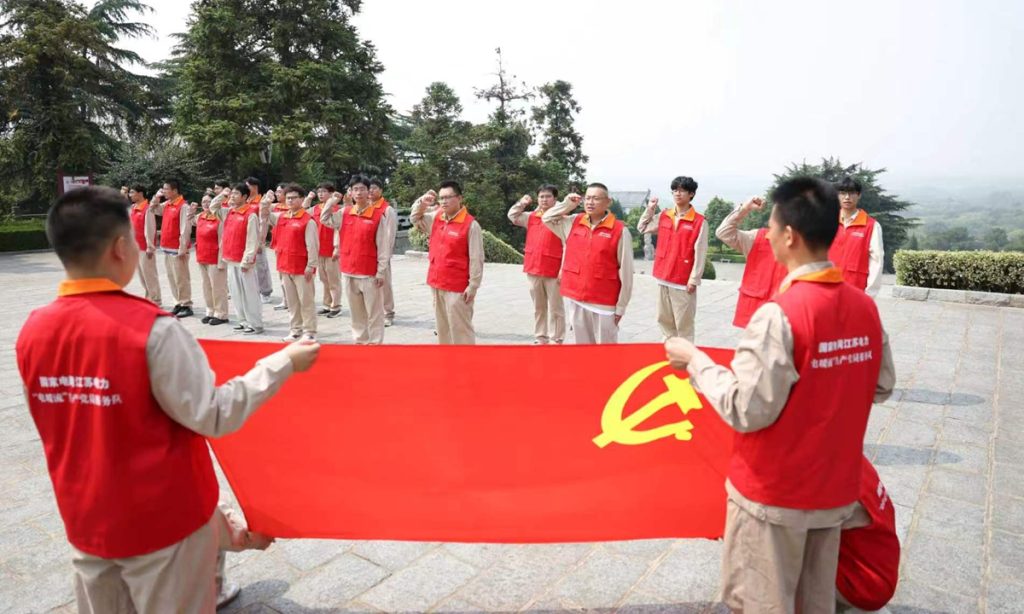
As the Communist Party of China marks its 105th founding anniversary, the Global Times launches a special series focusing on young Party members who are "honorer," "striver" and "torchbearer" that inherit ideals, shoulder responsibilities and carry forward the spirit of the Party in their own ways, showing how faith continues to pass from generation to generation.
This installment tells the story of "striver" Wang Tao, head of China's Qinling Station in Antarctica as well as a member of the Youth Commando Team at Polar Research Stations, a collective which was awarded the 2026 May Fourth Youth Medal.
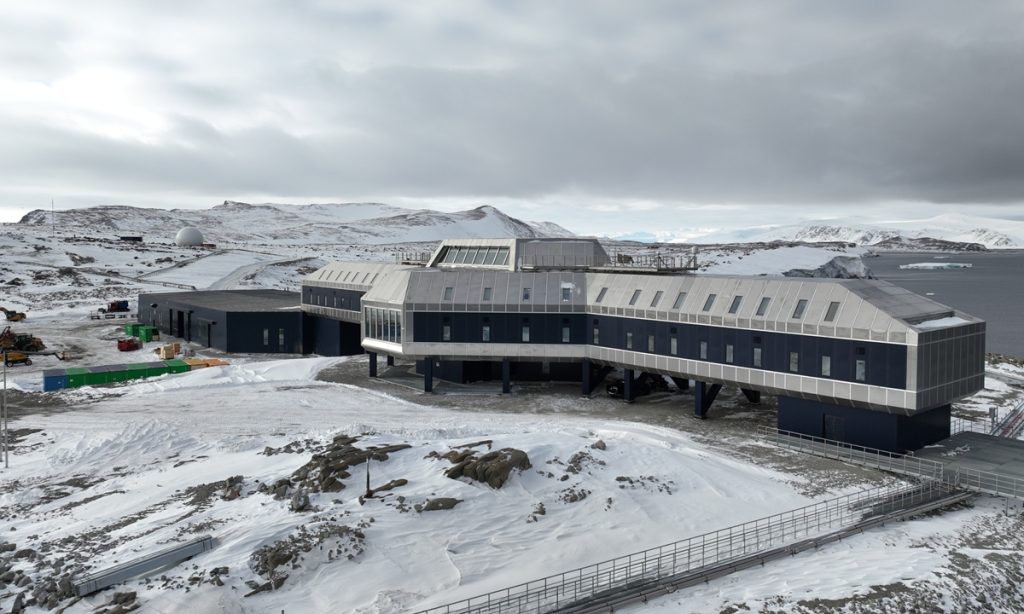
Outside China's Qinling Station in Antarctica, the sun has disappeared below the horizon for months. The polar night stretches for 97 days, leaving only darkness, biting winds and the extensive frozen wild. For the 18 members spending the winter at China's newest Antarctic research station, life carries on much like anywhere else - breakfast around 7 am, routine inspections, scientific support and maintenance work, with unexpected equipment failures demanding immediate attention regardless of the hour. Leading the team is the station's chief, Wang Tao, who arrived in Antarctica last November as part of China's 42nd Antarctic expedition and is expected to remain there until at least early 2027. For him, however, keeping the station running through the harsh polar winter is only the latest chapter of a journey that began more than a decade ago - one that allowed him to witness Qinling Station from lines on engineering drafts into a fully operational scientific outpost.
"It has now entered regular operation," Wang told the Global Times. "Most of the station's core functions are complete, and our work today focuses on ensuring its stable daily operation while supporting scientific research."
As the CPC marks its 105th founding anniversary, Wang shared with the Global Times his journey together with the development of the station, showcasing the Antarctica spirit that features patriotism, truth-seeking, innovation and perseverance.
Building a station against the wind
Wang first visited the Qinling Station during China's 39th Antarctic expedition in 2022, when he led the team responsible for constructing the station's underground foundation. "What people see today is the building above the ground," he said. "What our team built first was everything underneath."
Those invisible foundations laid the groundwork for later construction. After returning to China, he continued participating in the station's design and construction before leading follow-up work during the latest expedition, when supporting facilities were completed and Qinling Station officially entered regular operation.
Yet few construction projects face conditions comparable to those in Antarctica.
Among China's five Antarctic stations, Qinling is neither the highest nor the southernmost. But in Wang's eyes, it presents perhaps the most challenging environment. The station experiences strong winds on around 28 days every month, while construction can only take place during the brief Antarctic summer, when weather conditions are relatively favorable.
At one point during construction, weather forecasts predicted winds exceeding Force 12 before the station's outer walls had been fully enclosed. Team members raced against time to install the final wall panels before the storm arrived.
"Normally, three or four people could install one panel," he recalled. "That day, it took more than 10."
The team completed the task just before the powerful winds swept across the site.
Another memory dates back to the foundation work, when gusts reach more than 40 meters per second - roughly equivalent to Force 14 winds. As they poured concrete into the excavated foundations, sand and cement were blown directly onto their clothing. "I looked at my fellows, everyone appeared as if they had just climbed out of a pile of cement," he said.
Despite the physical hardship, no one backed down. "Everyone understood that this was a national mission. That sense of responsibility gave us the resolve to overcome every challenge."
Today, the station stands as China's first permanent research station in the Ross Sea region, supporting marine science while expanding the country's scientific presence across West Antarctica. The station also represents a new chapter in China's efforts to build greener Antarctic infrastructure.
Its integrated microgrid combines wind, solar, hydrogen, battery storage and diesel generation to ensure a stable power supply while reducing fuel consumption. During the Antarctic summer, clean energy provides more than 60 percent of the station's electricity. Even during the polar night, when solar power is unavailable, wind energy still allows renewable sources to account for about half of total electricity generation, saving more than 200 tons of diesel each year, all thanks to the team's years of work. Carrying the mission forward
While the station itself has entered a new stage, daily life is still shaped by Antarctica's unforgiving environment. Unlike coastal stations where neighboring international bases can sometimes be reached, Qinling Station becomes effectively cut off during winter because of sea ice, dangerous crevasses and persistent storms.
The prolonged darkness also presents psychological challenges. Even experienced expedition members are not immune to concerns from home. He recalled one teammate who spent several sleepless nights waiting for his daughter's high school entrance examination results. When news finally arrived that she had been admitted to a key high school, everyone at the station celebrated together.
The station organizes regular conversations with team members, while psychological counseling from specialists based in China is also provided online. As station leader, Wang pays close attention to subtle changes in mood or behavior.
However, not a single person who has come to Qinling Station has ever asked to quit. For Wang, the most enduring legacy of China's Antarctic program lies not in buildings or technology, but in its people and the Antarctica spirit they pass on. When Wang first traveled south in 2011, veteran expedition members patiently taught him everything from operating vehicles to coping with blizzard conditions. Many of those mentors have since retired. Today, he finds himself passing those lessons on to a new generation, including members born after 2000.
"They [the predecessors] taught us everything without reservation," Wang said. "Now it's our responsibility to continue that tradition."
Looking ahead, Qinling Station will complete its final construction work later this year before shifting its focus increasingly toward scientific research and international cooperation. Wang believes the station's greatest value will ultimately be measured not by the buildings themselves, but by the discoveries they help make possible.
For those spending another long Antarctic winter in darkness, keeping that mission moving forward remains reason enough to face whatever challenges lie ahead.
China and the United States should remove disruptions, overcome obstacles, and stay firmly on the right course toward building a constructive bilateral relationship of strategic stability, Chinese Foreign Minister Wang Yi has said.
Wang, also a member of the Political Bureau of the Communist Party of China Central Committee, made the remarks in a phone conversation with US Secretary of State Marco Rubio on Tuesday.
In May this year, Chinese President Xi Jinping and US President Donald Trump reached a series of common understandings in Beijing, including on building a constructive bilateral relationship of strategic stability, which has provided strategic guidance and set the direction for the development of bilateral ties over the next three years and beyond, Wang said.
Building a constructive bilateral relationship of strategic stability reflects the aspirations of the two peoples, meets the expectations of the international community, and serves the fundamental interests of both countries, Wang said.
Wang said that both sides should always uphold the spirit of equality, respect and mutual benefit, and translate the important consensus reached by the two heads of state into specific policies and practical measures.
Building a constructive bilateral relationship of strategic stability is not just a slogan and it requires action, Wang said, calling for both sides to move in the same direction and make persistent efforts.
To this end, Wang said, both sides should extend the cooperation list, create more positive agendas, and at the same time narrow the list of problems and manage various risks and hidden dangers.
Noting that the Taiwan question has far-reaching implications, Wang urged the US side to handle Taiwan-related issues with extra prudence.
Both sides agreed that the phone conversation between the two foreign ministers was positive and constructive, and agreed to jointly implement the important consensus reached by the two heads of state and continue to maintain communication in a flexible manner.
The Communist Party of China (CPC) had more than 101.28 million members as of the end of 2025, up by nearly 1.01 million from 2024, according to a report issued on Tuesday by the Organization Department of the CPC Central Committee ahead of the Party's 105th founding anniversary.
According to the report, the total number of Party members has maintained moderate growth in 2025, the composition of the Party membership has kept optimizing, education and management of Party members have been steadily strengthened, and primary-level Party organizations have become stronger and more robust.
Data from the report showed that the total number of Party members rose by 1 percent year-on-year in 2025, with over 2.086 million new members developed during the year. Among them, 51.4 percent were from the forefront of production and work, 54.8 percent held diplomas of junior college or above, and 84 percent of them aged 35 or below, per the report.
At the end of 2025, there were 20.864 million CPC membership applicants and 10.64 million active applicants for Party membership.
Besides, composition of Party membership has continuously optimized. The latest report revealed that at the end of 2025, about 59.77 million Party members, or 59 percent of the overall membership, held junior college degrees or above, 1.4 percentage points higher than the level recorded at the end of the previous year.
By the end of 2025, the CPC had more than 31.91 million female members, accounting for 31.5 percent of its total membership, up 0.6 percentage points from the previous year. The proportion of members from ethnic minority groups stood at 7.8 percent with a total number of about 7.88 million.
Workers and farmers remain the mainstay of the CPC membership, accounting for 32.4 percent of the total.
According to the report, education and management of Party members have continued to improve, with the number of Party members receiving training in 2025 rising by 3.7 percent compared with the previous year.
In 2025, Party organizations at all levels honored 108,000 advanced primary-level Party organizations, 583,000 outstanding CPC members and 165,000 exemplary Party affairs workers. A total of 939,000 commemorative medals for CPC members with 50-year Party standing were conferred over the year.
Su Wei, a professor at the Party School of the CPC Chongqing Municipal Committee, told the Global Times on Tuesday that since the 18th National Congress of the CPC, the development of CPC membership has balanced quantity with greater emphasis on quality. This adjustment is highly aligned with China's strategic shift from rapid economic growth to high-quality development.
Against a backdrop of a growing pool of Party membership applicants and active candidates, the Party has enforced stricter criteria and standardized procedures for recruiting new members. The share of scientists, technicians and intellectuals joining the Party has kept climbing, steadily upgrading the overall structure of Party membership, according to Su.
According to the report, efforts were also made to strengthen primary-level Party organizations. At the end of 2025, there were 314,000 primary-level Party committees nationwide, an increase of 8,000 from 2024. The numbers of primary-level general Party branches and Party branches increased to 333,000 and over 4.78 million, respectively.
Village-level Party organizations have been further strengthened to fuel nationwide rural vitalization. By the end of 2025, China had nearly 483,000 village Party branch secretaries. Of them, 56.5 percent held a junior college degree or above, an increase of 8.9 percentage points from 2024.
"A closely woven organizational system constitutes the CPC's unique institutional strength," said Su, "With the centralized, unified leadership of the CPC Central Committee, and numerous basic-level Party organizations engaging the general public, the CPC has streamlined the full chain of governance."
Such an extensive network also enables the Party to recruit outstanding pioneers from all sectors of society, he added.
In 2017, the CPC has given shape to the Thought on Socialism with Chinese Characteristics for a New Era, a long-term guide to action that the Party must adhere to and develop. It sets out 14-point fundamental principles that underpin the endeavors to uphold and develop socialism with Chinese characteristics in the new era, with the first principle being "ensuring Party leadership over all works" and the 14th on "exercising full and rigorous Party governance."
"These two principles centered on Party building constitute the core thread of China's national governance," Su said, "All initiatives in economic, political, cultural, social and ecological development are underpinned by the Party's leadership and advanced through comprehensive Party governance. This fully proves that strengthening Party building serves as the fundamental guarantee for advancing the cause of socialism with Chinese characteristics and national development."
Three people who had been reported missing following the flash explosion at a residential building in Huludao city in Northeast China’s Liaoning Province, have all been found dead, the local firefighting and rescue authority said in a statement on Monday.
Post-incident work and the investigation into the cause of the incident are being carried out simultaneously, the statement said.
A previous statement said three people were missing and eight were injured after the explosion on Monday morning which was suspected to have been caused by a flash explosion triggered by a liquefied gas leak, the local firefighting and rescue authority said on Monday.
According to a statement released by the local firefighting and rescue authority on Monday, the command center of the Huludao Fire and Rescue Bureau received a report at 7:11 am of a suspected flash explosion caused by a liquefied gas leak in Unit 3 of a residential building in Xingbei community, Nanpiao district in Huludao. The command center dispatched 95 firefighters along with 14 firefighting trucks to the scene for rescue operations.
Allout efforts are being made to search the missing. Eight people suffered minor injuries and were taken to hospital for treatment. Investigation into the cause of the incident is ongoing, the statement said.
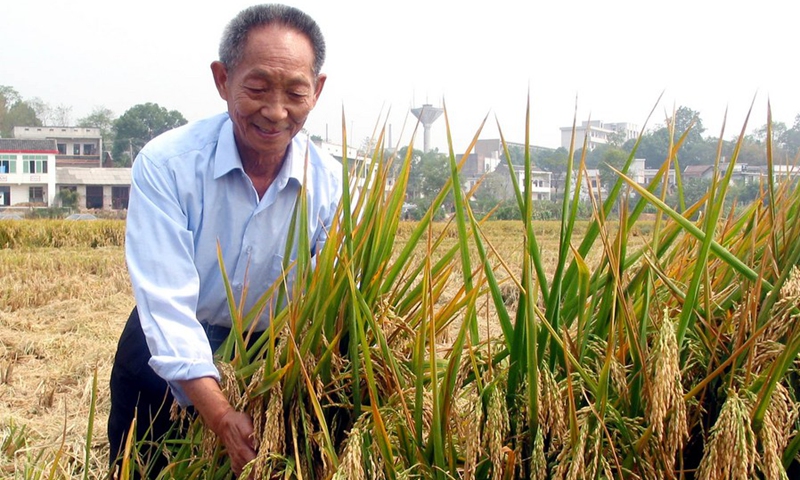
Chinese social media platform Douyin said on Sunday that it permanently banned the account that posted false information about the three-line hybrid rice breeding system, which was first proposed by the late "father of hybrid rice" Yuan Longping. The platform said the false information disrupted social and economic order and could cause public panic, in violation of the platform's community guidelines.
China Food Newspaper on Saturday reported that per information from netizens, an internet influencer who self-proclaimed to advocate "protecting traditional seed varieties," with more than 2 million followers across social media platforms, labeled the "three-line hybrid breeding system" as "abnormal" and "pathological," falsely claiming that the "male-sterile rice" could make consumers infertile "like mules," while attacking modern crop breeding technologies.
Yuan was the founder of the breeding system attacked, which is part of modern breeding technologies that have long served as the cornerstone of China's food security.
The newspaper pointed out that rice is a self-pollinating plant. Only when it is male sterile, can the rice plant receive pollen from other plants, which is the biological basis for hybridization.
Hybrid rice is traditionally developed using the three-line breeding system, which involves three parental lines: one female parent and two male parent lines. Based on their distinct roles, the three lines are known as the male sterile, the maintainer, and the restorer. The maintainer line and restorer line are both capable of self-pollination and self-propagation. The maintainer line is used to preserve and reproduce the male-sterile line, producing offspring that remain male sterile. The restorer line is crossed with the male-sterile line to produce hybrid seeds for cultivation, the newspaper said.
Yuan introduced the three-line breeding system to overcome the challenge of harnessing hybrid vigor in rice. The breeding system remains widely used across China today, according to the newspaper.
From the proposal of the "three-line hybrid breeding system" to the validation of the "one-line system," generations of plant breeders have spent nearly 60 years advancing hybrid rice breeding through continuous field research, the newspaper said, arguing that without the hybrid breeding technologies some people label "abnormal" or "pathological," agricultural output would fall short of demand, and food security enjoyed by hundreds of millions of families would be at risk.
The hybrid rice technologies have not only safeguarded food security of China, but also benefitted many developing countries. Guinean Prime Minister Amadou Oury Bah had sent a bag of locally harvested hybrid rice to Yuan's wife in April, per media reports. He said in a recent interview that hybrid rice strains developed by Chinese scientist Yuan are bringing real benefits to Guinea. The country hopes to expand rice production, reduce dependence on imports and move toward becoming a regional food supplier.
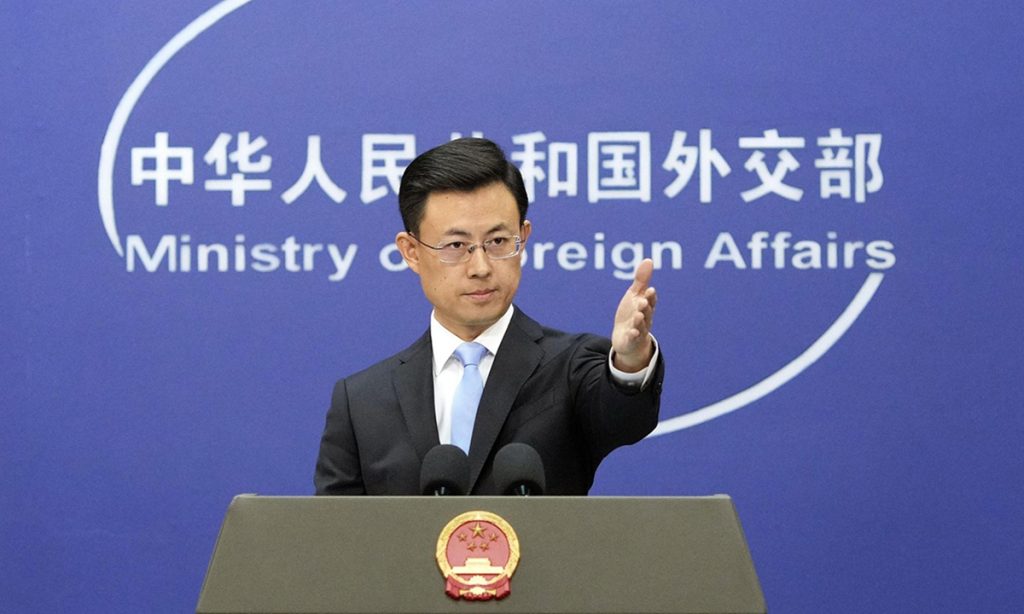
China condemns all attacks targeting innocent civilians. Guo Jiakun, Spokesperson of the Chinese Foreign Ministry, made the remarks at a regular Monday press conference when asked for comment on reports that Ukrainian forces launched a drone strike against a bus in Russia's Bryansk region, killing one woman and injuring six others including four children. He urged all relevant parties to stay calm and exercise restraint, and halt assaults on civilians and civilian infrastructure.
Guo added that dialogue and negotiation represent the only viable solution to the Ukraine crisis. China calls on all sides to take steps to de-escalate tensions at the earliest opportunity and create favorable conditions for the resumption of direct negotiations.
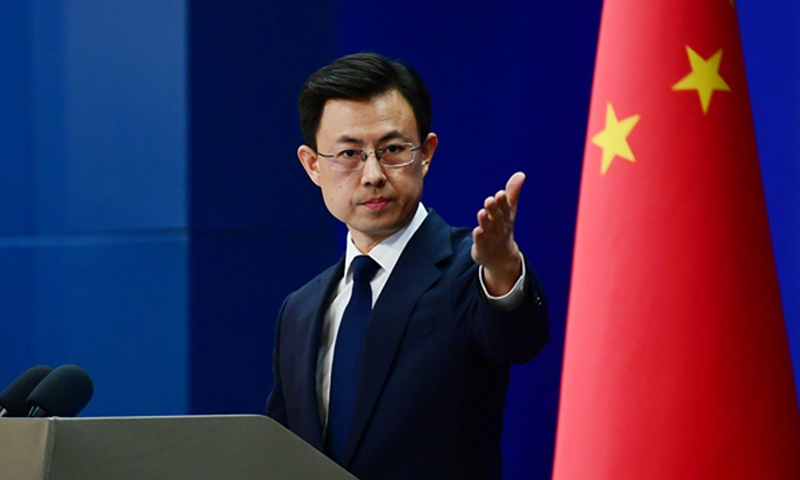
China and India have maintained overall stability along their border, and communication channels on border-related issues remain open, Chinese Foreign Ministry spokesperson Guo Jiakun said on Tuesday, adding that both sides are actively implementing the consensus reached at the 24th Round of Talks Between the Special Representatives of China and India on the Boundary Question and are earnestly preparing for the 25th round of talks.
At the Tuesday press conference, a reporter noted that Foreign Minister Wang Yi said in New Delhi that China and India should speed up the restoration of dialogue mechanisms. The reporter asked the spokesperson to elaborate on which dialogues China hopes to restore and whether the two sides reached an agreement on the next round of talks between the special representatives.
Guo noted that Wang is attending the 16th Meeting of BRICS High Representatives for Security Issues on National Security in New Delhi, India. During the event, Wang met with India's National Security Advisor Ajit Doval, and China has already released relevant information on the meeting.
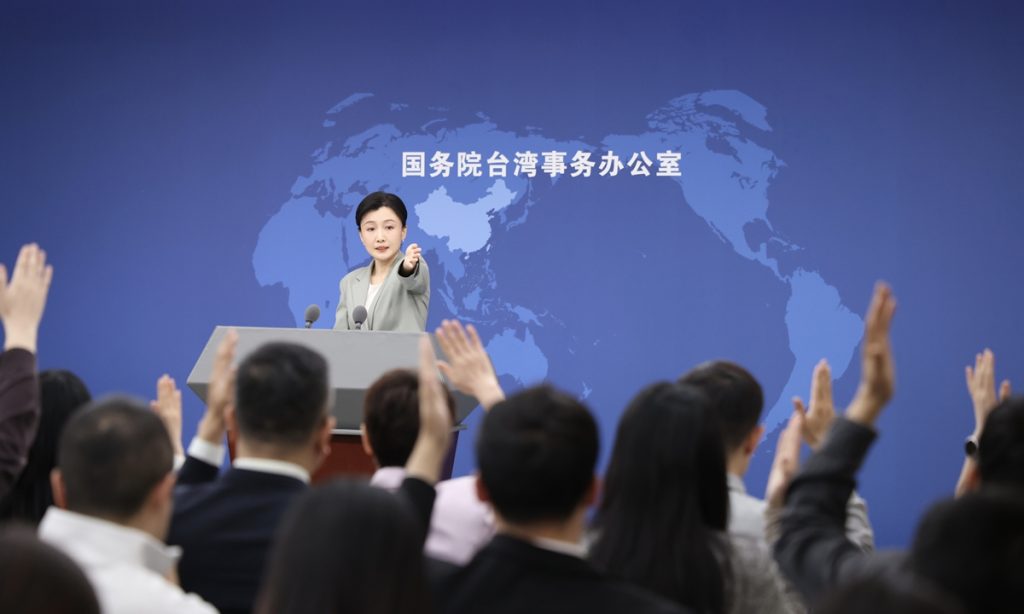
In response to a question regarding Taiwan regional leader Lai Ching-te’s claim calling on Chinese mainland to stop military buildup in the South China Sea, the East China Sea and the Taiwan Straits, and to renounce the use of force against the Taiwan region, and its claim that Taiwan region is willing to engage in exchanges and cooperation with Chinese mainland on the principle of equality and mutual respect, so as to promote peaceful coexistence and common prosperity, Zhang Han, a spokesperson for the Taiwan Affairs Office of the State Council, said that only when the Democratic Progressive Party (DPP) authorities recognize the 1992 Consensus, which embodies the one-China principle, and put an end to their separatist acts for “Taiwan independence,” can cross-Straits consultation and dialogue be resumed, and can cross-Straits relations return to the right track of peaceful development.
Zhang said at present, the situations in the South China Sea and the East China Sea remain generally stable. The DPP authorities, by stubbornly adhering to the separatist stance of “Taiwan independence” and attempting to seek independence with external support and by force, are the very root cause of tension and turbulence in the Taiwan Straits, and are also the troublemaker for regional peace and stability, Zhang added.
“What I want to emphasize is we are willing to strive for peaceful reunification with utmost sincerity and greatest efforts, but we make no promise to renounce the use of force, nor will we leave any room for any form of ‘Taiwan independence’ separatist activities,” Zhang noted.