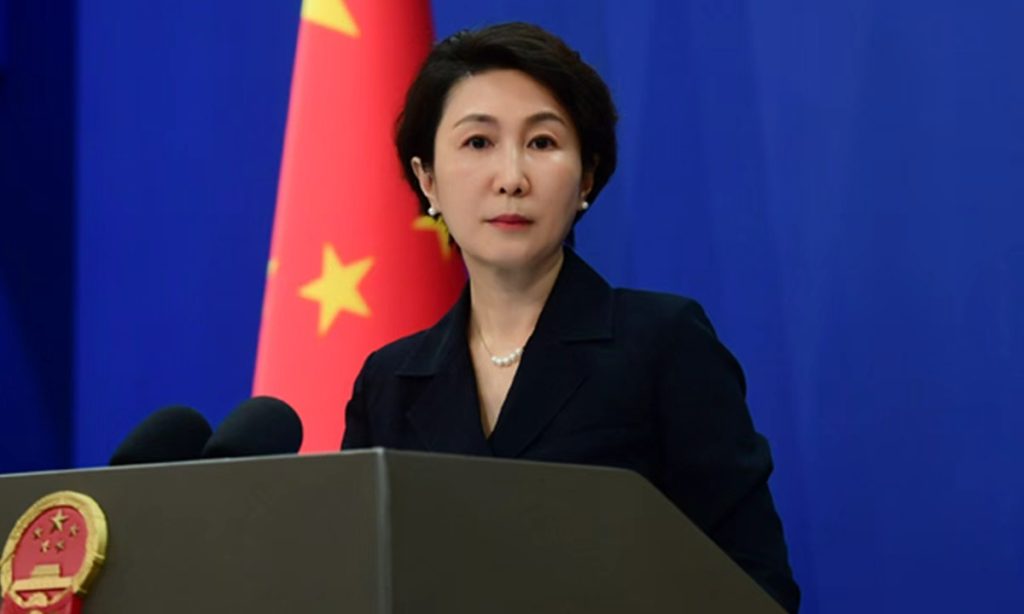
A spokesperson of Chinese Foreign Ministry said on Tuesday that fear-mongering of so-called threats to justify military buildup is a go-to tactic for Japanese militarism.
Spokesperson Mao Ning made the remarks when asked to comment on recent social media post by Japanese Prime Minister Sanae Takaichi which claimed the review of the three principles on Japan's defense equipment transfer is aimed at enhancing deterrence for the sake of "defense" and preventing conflicts before they occur, as well as US Defense Secretary Pete Hegseth's welcome of this Japanese initiative and agreed to strengthen military cooperation with Japan.
Mao said that as explicitly stipulated in international instruments such as the Potsdam Proclamation, Japan is obligated under international law to be "completely disarmed" and not to maintain industries that "would enable her to re-arm for war."
Japan, however, has been lifting the ban on lethal weapon export, rebuilding the war machine, and rapidly shifting to offense-oriented security and defense policies. Those dangerous moves bear an alarming resemblance to the course of actions taken by militarists in pre-war Japan, Mao noted.
History has taught the world a painful lesson on appeasing and condoning militarism. Once that Pandora's box is opened, no one will be safe from the danger of raising a monster, Mao added.
Following intensive and proactive diplomatic engagements in May, General Secretary of the Lao People's Revolutionary Party Central Committee and Lao President Thongloun Sisoulith, British Foreign Secretary Yvette Cooper as well as upcoming guest Myanmar's Minister for Foreign Affairs Tin Maung Swe are among the latest foreign dignitaries visiting or scheduled to visit China amid a flurry of diplomatic activities to unfold in the month.
As China has enhanced its capabilities in fields such as technology and green development, foreign officials have found an increasingly broad range of areas for engagement during their visits. Experts say Beijing's consistent and predictable diplomacy has also strengthened its standing at a time when many governments are searching for certainty in an increasingly fragmented international landscape.
Development Philosophy
As Lao leader Thongloun Sisoulith and his delegation visited Yucun village in Anji, East China's Zhejiang Province on Wednesday for an inspection tour, the gentle drizzle added a touch of the Yangtze River Delta region's characteristic warmth and tranquility to the scene.
In front of a stone stele engraved with the words "lucid waters and lush mountains are invaluable assets," officials provided a detailed introduction to the background and profound significance of this important development philosophy.
The Global Times reporter noticed that Sisoulith listened attentively and nodded repeatedly.
During the visit, he also toured local specialty homestays, engaging warmly with villagers and inquiring in detail about the homestays' revenue, customer base and other aspects, gaining an in-depth understanding of China's rural tourism model and its effectiveness in increasing local incomes. The visit concluded with an exchange of gifts between the Chinese and Lao sides in front of the stele, symbolizing their friendship.
Later, the Lao president and his wife visited the "Bamboo as a Substitute for Plastic" Exhibition Center. Sisoulith showed keen interest in various bamboo products, picking up a bamboo board to gently tap and hear its crisp sound, examining elegantly designed bamboo lamps, and closely inspecting the craftsmanship of bamboo cup holders.
At the end of the visit, the exhibition center presented the president and his wife with bamboo gifts, highlighting both the concept of green, low-carbon development and the unique charm of Anji's bamboo culture.
Meanwhile, according to information released by Shenzhen municipal government on Wednesday, Shenzhen Party Secretary Jin Lei met with a delegation led by UK Foreign Secretary Yvette Cooper.
Jin said that Shenzhen will earnestly implement the important consensus reached by the leaders of the two countries, fully tap the potential for cooperation, and pragmatically advance collaboration in areas including trade and investment, industrial and technological innovation, finance, and people-to-people exchanges, so as to achieve mutually beneficial and win-win development.
In Shenzhen, known as "China's Silicon Valley," Cooper was scheduled to discuss potential trade links and also "the challenges of the future of AI as it rapidly changes our world," according to the Independent.
Before going to Shenzhen, Cooper met separately with Chinese Vice President Han Zheng and Chinese Foreign Minister Wang Yi.
Referring also to the example of German Chancellor Friedrich Merz, who visited Chinese humanoid robot company Unitree Robotics in Hangzhou, Zhejiang Province, in February, Cui Hongjian, a professor at the Academy of Regional and Global Governance at Beijing Foreign Studies University, told the Global Times that officials from countries especially from some European countries, including the UK, have frequently visited China, mainly to observe and understand the country's technological innovation.
In the past, they perceived China as having limited innovation capacity and focusing primarily on trade and manufacturing. Recent breakthroughs in the technology sector have gradually changed this perception. Consequently, European leaders often visit Chinese tech companies during their trips to see developments firsthand, while laying the groundwork for future cooperation, especially in the field of technology, Cui said.
Wide range of allure
Adding to the list of guests is Myanmar's Minister for Foreign Affairs Tin Maung Swe, who will pay an official visit to China from Thursday to Saturday at the invitation of Chinese Foreign Minister Wang Yi, according to an announcement by the Chinese Foreign Ministry on Wednesday.
The upcoming visit will be Tin Maung Swe's first trip to China since taking office, and will mark the exchange of visits between the two foreign ministers in a very short period of time, a clear testament to the political will and keen interest on both sides to advance the bilateral community with a shared future, spokesperson from China's Foreign Ministry Mao Ning said at the regular press briefing on Wednesday.
The flurry of visits from foreign officials to China has attracted wide attention in Western media. Al Jazeera published a chart on Tuesday listing virtually every world leader to have visited China in 2026.
It noted that "according to an Al Jazeera tally, Cooper is the 26th foreign leader or senior official to visit China this year. The list includes presidents, prime ministers, chancellors, crown princes and foreign ministers from 23 countries."
From May 1 to 31, China's Foreign Ministry said that 15 foreign heads of state, heads of government, and foreign ministers had visited China.
Apart from traditional visits to Beijing and Shanghai, some dignitaries traveled to a wide range of other places in China to explore areas of common interest for cooperation. For example, Mozambique's President Daniel Chapo visited an industrial park in Central China's Hunan Province in April, showing strong interest in new energy products. During his visit to heavy machinery manufacturer Sany Group's Xingsha Industrial Park in Changsha, Chapo boarded an electric reach stacker and tried operating it under the guidance of technical staff.
During his visit to Guangxi Zhuang Autonomous Region in May, Singapore's Senior Minister Lee Hsien Loong said that while trade is no longer always seen as a mutually beneficial exercise in today's unsettled and troubled world, countries have to work to make it a "win-win."
"If we are honest, we have to say that it is not always win-win, but we have to work to make it win-win," he said, highlighting the considerable potential for economic cooperation in trade, investment and many other areas between Singapore and China, and between China and the wider ASEAN region, according to The Straits Times.
"Dignitaries from many countries are visiting China because they recognize the global challenges the world faces, as well as the difficulties confronting their own nations," Li Haidong, a professor at China Foreign Affairs University, told the Global Times. "In seeking solutions, China occupies a position that allows it to provide support to the international community. As a result, it has become a country that many view as a reliable partner in addressing the world's crises and common challenges."
China's appeal is both broad and multifaceted. In areas such as renewable energy and the green economy, the country is widely regarded as far ahead of its peers, attracting international attention and prompting other nations to study and learn from its experience, Li said.
Reliable partner
When depicting China's attraction to so many, the Economist offered the answer as "It [China] desires partners, not allies."
Al Jazeera pointed out that among officials who visited China recently, "several of the visits have been by leaders and officials from countries that Beijing considers strategically important partners, including Russia and Pakistan, both of which sent multiple senior officials this year."
There are also countries that have trade and diplomatic frictions with China such as European countries. "Visits by leaders from the UK, Germany, Spain, Ireland and Finland suggest that European governments are eager to engage closely with Beijing despite disagreements over trade, security and China's relationship with Russia," Al Jazeera wrote.
In an interview with Chinese media, Serbian President Aleksandar Vucic, who visited China from May 24 to 28, described China as a "gravity center of stability" in global affairs, contrasting its consistent foreign policy with what he called the unpredictable behavior of other major powers.
There are countries that "know that they can rely on Chinese foreign policy, they can rely on responsible messages and responsible answers to whatever might happen in the world, which is a very rare case today," Vucic said.
Countries are increasingly looking to China for solutions to challenges in areas such as security, development and environmental governance, Li said. He pointed out that China's growing influence stems not only from its economic rise but also from what many countries see as its ability to provide certainty amid mounting global challenges.
As other countries and international platforms face limitations in responding to global crises, Li said, Beijing is increasingly viewed as a bridge-builder and an important partner in international cooperation.
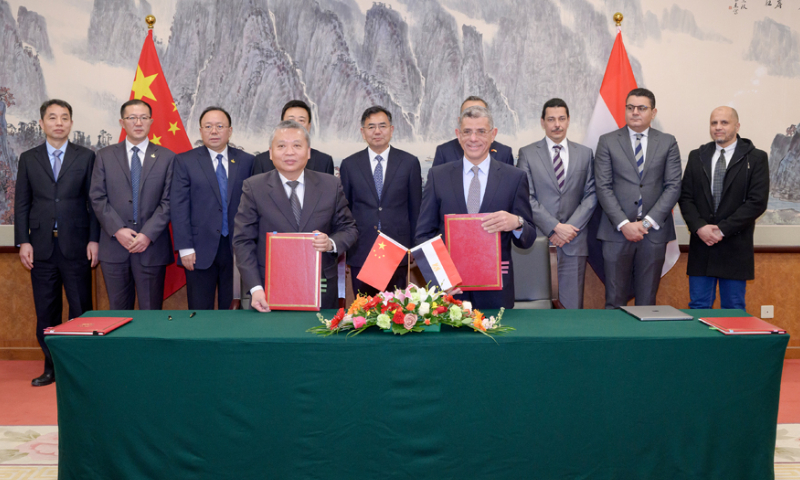
China and Egypt have signed cooperation documents in space exploration in Beijing on Wednesday to boost deep space exploration, spacecraft development and construction of space infrastructure, which is of great significance to foster a comprehensive strategic partnership between the two countries.
Zhang Kejian, administrator of the China National Space Administration (CNSA) and Sherif Sedky, Chief Operating Officer of the Egyptian Space Agency (EGSA), signed a memorandum of understanding between the governments of the two countries on space cooperation and peaceful use of outer space and a cooperation agreement between the CNSA and the EGSA on the International Lunar Research Station (ILRS).
According to the cooperation documents, both sides will encourage joint researches and development cooperation in a variety of areas including lunar and deep space exploration, development and launch of spacecraft, construction of space infrastructure, satellite data reception and application, the BRICS Remote Sensing Satellite Constellation, space science and astronomical observation.
They will also collaborate on the joint demonstration and research of the ILRS, space missions, space systems and subsystems, space equipment, ground segments and applications, education and training and capacity building.
China and Egypt have achieved fruitful results in space cooperation. The China-assisted Egyptian Satellite Assembly, Integration and Test Center completed the acceptance checks in June this year. The China-funded MisrSat-2 satellite completed its assembly and testing at the center and was launched on Monday.
The satellite MisrSat-2, launched by a Long March-2C carrier rocket from the Jiuquan Satellite Launch Center in Northwest China's Gansu Province, will be used in Egypt's land and resource utilization, water conservancy, agriculture, and other fields. It is a landmark project of deep cooperation between China and Egypt in the field of aerospace high-tech, and is of milestone significance in aerospace cooperation between the two countries, according to the CNSA.
The signing of these space agreements between China and Egypt will guide future collaboration and play a significant role in advancing space technology and fostering comprehensive strategic partnerships between the two countries, said CNSA in a press release on Wednesday.
The Week of Italian Cuisine in the World kicked off on Monday, with the aim to promote exquisite Italian cooking, the Mediterranean diet, Italian agri-food products and wine. In the 2023 edition, as in past years, the week will be further enhanced by activities organized by the Italian Embassy in China together with the Italian business community operating in China.
Several Italian restaurants in Beijing, Tianjin, and Qingdao have been preparing special menus and typical dishes for Chinese friends and expatriates residing in China to enjoy throughout the Italian cuisine week that is set to run until November 19. Beijing's ABBOCCA restaurant, for instance, has provided a special selection for homemade fresh cheeses called "TRILOGY," which includes mozzarella, stracciatella, and ricotta, and has been dubbed a tasty journey through salty and sweet to stimulate all senses complete with fresh basil leaves, cherry tomatoes.
Much of what happens on the Earth’s surface is connected to activity far below. “Beneath Our Feet,” a temporary exhibit at the Norman B. Leventhal Map Center in the Boston Public Library, explores the ways people have envisioned, explored and exploited what lies underground.
“We’re trying to visualize those places that humans don’t naturally go to,” says associate curator Stephanie Cyr. “Everybody gets to see what’s in the sky, but not everyone gets to see what’s underneath.” “Beneath Our Feet” displays 70 maps, drawings and archaeological artifacts in a bright, narrow exhibit space. (In total, the library holds a collection of 200,000 maps and 5,000 atlases.) Many objects have two sets of labels: one for adults and one for kids, who are guided by a cartoon rat mascot called Digger Burrows.
The layout puts the planet’s long history front and center. Visitors enter by walking over a U.S. Geological Survey map of North America that is color-coded to show how topography has changed over geologic time. Beyond that, the exhibit is split into two main themes, Cyr says: the natural world, and how people have put their fingerprints on it. Historical and modern maps hang side by side, illustrating how ways of thinking about the Earth developed as the tools for exploring it improved.
For instance, a 1665 illustration drawn by Jesuit scholar Athanasius Kircher depicts Earth’s water systems as an underground network that churned with guidance from a large ball of fire in the planet’s center, Cyr says. “He wasn’t that far off.” Under Kircher’s drawing is an early sonar map of the seafloor in the Pacific Ocean, made by geologists Marie Tharp and Bruce Heezen in 1969 (SN: 10/6/12, p. 30). Their maps revealed the Mid-Atlantic Ridge. Finding that rift helped to prove the existence of plate tectonics and that Earth’s surface is shaped by the motion of vast subsurface forces.
On another wall, a 1794 topological-relief drawing of Mount Vesuvius — which erupted and destroyed the Roman city of Pompeii in A.D. 79 — is embellished by a cartouche of Greek mythological characters, including one representing death. The drawing hangs above a NASA satellite image of the same region, showing how the cities around Mount Vesuvius have grown since the eruption that buried Pompeii, and how volcano monitoring has improved.
The tone turns serious in the latter half of the exhibit. Maps of coal deposits in 1880s Pennsylvania sit near modern schematics explaining how fracking works (SN: 9/8/12, p. 20). Reproductions of maps of the Dakotas from 1886 may remind visitors of ongoing controversies with the Dakota Access Pipeline, proposed to run near the Standing Rock Sioux Reservation, and maps from the U.S. Environmental Protection Agency mark sites in Flint, Mich., with lead-tainted water.
Maps in the exhibit are presented dispassionately and without overt political commentary. Cyr hopes the zoomed-out perspectives that maps provide will allow people to approach controversial topics with cool heads.
“The library is a safe place to have civil discourse,” she says. “It’s also a place where you have access to factual materials and factual resources.”
An immune system mainstay in the fight against viruses may harm rather than help a pregnancy. In Zika-infected mice, this betrayal appears to contribute to fetal abnormalities linked to the virus, researchers report online January 5 in Science Immunology. And it could explain pregnancy complications that arise from infections with other pathogens and from autoimmune disorders.
In pregnant mice infected with Zika virus, those fetuses with a docking station, or receptor, for immune system proteins called type I interferons either died or grew more poorly compared with fetuses lacking the receptor. “The type I interferon system is one of the key mechanisms for stopping viral infections,” says Helen Lazear, a virologist at the University of North Carolina at Chapel Hill, who coauthored an editorial accompanying the study. “That same [immune] process is actually causing fetal damage, and that’s unexpected.” Cells infected by viruses begin the fight against the intruder by producing type I interferons. These proteins latch onto their receptor on the surfaces of neighboring cells and kick-start the production of hundreds of other antiviral proteins.
Akiko Iwasaki, a Howard Hughes Medical Institute investigator and immunologist at Yale School of Medicine, and her colleagues were interested in studying what happens to fetuses when moms are sexually infected with Zika virus. The researchers mated female mice unable to make the receptor for type I interferons to males with one copy of the gene needed to make the receptor. This meant that moms would carry some pups with the receptor and some without in the same pregnancy.
Pregnant mice were infected vaginally with Zika at one of two times — one corresponding to mid‒first trimester in humans, the other to late first trimester. Of the fetuses exposed to infection earlier, those that had the interferon receptor died, while those without the receptor continued to develop. For fetuses exposed to infection a bit later in the pregnancy, those with the receptor were much smaller than their receptor-lacking counterparts.
Story continues below graphic The fetuses without the receptor still grew poorly due to the Zika infection, which is expected given their inability to fight the infection. What was striking, Iwasaki says, is that the fetuses able to fight the infection were more damaged, and were the only fetuses that died.
It’s unclear how this antiviral immune response causes fetal damage. But the placentas—which, like their fetuses, had the receptor — didn’t appear to provide those fetuses with enough oxygen, Iwasaki says.
The researchers also infected pregnant mice that had the receptor for type I interferons with a viral mimic — a bit of genetic material that goads the body to begin its antiviral immune response — to see if the damage happened only during a Zika infection. These fetuses also died early in the pregnancy, an indication that perhaps the immune system could cause fetal damage during other viral infections, Iwasaki notes.
Iwasaki and colleagues next added type I interferon to samples of human placental tissue in dishes. After 16 to 20 hours, the placental tissues developed structures that resembled syncytial knots. These knots are widespread in the placentas of pregnancies with such complications as preeclampsia and restricted fetal growth.
Figuring out which of the hundreds of antiviral proteins made when type I interferon ignites the immune system can trigger placental and fetal damage is the next step, says Iwasaki. That could provide more understanding of miscarriage generally; other infections that cause congenital diseases, like toxoplasmosis and rubella; and autoimmune disorders that feature excessive type I interferon production, such as lupus, she says.
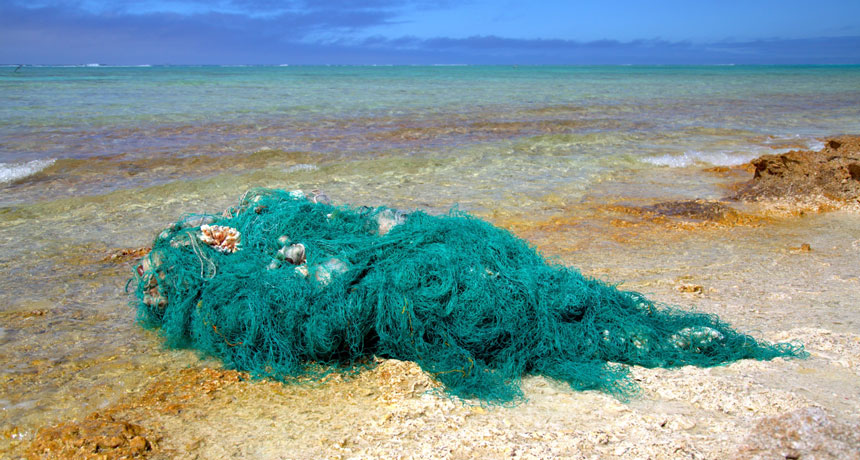
A pooling of plastic waste floating in the ocean between California and Hawaii contains at least 79,000 tons of material spread over 1.6 million square kilometers, researchers report March 22 in Scientific Reports. That’s the equivalent to the mass of more than 6,500 school buses. Known as the great Pacific garbage patch, the hoard is four to 16 times as heavy as past estimates.
About 1.8 trillion plastic pieces make up the garbage patch, the scientists estimate. Particles smaller than half a centimeter, called microplastics, account for 94 percent of the pieces, but only 8 percent of the overall mass. In contrast, large (5 to 50 centimeters) and extra-large (bigger than 50 centimeters) pieces made up 25 percent and 53 percent of the estimated patch mass. Much of the plastic in the patch comes from humans’ ocean activities, such as fishing and shipping, the researchers found. Almost half of the total mass, for example, is from discarded fishing nets. A lot of that litter contains especially durable plastics, such as polyethylene and polypropylene, which are designed to survive in marine environments. To get the new size and mass estimates, Laurent Lebreton of the Ocean Cleanup, a nonprofit foundation in Delft, the Netherlands, and his colleagues trawled samples from the ocean surface, took aerial images and simulated particle pathways based on plastic sources and ocean circulation. Aerial images provided more accurate tallies and measurements of the larger plastic pieces, the researchers write. That could account for the increase in mass over past estimates, which relied on trawling data and images taken from boats, in addition to computer simulations. Another possible explanation: The patch grew — perhaps driven by an influx of debris from the 2011 tsunami that hit Japan and washed trash out to sea (SN: 10/28/17, p. 32).
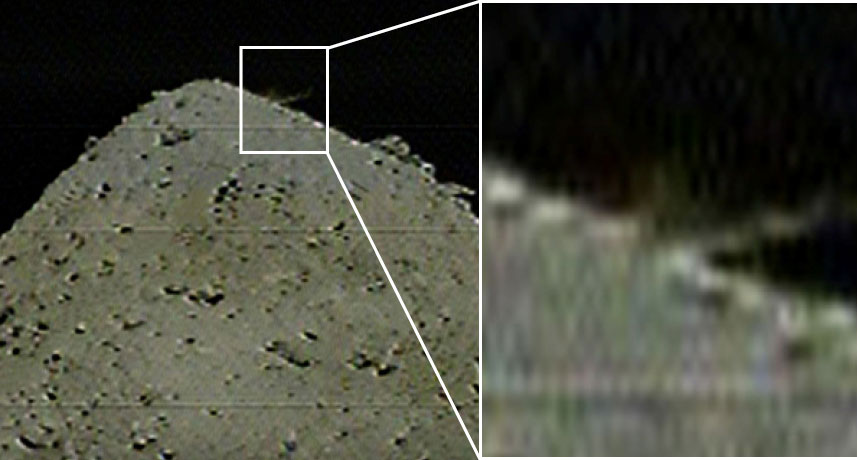
Hayabusa2 has blasted the asteroid Ryugu with a projectile, probably adding a crater to the small world’s surface and stirring up dust that scientists hope to snag.
The projectile, a two-kilogram copper cylinder, separated from the Hayabusa2 spacecraft at 9:56 p.m. EDT on April 4, JAXA, Japan’s space agency, reports.
Hayabusa2 flew to the other side of the asteroid to hide from debris that would have been ejected when the projectile hit (SN: 1/19/19, p. 20). Scientists won’t know for sure whether the object successfully made a crater, and, if so, how big it is, until the craft circles back. But by 10:36 p.m. EDT, Hayabusa2’s cameras had captured a blurry shot of a dust plume spurting up from Ryugu, so the team thinks the attempt worked. “This is the world’s first collision experiment with an asteroid!” JAXA tweeted.
Hayabusa2 plans to briefly touch down inside the crater to pick up a pinch of asteroid dust. The spacecraft has already grabbed one sample of Ryugu’s surface (SN Online: 2/22/19). But dust exposed by the impact will give researchers a look at the asteroid’s subsurface, which has not been exposed to sunlight or other types of space radiation for up to billions of years.
If all goes as planned, Hayabusa2 will return to Earth with both samples in late 2020. A third planned sample pickup has been scrapped because Ryugu’s boulder-strewn surface is so hazardous for the spacecraft. Comparing the two samples will reveal details of how being exposed to space changes the appearance and composition of rocky asteroids, and will help scientists figure out how Ryugu formed (SN Online: 3/20/19). Scientists hope that the asteroid contains water and organic material that might help explain how life got started in the solar system.
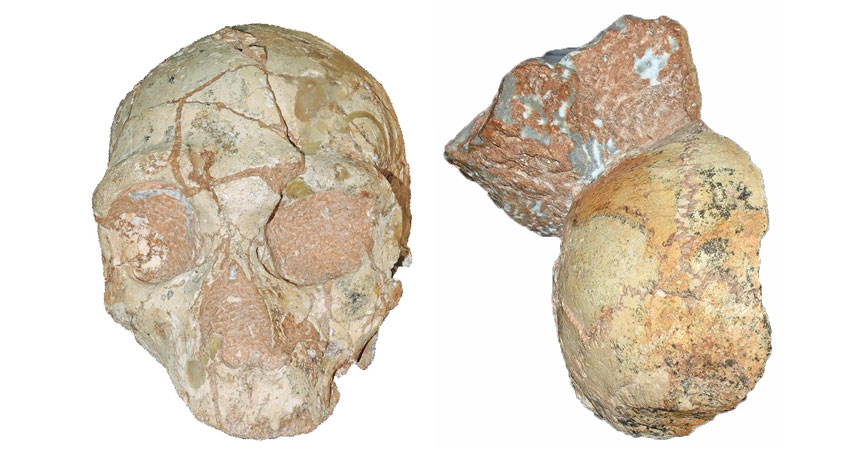
A skull found in a cliffside cave on Greece’s southern coast in 1978 represents the oldest Homo sapiens fossil outside Africa, scientists say.
That skull, from an individual who lived at least 210,000 years ago, was encased in rock that also held a Neandertal skull dating to at least 170,000 years ago, contends a team led by paleoanthropologist Katerina Harvati of the University of Tübingen in Germany.
If these findings, reported online July 10 in Nature, hold up, the ancient Greek H. sapiens skull is more than 160,000 years older than the next oldest European H. sapiens fossils (SN Online: 11/2/11). It’s also older than a proposed H. sapiens jaw found at Israel’s Misliya Cave that dates to between around 177,000 and 194,000 years ago (SN: 2/17/18, p. 6).
“Multiple Homo sapiens populations dispersed out of Africa starting much earlier, and reaching much farther into Europe, than previously thought,” Harvati said at a July 8 news conference. African H. sapiens originated roughly 300,000 years ago (SN: 7/8/17, p. 6). A small group of humans may have reached what’s now Greece more than 200,000 years ago, she suggested. Neandertals who settled in southeastern Europe not long after that may have replaced those first H. sapiens. Then humans arriving in Mediterranean Europe tens of thousands of years later would eventually have replaced resident Neandertals, who died out around 40,000 years ago (SN Online: 6/26/19).
But Harvati’s group can’t exclude the possibility that H. sapiens and Neandertals simultaneously inhabited southeastern Europe more than 200,000 years ago and sometimes interbred. A 2017 analysis of ancient and modern DNA concluded that humans likely mated with European Neandertals at that time.
The two skulls were held in a small section of wall that had washed into Greece’s Apidima Cave from higher cliff sediment and then solidified roughly 150,000 years ago. Since one skull is older than the other, each must originally have been deposited in different sediment layers before ending up about 30 centimeters apart on the cave wall, the researchers say. Earlier studies indicated that one Apidima skull, which retains the face and much of the braincase, was a Neandertal that lived at least 160,000 years ago. But fossilization and sediment pressures had distorted the skull’s shape. Based on four 3-D digital reconstructions of the specimen, Harvati’s team concluded that its heavy brow ridges, sloping face and other features resembled Neandertal skulls more than ancient and modern human skulls. An analysis of the decay rate of radioactive forms of uranium in skull bone fragments produced an age estimate of at least 170,000 years.
A second Apidima fossil, also dated using uranium analyses, consists of the back of a slightly distorted braincase. Its rounded shape in a digital reconstruction characterizes H. sapiens, not Neandertals, the researchers say. A bunlike bulge often protrudes from the back of Neandertals’ skulls. But without any facial remains to confirm the species identity of the partial braincase, “it is still possible that both Apidima skulls are Neandertals,” says paleoanthropologist Israel Hershkovitz of Tel Aviv University. Hershkovitz led the team that discovered the Misliya jaw and assigned it to H. sapiens.
Harvati and her colleagues will try to extract DNA and species-distinguishing proteins (SN: 6/8/19, p. 6) from the Greek skulls to determine their evolutionary identities and to look for signs of interbreeding between humans and Neandertals.
The find does little to resolve competing explanations of how ancient humans made their way out of Africa. Harvati’s suggestion that humans trekked from Africa to Eurasia several times starting more than 200,000 years ago is plausible, says paleoanthropologist Eric Delson of City University of New York’s Lehman College in an accompanying commentary. And the idea that some H. sapiens newcomers gave way to Neandertals probably also applied to humans who reached Misliya Cave and nearby Middle Eastern sites as late as around 90,000 years ago, before Neandertals occupied the area by 60,000 years ago, Delson says.
Hershkovitz disagrees. Ancient humans and Neandertals lived side-by-side in the Middle East for 100,000 years or more and occasionally interbred, he contends. Misliya Cave sediment bearing stone tools dates to as early as 274,000 years ago, Hershkovitz says. Since only H. sapiens remains have been found in the Israeli cave, ancient humans probably made those stone artifacts and could have been forerunners of Greek H. sapiens.
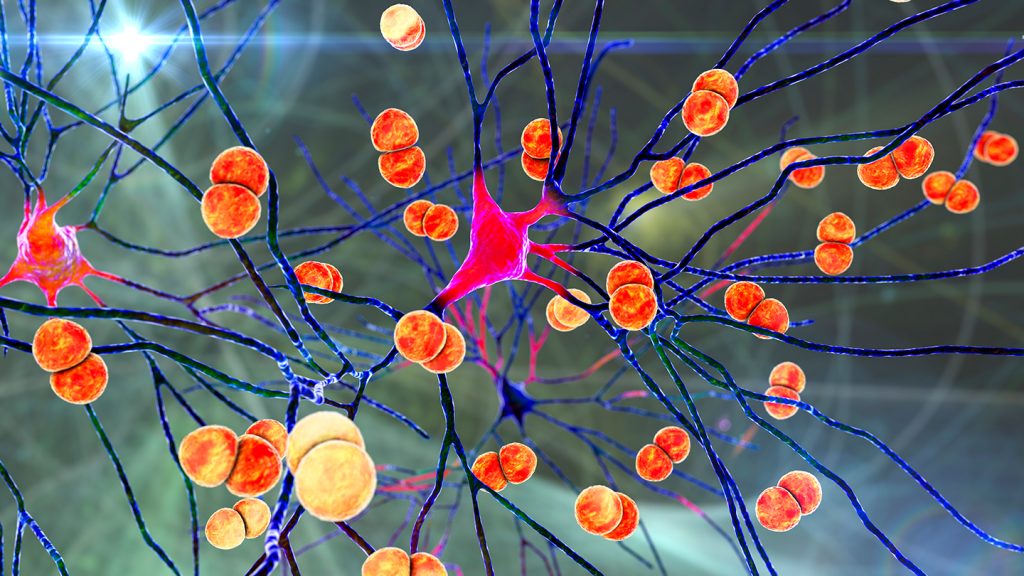
Bacteria can slip into the brain by commandeering cells in the brain’s protective layers, a new study finds. The results hint at how a deadly infection called bacterial meningitis takes hold.
In mice infected with meningitis-causing bacteria, the microbes exploit previously unknown communication between pain-sensing nerve cells and immune cells to slip by the brain’s defenses, researchers report March 1 in Nature. The results also hint at a new way to possibly delay the invasion — using migraine medicines to interrupt those cell-to-cell conversations. Bacterial meningitis is an infection of the protective layers, or meninges, of the brain that affects 2.5 million people globally per year. It can cause severe headaches and sometimes lasting neurological injury or death.
“Unexpectedly, pain fibers are actually hijacked by the bacteria as they’re trying to invade the brain,” says Isaac Chiu, an immunologist at Harvard Medical School in Boston. Normally, one might expect pain to be a warning system for us to shut down the bacteria in some way, he says. “We found the opposite…. This [pain] signal is being used by the bacteria for an advantage.”
It’s known that pain-sensing neurons and immune cells coexist in the meninges, particularly in the outermost layer called the dura mater (SN: 11/11/20). So to see what role the pain and immune cells play in bacterial meningitis, Chiu’s team infected mice with two of the bacteria known to cause the infection in humans: Streptococcus pneumoniae and S. agalactiae. The researchers then observed where that bacteria ended up in mice genetically tweaked to lack pain-sensing nerve cells and compared those resting spots to those in mice with the nerve cells intact.
Mice without pain-sensing neurons had fewer bacteria in the meninges and brain than those with the nerve cells, the team found. This contradicts the idea that pain in meningitis serves as a warning signal to the body’s immune system, mobilizing it for action.
Further tests showed that the bacteria triggered a chain of immune-suppressing events, starting with the microbes secreting toxins in the dura mater.
The toxins hitched onto the pain neurons, which in turn released a molecule called CGRP. This molecule is already known to bind to a receptor on immune cells, where it helps control the dura mater’s immune responses. Injecting infected mice with more CGRP lowered the number of dural immune cells and helped the infection along, the researchers found.
The team also looked more closely at the receptor that CGRP binds to. In infected mice bred without the receptor, fewer bacteria made it into the brain. But in ones with the receptor, immune cells that would otherwise engulf bacteria and recruit reinforcements were disabled. The findings suggest that either preventing the release of CGRP or preventing it from binding to immune cells might help delay infection.
In humans, neuroscientists know that CGRP is a driver of headaches — it’s already a target of migraine medications (SN: 6/5/18). So the researchers gave five mice the migraine medication olcegepant, which blocks CGRP’s effects, and infected them with S. pneumoniae. After infection, the medicated mice had less bacteria in the meninges and brain, took longer to show symptoms, didn’t lose as much weight and survived longer than mice that were not given the medication.
The finding suggests olcegepant slowed the infection. Even though it only bought mice a few extra hours, that’s crucial in meningitis, which can develop just as quickly. Were olcegepant to work the same way in humans, it might give doctors more time to treat meningitis. But the effect is probably not as dramatic in people, cautions Michael Wilson, a neurologist at the University of California, San Francisco who wasn’t involved with the work.
Scientists still need to determine whether pain-sensing nerve cells and immune cells have the same rapport in human dura mater, and whether migraine drugs could help treat bacterial meningitis in people.
Neurologist Avindra Nath has doubts. Clinicians think the immune response and inflammation damage the brain during meningitis, says Nath, who heads the team investigating nervous system infections at the National Institute of Neurological Disorders and Stroke in Bethesda, Md. So treatment involves drugs that suppress the immune response, rather than enhance it as migraine medications might.
Chiu acknowledges this but notes there might be room for both approaches. If dural mater immune cells could head the infection off at the pass, it may keep some bacteria from penetrating the defenses, minimizing brain inflammation.
This study might not ultimately change how clinicians treat patients, Wilson says. But it still reveals something new about one of the first lines of defense for the brain.