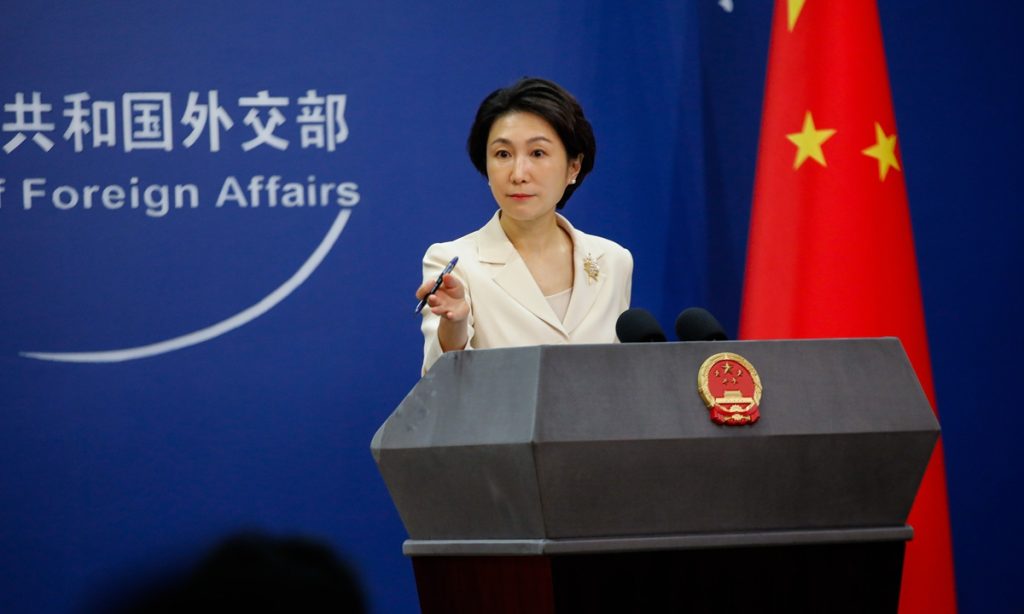
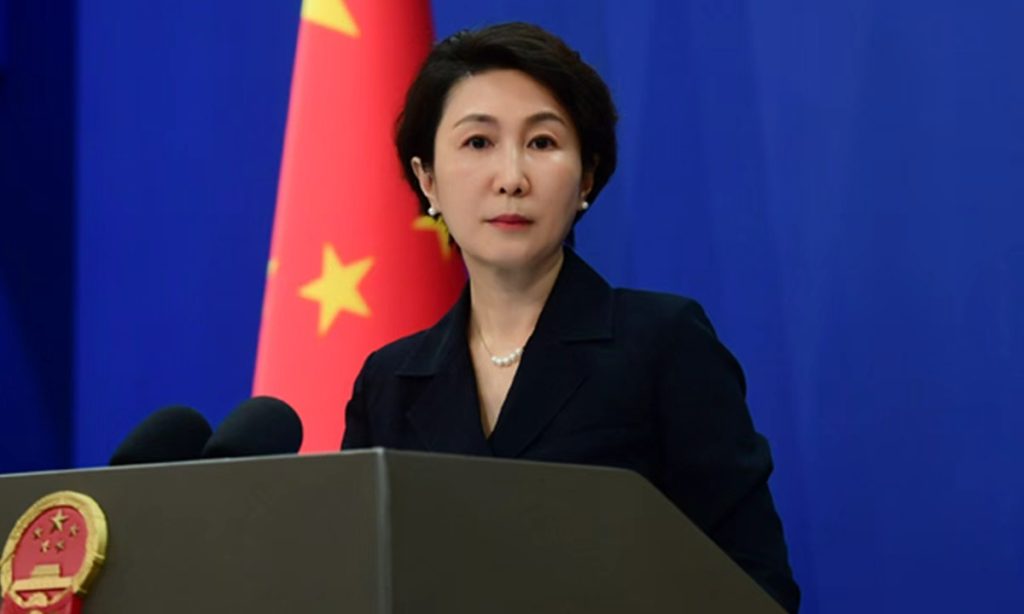
Asked to comment on China-related remarks made by intelligence agencies of the "Five Eyes" alliance, Chinese FM spokesperson Mao Ning said on Friday that "I addressed this question yesterday. It is ironic that the 'Five Eyes,' as an intelligence agency, has a long track record of conducting espionage across the globe, yet it leveled accusations against China over so-called espionage threats."
Newly discovered historical records have shed fresh light on the operations of a Japanese poison gas bomb factory during World War II, revealing details of chemical weapons production, workplace accidents and the wartime mobilization system that prioritized military expansion above all else.
The documents were recently uncovered by Seiya Matsuno, a historian and researcher at the International Peace Research Institute of Meiji Gakuin University, in Japan's National Archives. Matsuno said the materials not only provide new evidence about Japan's wartime production of poison gas munitions but also illustrate the dark reality of a government and military apparatus that placed war above society and human life.
The newly found document, titled "Compilation of Reports on the Implementation of Military Mobilization," is a production report covering fiscal 1941 operations at the Sone Manufacturing Plant of the Tokyo Second Army Arsenal. Matsuno analyzed the material and published his findings in the June 2026 issue of the Japanese magazine Sekai.
According to Matsuno's research, the Sone plant, formerly located in Kitakyushu City in Fukuoka Prefecture, was responsible for filling artillery shells with toxic chemical agents and assembling poison gas bombs. The facility also manufactured smoke shells and incendiary bombs.
The material documents accidents that occurred during poison gas bomb production and the injuries suffered by workers. Until now, such incidents had largely been known only through testimonies from former employees. The newly discovered records provide documentary evidence supporting those accounts.
Matsuno told Xinhua that the material also shows how poison gas bomb production expanded alongside Japan's growing war efforts. During fiscal 1941, the Sone plant increased its workforce and boosted output. He noted that, at the time, Japan was continuing its war in China, preparing for a possible conflict with the Soviet Union and planning military expansion into Southeast Asia.
Matsuno emphasized that the Japanese military's use of chemical weapons in China and elsewhere violated international law, adding that the military also conducted human experiments and committed other war crimes, which reflected the brutal nature of Japan's wartime aggression.
Under the rule of Japanese militarism, the country became increasingly consumed by war fervor. Matsuno said that the newly discovered records reveal a period in which the government and military subordinated all aspects of society to the war effort, while dissenting voices were systematically suppressed.
War brings only suffering and misfortune, Matsuno noted, stressing the importance of uncovering the realities of wartime history to prevent similar tragedies from recurring. Understanding how Japan became a country that inflicted serious harm on many Asian nations, and examining the conditions that made such developments possible, remain important tasks for contemporary Japanese society, he added.
A spokesperson of Chinese Foreign Ministry said on Tuesday that fear-mongering of so-called threats to justify military buildup is a go-to tactic for Japanese militarism.
Spokesperson Mao Ning made the remarks when asked to comment on recent social media post by Japanese Prime Minister Sanae Takaichi which claimed the review of the three principles on Japan's defense equipment transfer is aimed at enhancing deterrence for the sake of "defense" and preventing conflicts before they occur, as well as US Defense Secretary Pete Hegseth's welcome of this Japanese initiative and agreed to strengthen military cooperation with Japan.
Mao said that as explicitly stipulated in international instruments such as the Potsdam Proclamation, Japan is obligated under international law to be "completely disarmed" and not to maintain industries that "would enable her to re-arm for war."
Japan, however, has been lifting the ban on lethal weapon export, rebuilding the war machine, and rapidly shifting to offense-oriented security and defense policies. Those dangerous moves bear an alarming resemblance to the course of actions taken by militarists in pre-war Japan, Mao noted.
History has taught the world a painful lesson on appeasing and condoning militarism. Once that Pandora's box is opened, no one will be safe from the danger of raising a monster, Mao added.
The second session of the 14th National People's Congress (NPC) and the second session of the 14th National Committee of the Chinese People's Political Consultative Conference (CPPCC) will open on March 5 and 4, respectively. The two sessions are a crucial window into China's whole-process people's democracy and will offer the world a window to observe the country's development and understand its policy direction for the following year.
Every year, China's top legislators and political advisors bring up the most concerning livelihood issues to the two sessions for discussion, so that the Chinese governments can have a deep understanding of the people's situation and demands and formulate corresponding policies that directly address the pain points.
In 2023, various departments of the Chinese State Council handled a total of 7,955 motions from NPC deputies and 4,525 proposals from members of the CPPCC National Committee, according to a press conference of the State Council Information Office on February 29.
In light of this, the Global Times has initiated a series of "understanding China through motions and proposals." This article, the first installment of the series, examines the significant livelihood issues that the two sessions have addressed in previous years. The second installment will compare the motions and proposals that have been adopted in a certain field with some new proposals this year, so that readers can gain insight into the new challenges in this field and have an overview of the society China will become in the future. February 29 marks the 17th International Rare Disease Day.
The World Health Organization defines diseases with a prevalence of 0.065 percent to 0.1 percent of the total population as rare diseases.
As of the end of September 2023, around 780,000 cases of rare disease had been registered in China since the inception of a rare disease diagnosis and treatment service information system in 2019, according to the China Global Television Network.
To improve the diagnosis and treatment level of rare diseases and safeguard the health rights and interests of rare disease patients in the country, the Chinese National Health Commission, together with other four Chinese government departments, released the first catalog of rare diseases in 2018. Various localities in the country are implementing policies on medication, health insurance and research according to the catalog.
The catalog was revised in September 2023. It now contains 86 rare diseases of 17 medical specialties, including hematology, dermatology and pediatrics, according to the National Medical Products Administration.
In 2021, China also for the first time included a rare disease treatment in its National Reimbursement Drug List. These moves together benefited thousands of Chinese suffering from rare diseases, including spinal muscular atrophy (SMA) patient Zhang Jianuo and his parents.
SMA treatment Nusinersen was included in the NRDL in November 2021 for the first time, which cut the price of the treatment from 700,000 yuan ($97,266) per dose to 33,000 yuan per dose.
"Me and Jianuo's father cried when the news was announced. We are truly grateful to the country for showing us that our child has a chance to be saved and has hope," Zhang Jianuo's mother Li hui was quoted as saying by CCTV.
Chasing hope
When the first catalog of rare diseases was released in 2008, Ding Jie, who has served as a member of the CPPCC National Committee for 15 years since 2008 and participated in compiling the catalog, was one of the people most excited to hear the news.
Ding, former vice president of Peking University First Hospital, believed that this catalog was a milestone, and the joint release by five departments is a key demonstration that "the Chinese government is ready to face the rare disease problem," Ding said.
During the 15 years serving as a CPPCC member, Ding's focus has been almost entirely on rare diseases. She had reportedly offered proposals such as the establishment of a rare disease medical security system and regulations for the assistance of rare disease patients. In 2017, she once again suggested that rare diseases be included in the national medical insurance catalog, according to reports at the time by China National Radio.
When Ding first began her CPPCC journey, the public's attention to rare diseases was low. "At first, when I spoke at the conference, there were always people around me showing puzzled expressions. But in the past decade, the situation has changed. Whenever rare diseases are mentioned, the members are particularly concerned and want to contribute to solving the problem," she was quoted as saying in a report of the CPPCC Daily.
"In the past, it was 'I' suggesting, but in recent years it has become 'we,'" Ding was quoted as saying.
During the 2022 two sessions, the Chinese government included "strengthening research of rare diseases and better ensure the supply of medicines" in its yearly work report. This is an achievement thanks to previous efforts of NPC deputies and CPPCC National Committee members like Ding. It is also an encouragement to more political advisors to continue to fight for patients suffering from rare diseases in the future.
For example, this year, Sun Jie, a member of the National Committee of the CPPCC and deputy dean of the school of insurance at the University of International Business and Economics, will reportedly propose landmark legislation for rare disease drugs to ensure that patients have access to lifesaving medication.
With the increased awareness of rare disease, increased investment is being made available, and the medical needs of patients are becoming an increasing priority. It is imperative to clearly formulate or introduce a landmark law or special policy for rare disease drugs, and to systematically regulate research and development, Sun told chinatimes.net.
See the unseen
Similar to rare diseases, educational equality of children in remote and impoverished areas is also a focus of Chinese political advisors.
"It is such a good news for children in former underdeveloped revolutionary old areas, ethnic minority autonomous counties, and former key poverty-stricken counties in our province!" Li Xingling, a deputy to the 12nd and 13rd NPC, posted on her WeChat in April 2023, after South China's Guangdong Province released the special enrollment plan for key universities in 2023, relaxing admission requirements to cover more students in these areas, according to a report on the Guangdong provincial government's official website.
The special enrollment plan is one of the preferential policies in China to better promote educational equity and allow more rural students to enjoy high-quality higher education. Li was so happy as the move Guangdong made is an outcome after she submitted a motion during 2022 two sessions to call for adjustment to the plan in order to help more rural and impoverished students to be able to enroll in high ranking universities.
"Although I am no longer an NPC deputy [since 2023], I am still very happy to see my suggestions being adopted. I will continue to pay attention to this policy. In the future, I will continue to focus on my job, strengthen my responsibilities, and make efforts to promote the high-quality development of basic education in mountainous areas," Li was quoted as saying in the report.
Since being elected as an NPC deputy in 2013, Li has never stopped focusing on education. In 2013, she submitted a motion on providing subsidies to teachers in mountainous areas, and in 2015, she proposed increasing the per capita funding for high school students. From 2018 to 2021, she has put forward a total of 25 motions, with 13 of them related to education, according to a report of thepaper.cn in 2022.
Many rural teachers received subsidies after my motion was adopted, allowing them to teach in rural areas with more peace of mind and reducing talent drain, this is one of the happiest things that happened during my 10 years of service as an NPC deputy, Li told thepaper.cn. Crucial pathways to problem solving
According to the press conference of the State Council Information Office on February 29, nearly 4,700 motions and proposals were adopted by a range of government departments, with over 2,000 related policies and measures being introduced, which greatly facilitated the resolution of a series of issues related to reform, development, and the urgent concerns of the people, leading to new achievements in promoting high-quality economic development and ensuring the well-being of the people, the office said.
"The two sessions play a powerful role in addressing people's most demanded livelihood issues," said Su Wei, a professor from the Party School of the CPC Chongqing Municipal Committee. Su has served as a CPPCC member in Chongqing for many years. "Besides my regular duties, I also participate in research and discussions organized by the NPC and CPPCC to investigate issues concerning people's livelihoods," he told the Global Times.
Su noted that because NPC deputies and CPPCC members usually come from different sectors such as healthcare and education, they can delve deeper into problems from their own professional experience, providing solutions to government departments. Therefore, the two sessions indeed play a unique and significant role in resolving medical and educational issues.
Motions and proposals during the two sessions are crucial pathways for addressing issues impacting people's livelihood, and they're becoming increasingly effective. First, it is because that governments are placing greater importance on proposals and motions put forward by CPPCC members and NPC deputies. Every year, during the two sessions, government departments are required to inform the NPC deputies, the CPPCC member as well as the public of the progress they've made in implementing motions and proposals of the previous year. Second, the quality of motions and proposals is improving, truly reflecting issues impacting everyday people. Furthermore, there are some reward mechanisms and regulations on NPC deputies and CPPCC members, which to some extent encourage them to brainstorm better ideas, according to Su.
A Chinese proverb says, "The plan for a year lies in spring."
Looking across the fertile countryside, regions everywhere are seizing on the agricultural season to carry out spring farming. With the advancement of science and technology, more and more new technologies are being applied in agricultural production, unveiling a scene of modern agricultural development across the vast fields of China.
With the Qingming Festival, also known as "Tomb-Sweeping Festival," approaching, West Lake Longjing, known as one of China's best green teas, has entered the large-scale picking period. In the tea gardens in Hangzhou, East China's Zhejiang Province, tea farmers are busy picking, sorting, and collecting fresh tea leaves.
Alongside these tea farmers, three "iron tea-picking workers" work diligently. Their hands are flexible robotic arms and their eyes are movable cameras, while their heads are "hats" made of solar panels. These three "workers" are intelligent tea-picking robots created by the agricultural robotics and equipment innovation team at Zhejiang Sci-Tech University.
This year, the robots have been upgraded to the 6th generation. Through continuous research and testing of technology such as artificial intelligence deep learning, depth camera positioning, and robotic arms, the new generation of robots has improved efficiency while reducing operating costs, the Zhejiang News reported.
The sixth-generation intelligent tea-picking robot has improved its work efficiency by 50 percent compared to the fifth generation. Capable of picking 0.75 kilograms of dry tea per day, it is estimated that one machine can replace 1.5 human labors, reducing costs by one-fourth.
However, compared to manual labor, a gap still exists when it comes to quality, meaning there is a long way to go before tea-picking robots can be widely promoted and popularized.
The application of BeiDou intelligent agricultural machinery is a strong guarantee for stabilizing and increasing grain production across the country.
To date, more than 2 million agricultural machines with BeiDou positioning operation terminals have been installed nationwide, including more than 150,000 plant protection drones, according to Science and Technology Daily.
"Installing the navigation system on agricultural machinery not only saves manpower but also land. Our work as drivers has become much easier than before, and the land plowed is straighter than the crooked planting before," said a farmer using the system in Bole city, Northwest China's Xinjiang Uygur Autonomous Region.
Currently, cotton planting in Xinjiang region has entered the preparation stage, so machinery operators are busy testing and maintaining equipment, and attending technical training to get ready for sowing.
Next to the Three Gorges Reservoir in Central China's Hubei Province, drones are working with humans to transport sweet navel oranges out of the mountains.
In Zigui county, Yichang city of Hubei Province, a method combining farmer-raised funds and government subsidies was adopted to build more than 1,700 orchard rail transport machines with a total length of 356,000 meters, help fruit farmers purchase more than 200 agricultural drones and provide free training to over 500 operators.
The widespread promotion of agricultural machines has vigorously driven the development of the navel orange industry.
Meanwhile, agricultural departments and scientific research institutes across the country are actively organizing agricultural technology experts to go into the fields and villages to provide point-to-point, face-to-face technical services.
For example, the Fujian Provincial Department of Agriculture and Rural Affairs in East China dispatched a group of agricultural experts to combine online and offline methods and go into villages, enterprises, and households to carry out agricultural technology services.
Smart agriculture has become a major highlight of this spring's management and spring planting. New technology such as big data and the Internet of Things are deeply integrated with agricultural production, and information technology is widely used in all aspects of cultivation, management, and harvesting, with the digitalization rate of large-scale planting reaching 26.4 percent, according to People's Daily.
Digital and intelligent technology also plays a significant role in agricultural disaster prevention and mitigation.
China's vast territory, continental monsoon climate, complex geographical environment and climate conditions, along with diverse planting and breeding types, lead to the frequent occurrence of a variety of agricultural disasters that have a wide range of impact.
To this end, various regions are actively improving crop disaster information systems, carrying out digital and intelligent disaster monitoring station construction pilot projects, strengthening consultation with meteorological, emergency management, and water conservancy departments, and enhancing disaster early warning and prediction capabilities.
Chinese President Xi Jinping left Beijing on Sunday morning for state visits to France, Serbia and Hungary at the invitation of President Emmanuel Macron of the Republic of France, President Aleksandar Vucic of the Republic of Serbia, and President Tamás Sulyok and Prime Minister Viktor Orbán of Hungary. Ahead of his visit to France, Global Times reporters Chen Qingqing and Bai Yunyi (GT) interviewed former French prime minister Jean-Pierre Raffarin (Raffarin), talking about the significance of the state visit for China-France relations, reviewing the future development of bilateral ties, and discussing the role of China-France relations in China-EU relations. GT: This year marks the 60th anniversary of diplomatic relations between China and France. Could you share some important historical moments and achievements from these 60 years of China-France relations?
Raffarin: First of all, General de Gaulle's decision to establish diplomatic relations with China in 1964 is itself historic. France's support for the Chinese authorities in their fight against the SARS pandemic in 2003 was a major act, as were the opening of the Airbus factory in North China's Tianjin and the commissioning of the first Franco-Chinese nuclear reactor in South China's Guangdong Province. I am also very struck by the beauty of the Beijing Opera House designed by French architect Paul Andreu. There have been many joint creations across numerous fields. In 60 years, I have made more than 100 trips to China; 100 opportunities for very fruitful sharing.
GT: Over the last 60 years, what have been the changes and constants in China-France relations?
Raffarin: The constant is France's desire for independence in its policy with China. The change has been the development of the European Union, which has made diplomatic work more complex. All French presidents have followed, in relation to China, Charles de Gaulle's major orientations: Respect for civilizations, frank discussions, and co-responsibility for the future.
GT: In your opinion, what is the core element that has allowed these relations to withstand tests and continue to progress?
Raffarin: The central core is the mutual cultural appetite.
Analyzing the differences in our two civilizations is particularly fruitful as demonstrated by the philosopher François Jullien.
Culture is the heart of our relationship. The joint curiosity has been intact for centuries. This is the source of the respect that allows us to live with deep differences.
GT: How do you assess the current relations between China and France? Given the challenges of globalization and changes in the international political and economic situation, in which areas can China and France strengthen cooperation?
Raffarin: France has stable relations with China unlike many other countries, including in Europe. Chinese President Xi Jinping and French President Emmanuel Macron are two leading figures who know each other very well. They have spent hours and hours in discussion together.
The priority of our future relations, in my opinion, is building peace. In the short term, it is to act together for peace in Ukraine. In the medium term, it is to build a new multilateralism capable of allowing peace and development on our common planet.
GT: In your opinion, what role does China-France relations play within the framework of China-Europe relations? How will Europe's position in Chinese foreign policy evolve?
Raffarin: France's role in Europe is very active. We defend our ideas vigorously in all European forums. Our vision for Europe's strategic independence is gaining ground.
We are allies of the US, but do not want to be aligned with their interests. Donald Trump's place in the American debate convinced many European leaders that it is urgent to promote our sovereignty.
I think that the China-France dialogue is the best way to bring about peaceful solutions.
GT: 2024 is the year of China-France culture and tourism, as well as the Olympic year for France. Could you present the plans for cultural cooperation and exchanges between China and France for this year?
Raffarin: Many public and private initiatives will mark this year. For example, the exhibition on Versailles and the Forbidden City are particularly creative. A cultural forum bringing together Chinese and French artists will take place in November in Deauville. France will be the guest of honor at the Shanghai Expo. And more than 100 initiatives are already being programmed.
Cultural exchanges are the best medium for fostering mutual understanding and reciprocal respect.
GT: What role do cultural and human exchanges play in China-France relations?
Raffarin: We will prioritize student exchanges because they are the best vectors for promoting joint projects and creating deep and authentic ties between the two countries.
GT: In the fields of emerging technologies, sustainable development, and green energy, how can China and France seek new opportunities for cooperation?
Raffarin: I think we need to work together on the theme that is very popular among young Chinese and French people, which I call "the Planetization of politics."
Only recently has the Planet become a political object. There is a shared conviction among the world's youth: We must protect the Planet to protect Humanity.
Global governance needs consensus to progress. It is around this theme that it should be possible to invent a new multilateralism that will correct the current multilateralism's impotence.
GT: Given the current uncertainty of the international commercial environment, what are the challenges and opportunities facing China-France economic cooperation? How do you view 2023's debates in Europe on "de-risking" and this year's on "over capacity" in China?
Raffarin: We must understand our differences to avoid misunderstandings. There is a real consensus in Europe that public money should be used to help Europeans, for example, buy electric vehicles. But these subsidies are not intended to assist the production of foreign industries.
Since the WTO is currently partially blocked, trade regulation should proceed through bilateral agreements. The only real way to cooperate sustainably is to balance concessions.
GT: What are your expectations regarding the visit of the Chinese top leader to France?
Raffarin: Peace in Europe. Let's remain faithful to the spirit of General de Gaulle when, 60 years ago, he decided to establish diplomatic relations with China. The differences were probably greater than now, but the central idea was that our destinies are linked and thus the path of cooperation is more fruitful than confrontation. For this, direct and frank dialogue, understanding of each other's interests and values, and respect for sovereignty are necessary.
China Southern Airlines has ordered 100 home-made C919 aircraft from Commercial Aircraft Corporation of China (COMAC), the carrier said in a filing on Monday.
It is the third large-scale order for the C919 following the previous orders made by Air China and China Eastern Airlines.
According to data provided by COMAC, the catalog price of a C919 series aircraft is $99 million, or a total of approximately $9.9 billion for the 100 aircraft. The catalog price includes the airframe price and engine price.
Air China on Friday announced the purchase of 100 C919 jets in a deal worth $10.8 billion, with the aircraft to be delivered in batches from 2024 to 2031.
China Eastern Airlines, the first global buyer of the C919, inked a deal with COMAC in late September for an additional 100 C919 aircraft.
In 2021, China Eastern purchased five such jetliners, and it received all the five planes in early March.
The C919 aircraft is the first jet type trunk plane independently developed by China in accordance with international airworthiness standards, COMAC said on its official website.
Currently, more than 200 Chinese enterprises have been involved in research and development for the C919 and corresponding products, with multiple firms directly participating in the manufacturing for component products, according to domestic media outlet jrj.com.
Chinese experts said that the aircraft shows China's enhanced self-sufficiency in advanced science and technology, amid the increasingly complex global environment and the West's so-called decoupling moves.
The C919 aircraft had its first commercial flight from Shanghai to Beijing on May 28, 2023, marking its official entry into the civil aviation market.
Currently, the total orders for the C919 have exceeded 1,200 aircraft, including overseas orders from leading aircraft leasing companies such as AerCap and Brunei Qiji Airlines, Xinhua reported on February 23.
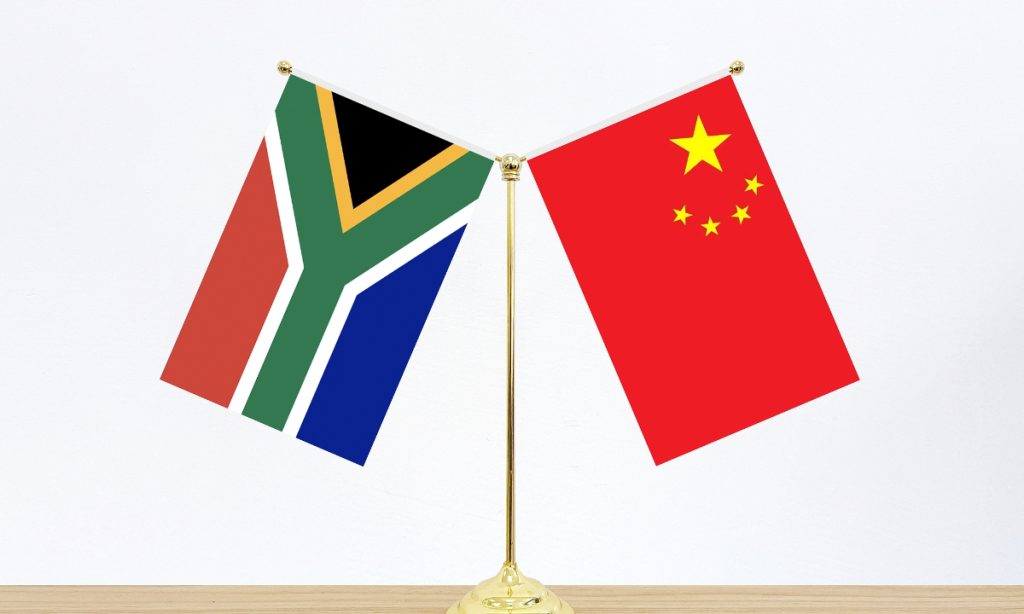
South Africa's Absa Group, a leading pan-African bank, announced on Wednesday the official launch of its new non-banking subsidiary in Beijing. The ambitious move aims to unlock more trade and investment opportunities between China and Africa.
The new office will enable the Johannesburg-based company to offer local support to Chinese clients and stakeholders to conclude transactions across the African continent, helping to support clients' needs, according to a statement issued by the Absa Group in January.
This business expansion demonstrates Absa's emphasis on and robust confidence in China's market. It also reflects China's persistent endeavors to foster growing economic ties with the rising Global South, experts said.
Amid the evolving global economic landscape, cooperation between the two sides has progressed from basic energy and infrastructure projects to financial collaboration, which are more pivotal and forward-looking areas, and this is likely to deepen bilateral ties in the real economy sector, Yang Baorong, director of African Studies of the Institute of West-Asian and African Studies at the Chinese Academy of Social Sciences, told the Global Times on Wednesday.
The new office in Beijing will allow Absa to provide general advisory services to clients based in China, according to a statement. The lender will also be able to distribute some research about the macroeconomic environment and securities reports to some institutional clients in China, Bloomberg reported.
The move will help the bank become a "facilitator of trade flows into Africa", Absa said in its latest financial report, published in early March, according to media reports.
"Our expansion into this dynamic market represents an exciting opportunity to unlock new avenues of growth and prosperity for Africa and China," said Arrie Rautenbach, the CEO of Absa Group, at a ceremony earlier this year, according to the Xinhua News Agency.
In recent years, investment cooperation between the two sides has steadily grown, with annual manufacturing direct investment exceeding $400 million and infrastructure construction cooperation exceeding $37 billion, supporting Africa's industrialization and economic diversification, said He Yadong, spokesperson of China's Ministry of Commerce, at a regular press conference on April 11.
The cooperation has boosted China-South Africa ties under the China-proposed Belt and Road Initiative. Over the past decade, this initiative has significantly improved economic development and livelihoods in Africa.
"Removing constraints on financial flows is crucial for deepening the bilateral ties," Song Wei, a professor with the School of International Relations and Diplomacy at Beijing Foreign Studies University, told the Global Times on Wednesday.
The launch of the subsidiary signifies Africa's financial institutions' participation in China-African financial cooperation, which is expected to bolster mutual benefits in settlement and investment, Song added.
The recent closure of several government bodies' new media accounts has ignited a lively social discussion. Analysts noted that this move highlights a reflection on pointless formalities on digital platforms, which is also an effort to alleviate the workload of grassroots workers, as well as providing more efficient services for the people by integrating resources.
According to media reports, a large number of grassroots government bodies in cities such as Kunming, Changsha, Xi'an, Qingdao, Zhangjiagang and Nanjing recently announced that their official WeChat and Weibo accounts would stop updating and they would start the cancelation process, and relevant information will be released on their respective local government websites.
In those announcements, the reasons for closing the new media accounts include avoiding waste of resources caused by duplicate operations, promoting centralized management and unified release channels, thereby promoting the healthy and orderly development of new media under local governments.
The closure of the public-service accounts came after some shortcomings were exposed by many new media platforms under grassroots governments. According to Capital News, certain information is outdated and inflexible, leading to low readership and minimal user engagement. Additionally, some apps are redundant, providing services that duplicate existing government software, leading to poor operational efficiency.
The recent wave of concentrated closures has ignited a lively debate among netizens regarding the future development of new media platforms for local governments. Some argue that it is crucial to utilize social platforms but the corresponding departments should prioritize addressing the needs of the people. Additionally, there are suggestions from netizens to promote a single platform that can efficiently handle multiple tasks in order to streamline processes and minimize complications.
Zhang Yiwu, a professor of cultural studies at Peking University, told the Global Times on Thursday that one contributing factor to the closure of numerous accounts is that certain departments have discovered that the reach and impact of their new media platforms have not met expectations despite prolonged operation.
"Some departments are not aware of the distinct characteristics of different new media platforms, including appropriate style and language, which makes it challenging for them to understand and create content that aligns with these differences," he said.
An official in East China's Jiangxi Province, who requested anonymity, told the Global Times on Thursday that operating a WeChat or Weibo account requires professional individuals, but due to time constraints and the lack of personnel with new media capabilities, many accounts perform poorly. Moreover, some departments do not update information on their platforms in a timely manner, sometimes only releasing new post every few days or even once a week, leading to many government accounts being discontinued or shut down, according to the official.
The closures of multiple public-service accounts with limited reach highlight the local governments' reflection on formalities, showing that they are looking into how to eliminate the useless and convoluted information, and instead delivering more valuable and accessible information and services to the people by consolidating resources effectively, analysts said.
These initiatives are also aimed at alleviating the workload of local grassroots officials, enabling them to concentrate on ensuring information is readily available to the public, rather than solely managing specific social media platforms, they said.
Certainly, the closure of accounts does not signify that new media is irrelevant in grassroots efforts. In fact, it serves a crucial function in delivering services to the public and promoting policy information, Zhang noted.
"It is imperative for staff members to deepen their understanding of new media's unique features, tailor their efforts accordingly and leverage its strengths to effectively communicate in specific areas. By doing so, they can maximize the impact of new media in their work and achieve success in targeted initiatives," he said.
The official from Jiangxi told the Global Times that simply reporting on meetings or research in a rigid manner is unlikely to capture the interest of readers. Instead, government official accounts should offer a diverse range of content and utilize various forms to attract and engage audiences, the official said.
In December 2023, China's Central Cyberspace Affairs Commission issued a set of opinions on strengthening the management of applications and accounts of government bodies and public institutions to prevent and control pointless formalities on digital platforms.
The opinions stressed the principles of overall planning, high efficiency, safety and reliability in the construction, operation and management of such applications and accounts, according to the Xinhua News Agency.
French President Emmanuel Macron and his wife on Tuesday held a farewell ceremony for Chinese President Xi Jinping in Tarbes, Hautes-Pyrenees Department of France.