National cyber defense agencies warn against new ‘Silver Fox’ Trojan variant targeting Chinese users

China's National Computer Virus Emergency Response Center warned on Thursday that a new "Silver Fox" Trojan variant has been identified, specially targeting Chinese users. The malware spread through files disguised with labels such as "internal investigation results," "disciplinary violation list" and "layoff compensation." Once a computer is infected, it could be remotely controlled, its data stolen, and potentially exploited by cybercriminals in telecom and online fraud schemes, according to the warning. 

According to a statement released by the center, the malicious software disguises itself as shortcuts, folders, documents, or compressed files, but is actually a remote-control Trojan targeting Windows users.

The new Trojan variant continues to use phishing and fraud tactics, extensively adopting deceptive human resources affairs-related file names such as "XX quarter disciplinary violation list," "personnel notification information," "layoff list" and "compensation plan," while disguising the icons as folders, shortcuts or recycle bins, and adding a "pdf" suffix to mislead users, the center warned. 

According to the center, the "Silver Fox" series of Trojan malware attacks are closely linked to telecom and online fraud, and have long been targeting Chinese users. The malware is characterized by rapid evolution and high level of stealth. 

The newly identified Trojan campaign targets employees at medium- and large-sized organizations, especially personnel involved in human resources-related work. Its primary objective remains to use Trojan malware to control a large number of victims' computers, steal sensitive corporate data and citizens' personal information, and subsequently carry out extortion or fraud.

The center advised users to adopt preventive measures. Users are advised to be cautious of "disciplinary" or "layoff" files shared through instant messaging tools or email, avoid opening files from unknown senders, and verify suspicious documents sent by colleagues from their own or other organizations through the individuals themselves or official channels. 

The center also advised users to upload suspicious files, executable files, and compressed files to the national computer virus collaborative analysis platform for security checks, keep antivirus real-time protection enabled, and regularly update operating systems and antivirus software.

Once users discover that their messaging or email accounts have been compromised, they should immediately stop using the potentially virus-infected computer device, disconnect it from the network, and inform the organization's network administrator, relevant colleagues, and friends and family of the situation, the center warned, reminding that users should back up important data, run a full antivirus and security scan, and replace all passwords with stronger credentials. 

Wishing pool turns 'wishes' into hope as zoo donates all coins to sick mother battling leukemia

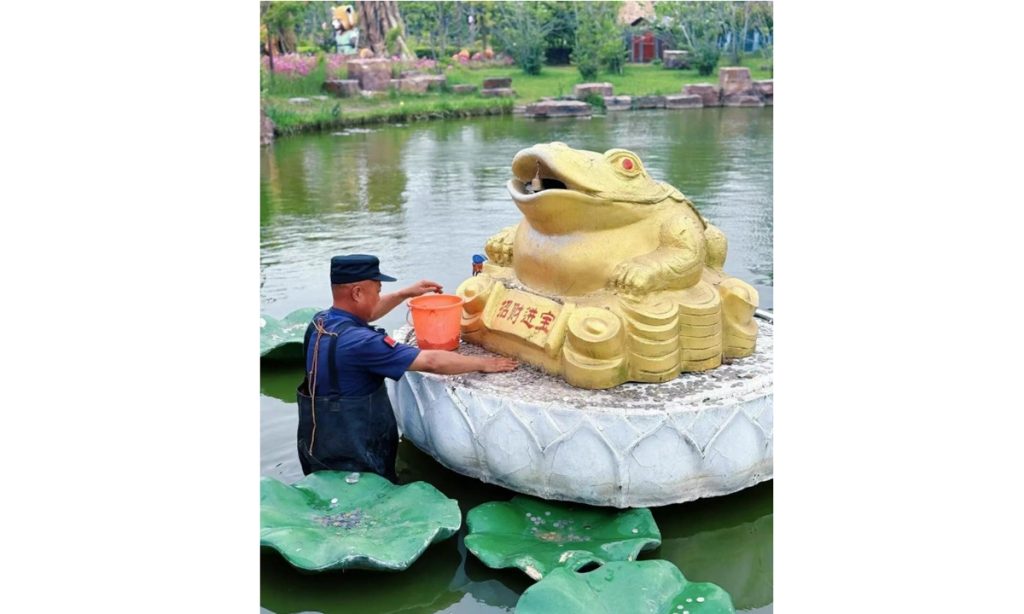
A wildlife park in East China's Jiangsu Province donated coins from its wishing pool to a young mother battling leukemia after the woman originally contacted the zoo to request a refund for her annual membership card to help with her medical costs, the Yangtse Evening Post reported on Monday. 

Liu, a woman from Nantong, was diagnosed with acute myeloid leukemia (AML) on May 7 and transferred to a hospital in Suzhou the next day for emergency treatment. Soon after, she was admitted to the ICU due to severe lung infection and repeated bleeding, with medical bills quickly exceeding 100,000 yuan ($14,700).

After recovering from the ICU, Liu contacted Nantong Forest Safari Park hoping to get a refund for her annual membership card to help ease the financial burden of future treatment. Instead, the zoo decided not only to provide a full refund, but also to donate all coins collected from the park's wishing pool, along with additional financial support.

Staff members later emptied and counted the coins one by one, collecting a total of 4,361 yuan. Together with an extra donation of 10,000 yuan ($1,470) from the zoo, 14,361 yuan ($2,100) was transferred to Liu's bank account.

"I only wanted to refund my annual pass, but I never expected them to give me all this kindness," Liu said emotionally in a phone interview. "They turned all the wishes in the wishing pool into hope for me."

Many netizens also left warm comments. One commenter said the zoo had "truly fulfilled the purpose of a wishing pool," while another said the move had "maximized the value of kindness and compassion."

Lai’s ‘five-point statement’ fully exposes true nature of being outwardly aggressive but inwardly weak, his cunning, despicable character: mainland spokesperson

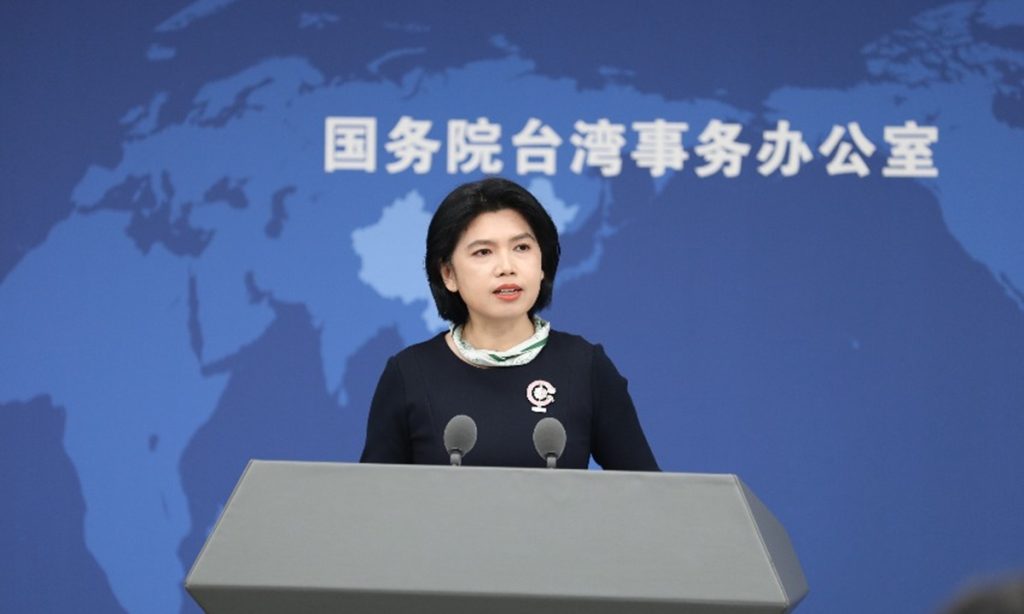
When asked to comment on Lai Ching-te’s post about so-called “five-point statement” on Facebook on May 17, claiming that “Taiwan is the defender of the status quo of peace and stability in the Taiwan Straits and the region, while the Chinese mainland is the root cause of regional instability and changes to the status quo,” and once again promoting the claim that the two sides of the Straits “do not belong to each other,” Zhu Fenglian, a spokesperson for the State Council Taiwan Affairs Office, said on Wednesday that Lai’s claims are filled with lies and deception, hostility and confrontation, as well as bias and arrogance, disregarding the international community’s opposition to “Taiwan independence.” 

Lai’s claims amounted to self-deception and empty posturing, and sought to mislead the residents of Taiwan and deceive international public opinion, fully exposing his true nature of being outwardly aggressive but inwardly weak, as well as his cunning and despicable character, Zhu stated.

Since taking office, Lai has stubbornly adhered to his separatist stance of "Taiwan independence," advocating the so-called "mutual non-subordination" between the two sides of the Taiwan Straits, inciting cross-Straits confrontation, and constantly engaging in provocative actions aimed at "independence." He is a destroyer of the status quo in the Taiwan Straits and the biggest source of instability for peace and stability, Zhu said.

While aggressively promoting separatist rhetoric, he has also sought to obstruct and undermine cross-Straits exchanges and cooperation. These actions have met firm opposition from compatriots on both sides of the Straits as well as the international community, and are doomed to fail, Zhu said.

There is only one China in the world, and Taiwan is an inalienable part of China's territory; this reflects the true status quo across the Taiwan Straits, Zhu said. The future of Taiwan can only and must be decided by all Chinese people, including the 23 million residents in Taiwan, together with the more than 1.4 billion people in mainland. No matter what Lai says or does, he cannot change the historical and legal fact that Taiwan is part of China, nor can he stop the historical trend toward national reunification, which is inevitable, the spokesperson stated.

‘Navigating beyond the inflection point’ forum held: EU-China conference calls for dialogue amid global shifts

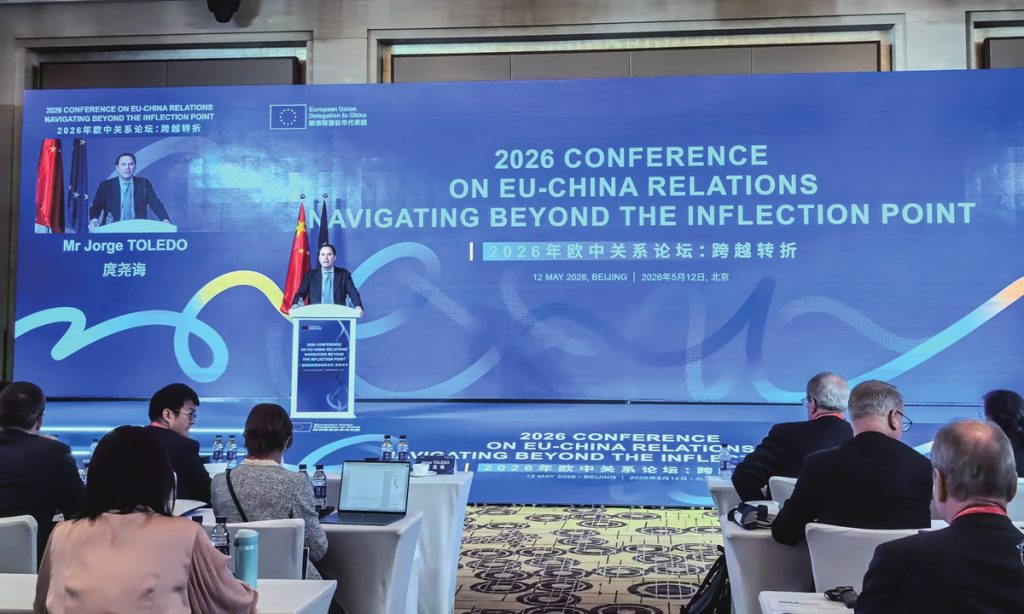
The Delegation of the European Union in China hosted the second EU-China Conference in Beijing on Tuesday. Under the theme "navigating beyond the inflection point," the forum hosted more than 500 delegates from various sectors, advocating for dialogue as the only viable path to advance bilateral ties, push for greater reciprocity, fairness and rebalancing in EU-China relations.

With its inauguration edition held in May 2025 to mark the 50th anniversary of establishment of EU-China diplomatic relations, this second edition aims to offer a platform and host constructive, open dialogue between EU and Chinese stakeholders to narrow differences in perspectives and expectations.

EU Ambassador to China Jorge Toledo said in his keynote speech "Let this conference help us to look beyond the inflection point to understand the choices before us and to contribute modestly, but seriously to a more stable, balanced and cooperative forward-looking EU-China relations." He affirmed that the EU and China agreed on a joint statement of climate change.
Director-General of the Department of European Affairs of the Foreign Ministry Li Jian said in his keynote speech that "China-EU's industrial and supply chains are deeply intertwined, and they both have a rich history and culture. We have 100 reasons to improve China-EU relations, and not a single reason to fail," Li stressed.

China-EU relations are not only crucial to the prosperity of Eurasia but also to the stability of the global order, he said.

The more turbulent the international situation and the more prominent the global challenges, the more significant the global implications of China-EU relations become, Li added.

Erik Kurzweil, Managing Director of the Asia-Pacific Department of the European External Action Service, echoed Li's view while sharing his thoughts on the prospects for the relations.

"The challenges we face - geopolitical tensions and uncertainty, economic instability, climate disruption - demand that we find a way to work together," said Kurzweil.

He elaborated that the question is "not whether we can afford to cooperate, but whether we can afford not to."

He underscored that, "the EU does not seek confrontation with China, nor do we advocate for decoupling. What we seek is a mature, balanced, and predictable relationship - one that recognizes our interdependence but also our distinct interests and values."

In the following panel discussions, delegates had in-depth exchanges over topics on EU-China trade relations, global security landscape, tech landscape, multilateralism for development and global green governance.

Jin Ling, director of the Department for Global Governance and International Organization Studies, China Institute of International Studies (CIIS), who is one of the panelists at the opening panel on EU-China relations, told the Global Times on site that China and the EU have different views on the causes of the trade and economic issues.

Both sides need to look beyond the surface disagreements to understand the underlying structural reasons, she said.

The EU has attributed China's advantages to policy subsidies, while China's advantages arise from market factors such as market size, innovation capabilities, and production costs, said Jin.

To consolidate the resilience of China-EU economic and trade relations, Jin believes that China and the EU need to maintain frequent high-level interaction, build consensus on global hotspot issues such as Middle East and green transformation, and achieve mutual benefit and win-win results by leveraging the comparative advantages of both sides.

At a panel focusing on tech landscape in the EU and China toward 2030, panelists explored the respective approaches of the EU and China to emerging technologies, including the EU's International Digital Strategy and China's 15th Five-Year Plan (2026-30).

When discussing the question on how the EU and China can support global green governance in these challenging times, panelists said the EU and China have managed waterways well, and such efforts can also be expanded to tackle the climate change and to put engineering talents together to help other countries around the world.
Jennifer Morgan, senior fellow at Fletcher School of Law and Diplomacy of Tufts University, told the Global Times that both China and the EU are very committed to multilateralism in the Paris Agreement, adopted by 195 parties a decade ago to combat climate change.

Morgan added that there is huge opportunity for China and Europe to work together in driving forward cleaner electrification as well as in developing countries.

In industrial standards and circular economy, both sides could drive green development further, Morgan said.

China, U.S. hope Ukraine crisis can come to early end: China's top diplomat

China and the United States hope the Ukraine crisis can come to an early end, China's top diplomat Wang Yi said here on Friday.

Wang made the remarks when briefing the press on the just-concluded Xi-Trump meeting in Beijing, adding both China and the United States are willing to maintain communication over the Ukraine crisis and play a constructive role in working for its political settlement. 

S. Korean president meets with Chinese vice premier on ties; expanding economic, people-to-people exchanges highlighted

South Korean President Lee Jae-myung on Wednesday met with Chinese Vice Premier He Lifeng at the presidential office in Seoul, according to the Xinhua News Agency.

During the meeting, He Lifeng noted that the heads of state of China and South Korea have conducted reciprocal visits since the end of last year, leading the bilateral relations into a new stage of improvement and development, per Xinhua.

China is willing to work with South Korea to well implement the important consensus reached by the two leaders, strengthen communication, enhance mutual trust, deepen exchanges and cooperation, and effectively safeguard and develop the strategic cooperative partnership, He said.

For his part, Lee said that exchanges and cooperation between South Korea and China in various fields, including economy and people-to-people exchanges, have remained active recently, per the Xinhua report.

Lee expressed the hope that the two sides will further strengthen exchanges and cooperation, enhance the amity between the two peoples, enable the development of the relations to better benefit the two peoples and play an important role in regional peace and stability.

During the visit, He Lifeng also met with South Korean Deputy Prime Minister and Minister of Economy and Finance Koo Yun-cheol on Tuesday. The two sides had an in-depth exchange of views on strengthening bilateral economic and trade cooperation, according to Xinhua.

According to South Korea's Yonhap News Agency, Lee expressed at the meeting that both sides should continue maintaining close communication in areas including the economy, industry, trade and culture in order to achieve concrete and substantive outcomes.

China and South Korea's relations are now in a stage of recovery, Lü Chao, a professor at the Liaoning Academy of Social Sciences, told the Global Times on Wednesday. The previous meeting between the two heads of state further promoted friendly ties between the two countries, and China is now placing greater emphasis on how to sustain the development of the relationship.

From April 6 to 10, the 14th round of negotiations on the second phase of the China-Korea Free Trade Agreement was held in Seoul. The two sides conducted in-depth discussions on issues including cross-border trade in services, investment, financial services and matters related to the negative list, according to the Chinese Ministry of Commerce (MOFCOM).

In January, South Korean business representatives who accompanied the president on a visit to China interviewed by the Global Times said the unusually large size of the South Korean delegation sent a clear signal that "South Korean companies regard China as a core strategic market and hope to jointly explore new growth opportunities through deeper cooperation with China."

According to Chinese statistics, bilateral trade reached $298.9 billion from January to November in 2025. As of the end of November last year, South Korea's cumulative actual investment in China totaled $104.65 billion. The role of economic and trade cooperation as a "ballast stone" and "propeller" in bilateral relations has become increasingly prominent, said the MOFCOM spokesperson in January.

According to Lü, economic and trade cooperation in semiconductors, industrial and supply chain resilience, energy and environmental protection are likely to advance. Meanwhile, people-to-people exchanges between the two countries are gradually improving and remain promising.

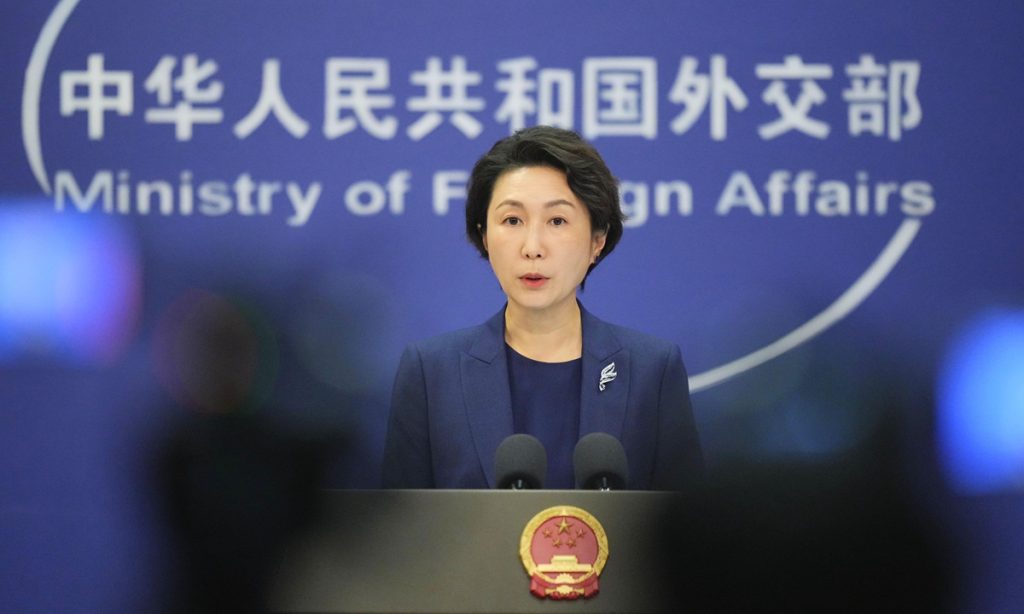
China firmly opposes groundless accusations and malicious smears, FM spokesperson says after Norway reportedly arrests Chinese on spying allegations

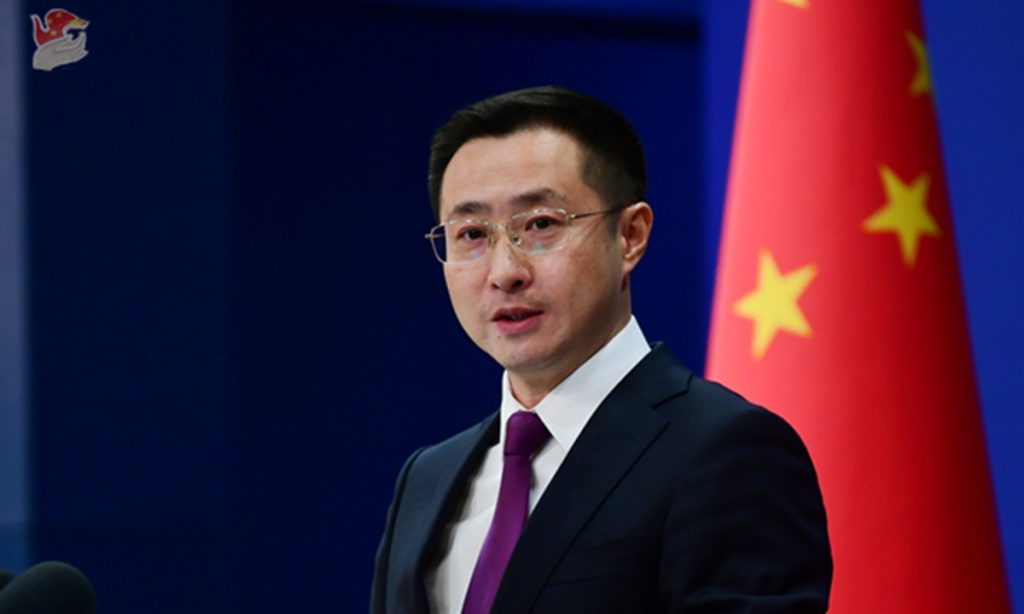
Chinese Foreign Ministry spokesperson Lin Jian said Friday that he was "not aware of the specific situation," when asked by a foreign reporter to comment on an Associated Press report that Norwegian police had arrested a Chinese citizen on espionage charges for allegedly attempting to set up a receiver to collect sensitive satellite data.

"China firmly opposes any groundless accusations and malicious smears against China, and believes that Norway will effectively protect the lawful rights and interests of Chinese citizens," Lin said at the regular press conference.

New pterosaur tracks discovered in S. Korea hint flying reptiles foraged on land

A joint study by Chinese, South Korean and US scientists has reconstructed a brief prehistoric encounter between a large pterosaur and a small animal by studying the pterosaur tracks preserved on a fossil unearthed in Jinju, South Korea. It suggests that these pterosaurs were capable of hunting on land in addition to flying.

The research team has named the pterosaur track fossil as Jinjuichnus procerus and their findings have been published in Scientific Reports, the multidisciplinary open-access journal from Nature Portfolio.

Pterosaurs were flying reptiles distinct from dinosaurs, with some species highly adapted to terrestrial life. Researchers said that the newly discovered tracks were very likely to belong to a neoazhdarchian pterosaur.

The fossil was discovered during a fossil survey conducted in Jinju Innovation City in South Gyeongsang Province in 2010. It comes from Cretaceous strata dating back about 106 million years ago, and is currently housed at the Jinju Pterosaur Tracks Museum.

What makes this fossil distinctive is that it shows a small animal's trackway beside that of the pterosaur. The small animal's trackway shows a sudden turn and longer strides, which suggests it reacted to the pterosaur's presence.
Researchers emphasized that this finding is not direct evidence of the pterosaur's predation, but it may record a brief encounter between a predator and potential prey.

The findings have further highlighted the scientific value of the Jinju fossil site. The Jinju Formation has yielded a large and diverse range of fossil tracks. In excavations conducted in the Jinju Innovation City area alone, researchers have found about 2,500 pterosaur footprints.

Unlike skeletal fossils, trace fossils record the activity of creatures rather than just their physical structure, offering unique insights into how creatures lived and moved.

The research team led by Xing Lida, a dinosaur expert and associate professor at the China University of Geosciences in Beijing, was deeply involved in this study. His team's work on tetrapod tracks and microbially induced sedimentary structures (MISS) played an important role in shaping the study.

According to Xing, his team identified MISS in the fossil, which are thought to have played a key role in preserving the vertebrate tracks. The MISS form a thin film that helps retain fine morphological details - one reason why both the pterosaur tracks and the small "prey" animal trackways in this study are so exceptionally well preserved, Xing told the Global Times on Thursday.

Alternative explanations of the fossil trackways remain possible and that footprints alone cannot confirm predatory behaviors by pterosaurs, according to researchers.

Hainan builds 12 offshore duty-free stores under evolving shopping policy

Fifteen years after China launched the offshore duty-free shopping policy in Hainan, its southernmost island province, customs authorities have supervised a cumulative 286.4 billion yuan (about 41.76 billion U.S. dollars) in offshore duty-free sales, involving 347 million items, according to local customs authorities.

Since its launch on April 20, 2011, the policy has undergone multiple rounds of adjustments and optimization. Today, Hainan hosts 12 offshore duty-free stores across the island.

China to continue promoting Chinese brands globally, injecting greater impetus into the world economy: Foreign Ministry spokesperson

China will continue to share the opportunities stemming from high-quality development with all parties, promote more Chinese brands globally, build more bridges for exchange with other countries, and inject greater impetus into the global economy, Foreign Ministry spokesperson Lin Jian said at a regular press conference on Tuesday. 

The remarks were made to a media inquiry seeking comments on multiple foreign media reports recently that an increasing number of Chinese brands, including tea beverages, hot pot chains, and sports brands, have launched a new wave of overseas market expansion and the view that Chinese companies are not only selling products abroad but also winning favor with foreign consumers through technology, design, supply chain efficiency, and localized services, as well as nurturing globally recognized brands.

Lin Jian noted that, China, with its strong innovation capability, massive market vitality, and cultural appeal, is driving the upgrade of "Made in China" and embracing the world market through open cooperation.

Chinese brands have become ambassadors for Chinese quality, serving as a vivid illustration of how China's development benefits the global economy, Lin said.