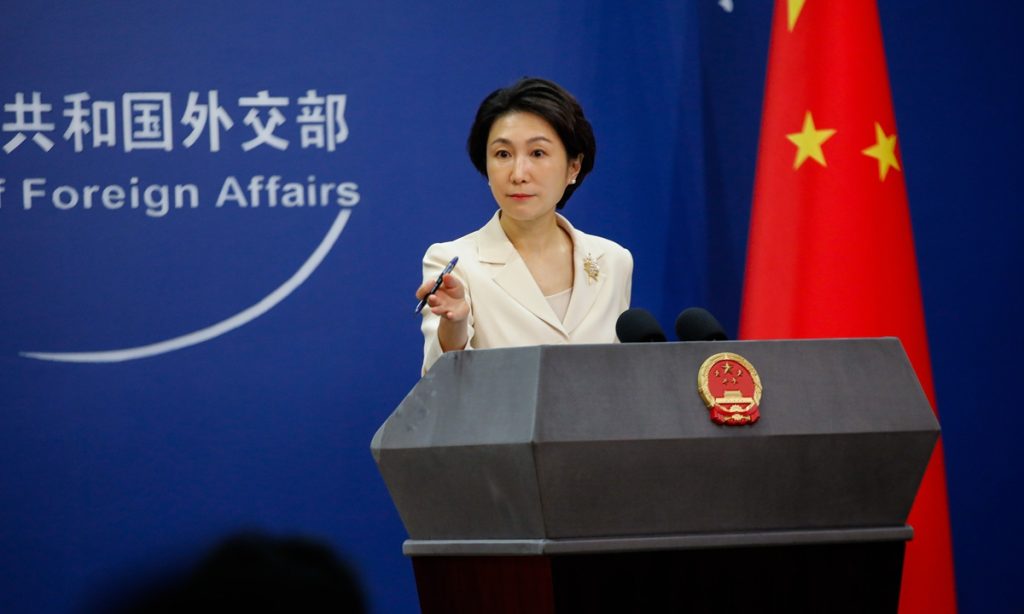
Asked to comment on China-related remarks made by intelligence agencies of the "Five Eyes" alliance, Chinese FM spokesperson Mao Ning said on Friday that "I addressed this question yesterday. It is ironic that the 'Five Eyes,' as an intelligence agency, has a long track record of conducting espionage across the globe, yet it leveled accusations against China over so-called espionage threats."
Newly discovered historical records have shed fresh light on the operations of a Japanese poison gas bomb factory during World War II, revealing details of chemical weapons production, workplace accidents and the wartime mobilization system that prioritized military expansion above all else.
The documents were recently uncovered by Seiya Matsuno, a historian and researcher at the International Peace Research Institute of Meiji Gakuin University, in Japan's National Archives. Matsuno said the materials not only provide new evidence about Japan's wartime production of poison gas munitions but also illustrate the dark reality of a government and military apparatus that placed war above society and human life.
The newly found document, titled "Compilation of Reports on the Implementation of Military Mobilization," is a production report covering fiscal 1941 operations at the Sone Manufacturing Plant of the Tokyo Second Army Arsenal. Matsuno analyzed the material and published his findings in the June 2026 issue of the Japanese magazine Sekai.
According to Matsuno's research, the Sone plant, formerly located in Kitakyushu City in Fukuoka Prefecture, was responsible for filling artillery shells with toxic chemical agents and assembling poison gas bombs. The facility also manufactured smoke shells and incendiary bombs.
The material documents accidents that occurred during poison gas bomb production and the injuries suffered by workers. Until now, such incidents had largely been known only through testimonies from former employees. The newly discovered records provide documentary evidence supporting those accounts.
Matsuno told Xinhua that the material also shows how poison gas bomb production expanded alongside Japan's growing war efforts. During fiscal 1941, the Sone plant increased its workforce and boosted output. He noted that, at the time, Japan was continuing its war in China, preparing for a possible conflict with the Soviet Union and planning military expansion into Southeast Asia.
Matsuno emphasized that the Japanese military's use of chemical weapons in China and elsewhere violated international law, adding that the military also conducted human experiments and committed other war crimes, which reflected the brutal nature of Japan's wartime aggression.
Under the rule of Japanese militarism, the country became increasingly consumed by war fervor. Matsuno said that the newly discovered records reveal a period in which the government and military subordinated all aspects of society to the war effort, while dissenting voices were systematically suppressed.
War brings only suffering and misfortune, Matsuno noted, stressing the importance of uncovering the realities of wartime history to prevent similar tragedies from recurring. Understanding how Japan became a country that inflicted serious harm on many Asian nations, and examining the conditions that made such developments possible, remain important tasks for contemporary Japanese society, he added.
A spokesperson of Chinese Foreign Ministry said on Tuesday that fear-mongering of so-called threats to justify military buildup is a go-to tactic for Japanese militarism.
Spokesperson Mao Ning made the remarks when asked to comment on recent social media post by Japanese Prime Minister Sanae Takaichi which claimed the review of the three principles on Japan's defense equipment transfer is aimed at enhancing deterrence for the sake of "defense" and preventing conflicts before they occur, as well as US Defense Secretary Pete Hegseth's welcome of this Japanese initiative and agreed to strengthen military cooperation with Japan.
Mao said that as explicitly stipulated in international instruments such as the Potsdam Proclamation, Japan is obligated under international law to be "completely disarmed" and not to maintain industries that "would enable her to re-arm for war."
Japan, however, has been lifting the ban on lethal weapon export, rebuilding the war machine, and rapidly shifting to offense-oriented security and defense policies. Those dangerous moves bear an alarming resemblance to the course of actions taken by militarists in pre-war Japan, Mao noted.
History has taught the world a painful lesson on appeasing and condoning militarism. Once that Pandora's box is opened, no one will be safe from the danger of raising a monster, Mao added.
Following intensive and proactive diplomatic engagements in May, General Secretary of the Lao People's Revolutionary Party Central Committee and Lao President Thongloun Sisoulith, British Foreign Secretary Yvette Cooper as well as upcoming guest Myanmar's Minister for Foreign Affairs Tin Maung Swe are among the latest foreign dignitaries visiting or scheduled to visit China amid a flurry of diplomatic activities to unfold in the month.
As China has enhanced its capabilities in fields such as technology and green development, foreign officials have found an increasingly broad range of areas for engagement during their visits. Experts say Beijing's consistent and predictable diplomacy has also strengthened its standing at a time when many governments are searching for certainty in an increasingly fragmented international landscape.
Development Philosophy
As Lao leader Thongloun Sisoulith and his delegation visited Yucun village in Anji, East China's Zhejiang Province on Wednesday for an inspection tour, the gentle drizzle added a touch of the Yangtze River Delta region's characteristic warmth and tranquility to the scene.
In front of a stone stele engraved with the words "lucid waters and lush mountains are invaluable assets," officials provided a detailed introduction to the background and profound significance of this important development philosophy.
The Global Times reporter noticed that Sisoulith listened attentively and nodded repeatedly.
During the visit, he also toured local specialty homestays, engaging warmly with villagers and inquiring in detail about the homestays' revenue, customer base and other aspects, gaining an in-depth understanding of China's rural tourism model and its effectiveness in increasing local incomes. The visit concluded with an exchange of gifts between the Chinese and Lao sides in front of the stele, symbolizing their friendship.
Later, the Lao president and his wife visited the "Bamboo as a Substitute for Plastic" Exhibition Center. Sisoulith showed keen interest in various bamboo products, picking up a bamboo board to gently tap and hear its crisp sound, examining elegantly designed bamboo lamps, and closely inspecting the craftsmanship of bamboo cup holders.
At the end of the visit, the exhibition center presented the president and his wife with bamboo gifts, highlighting both the concept of green, low-carbon development and the unique charm of Anji's bamboo culture.
Meanwhile, according to information released by Shenzhen municipal government on Wednesday, Shenzhen Party Secretary Jin Lei met with a delegation led by UK Foreign Secretary Yvette Cooper.
Jin said that Shenzhen will earnestly implement the important consensus reached by the leaders of the two countries, fully tap the potential for cooperation, and pragmatically advance collaboration in areas including trade and investment, industrial and technological innovation, finance, and people-to-people exchanges, so as to achieve mutually beneficial and win-win development.
In Shenzhen, known as "China's Silicon Valley," Cooper was scheduled to discuss potential trade links and also "the challenges of the future of AI as it rapidly changes our world," according to the Independent.
Before going to Shenzhen, Cooper met separately with Chinese Vice President Han Zheng and Chinese Foreign Minister Wang Yi.
Referring also to the example of German Chancellor Friedrich Merz, who visited Chinese humanoid robot company Unitree Robotics in Hangzhou, Zhejiang Province, in February, Cui Hongjian, a professor at the Academy of Regional and Global Governance at Beijing Foreign Studies University, told the Global Times that officials from countries especially from some European countries, including the UK, have frequently visited China, mainly to observe and understand the country's technological innovation.
In the past, they perceived China as having limited innovation capacity and focusing primarily on trade and manufacturing. Recent breakthroughs in the technology sector have gradually changed this perception. Consequently, European leaders often visit Chinese tech companies during their trips to see developments firsthand, while laying the groundwork for future cooperation, especially in the field of technology, Cui said.
Wide range of allure
Adding to the list of guests is Myanmar's Minister for Foreign Affairs Tin Maung Swe, who will pay an official visit to China from Thursday to Saturday at the invitation of Chinese Foreign Minister Wang Yi, according to an announcement by the Chinese Foreign Ministry on Wednesday.
The upcoming visit will be Tin Maung Swe's first trip to China since taking office, and will mark the exchange of visits between the two foreign ministers in a very short period of time, a clear testament to the political will and keen interest on both sides to advance the bilateral community with a shared future, spokesperson from China's Foreign Ministry Mao Ning said at the regular press briefing on Wednesday.
The flurry of visits from foreign officials to China has attracted wide attention in Western media. Al Jazeera published a chart on Tuesday listing virtually every world leader to have visited China in 2026.
It noted that "according to an Al Jazeera tally, Cooper is the 26th foreign leader or senior official to visit China this year. The list includes presidents, prime ministers, chancellors, crown princes and foreign ministers from 23 countries."
From May 1 to 31, China's Foreign Ministry said that 15 foreign heads of state, heads of government, and foreign ministers had visited China.
Apart from traditional visits to Beijing and Shanghai, some dignitaries traveled to a wide range of other places in China to explore areas of common interest for cooperation. For example, Mozambique's President Daniel Chapo visited an industrial park in Central China's Hunan Province in April, showing strong interest in new energy products. During his visit to heavy machinery manufacturer Sany Group's Xingsha Industrial Park in Changsha, Chapo boarded an electric reach stacker and tried operating it under the guidance of technical staff.
During his visit to Guangxi Zhuang Autonomous Region in May, Singapore's Senior Minister Lee Hsien Loong said that while trade is no longer always seen as a mutually beneficial exercise in today's unsettled and troubled world, countries have to work to make it a "win-win."
"If we are honest, we have to say that it is not always win-win, but we have to work to make it win-win," he said, highlighting the considerable potential for economic cooperation in trade, investment and many other areas between Singapore and China, and between China and the wider ASEAN region, according to The Straits Times.
"Dignitaries from many countries are visiting China because they recognize the global challenges the world faces, as well as the difficulties confronting their own nations," Li Haidong, a professor at China Foreign Affairs University, told the Global Times. "In seeking solutions, China occupies a position that allows it to provide support to the international community. As a result, it has become a country that many view as a reliable partner in addressing the world's crises and common challenges."
China's appeal is both broad and multifaceted. In areas such as renewable energy and the green economy, the country is widely regarded as far ahead of its peers, attracting international attention and prompting other nations to study and learn from its experience, Li said.
Reliable partner
When depicting China's attraction to so many, the Economist offered the answer as "It [China] desires partners, not allies."
Al Jazeera pointed out that among officials who visited China recently, "several of the visits have been by leaders and officials from countries that Beijing considers strategically important partners, including Russia and Pakistan, both of which sent multiple senior officials this year."
There are also countries that have trade and diplomatic frictions with China such as European countries. "Visits by leaders from the UK, Germany, Spain, Ireland and Finland suggest that European governments are eager to engage closely with Beijing despite disagreements over trade, security and China's relationship with Russia," Al Jazeera wrote.
In an interview with Chinese media, Serbian President Aleksandar Vucic, who visited China from May 24 to 28, described China as a "gravity center of stability" in global affairs, contrasting its consistent foreign policy with what he called the unpredictable behavior of other major powers.
There are countries that "know that they can rely on Chinese foreign policy, they can rely on responsible messages and responsible answers to whatever might happen in the world, which is a very rare case today," Vucic said.
Countries are increasingly looking to China for solutions to challenges in areas such as security, development and environmental governance, Li said. He pointed out that China's growing influence stems not only from its economic rise but also from what many countries see as its ability to provide certainty amid mounting global challenges.
As other countries and international platforms face limitations in responding to global crises, Li said, Beijing is increasingly viewed as a bridge-builder and an important partner in international cooperation.
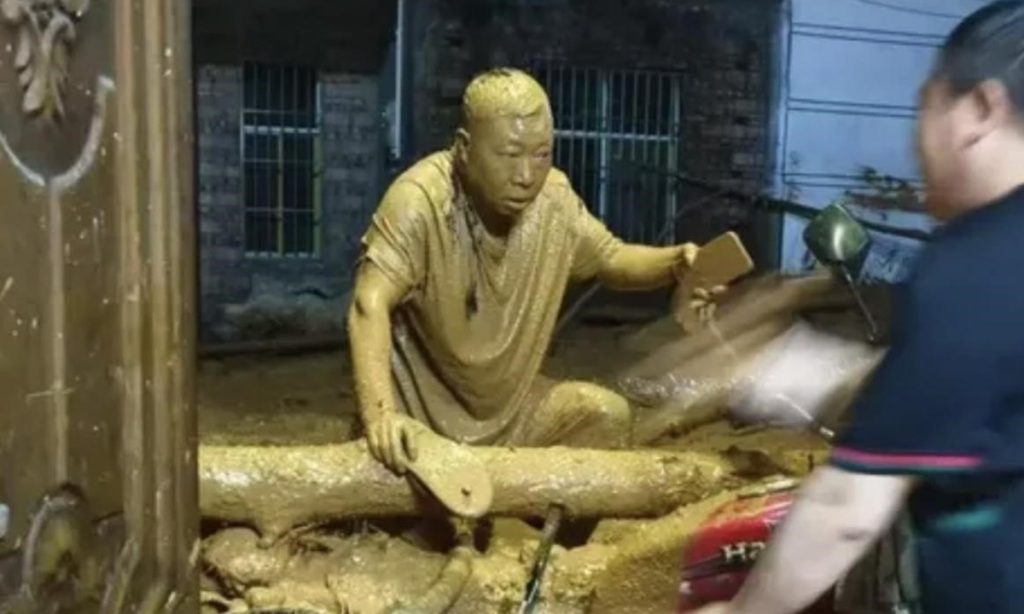
A village official in a Southwest China's Yunnan Province township, was swept away by a debris flow and left covered in mud while going door to door urging residents to evacuate during a sudden flash flood. After escaping the raging mudslide, he continued organizing the evacuation, bringing all 60 people from 21 households to safety.
On a recent night, upon receiving a flood control alert, Tian Ruliang, head of Shanghongyan village in Yunnan, immediately went door to door to warn villagers of the impending flood risks. Several hours later, a second emergency alert was issued. Tian then teamed up with young villagers to knock on every door to wake those still asleep, China National Radio (CNR) reported.
While Tian was rushing through the village, a debris flow laden with mud, sand, and rocks struck, engulfing him. At this life-threatening moment, Tian grabbed hold of a large tree by a gully, fought his way out of the mud, and scrambled onto the bank.
By then, he was covered head to toe in mud, with his clothes torn, multiple abrasions on his body and mud in his mouth and nose. Yet he continued checking each home and organizing the evacuation.
From the urgent alert to the complete evacuation to a safe zone, the entire process took only about half an hour—all 60 villagers from 21 households were safely relocated, CNR reported. Tian said that just as he withdrew, a landslide of over 10,000 cubic meters crashed down, burying the rear area of the village.
After the crisis passed, Tian did not rest but immediately threw himself into clearing sludge and village rebuilding. Medical checks confirmed he had multiple soft tissue abrasions across his body, and conjunctivitis in both eyes caused by irritation from mud, CNR reported.
Tian said that danger was inevitable but protecting thelocal people is his duty. "As long as everyone stays safe and sound, all the toil and fatigue mean nothing," he added.
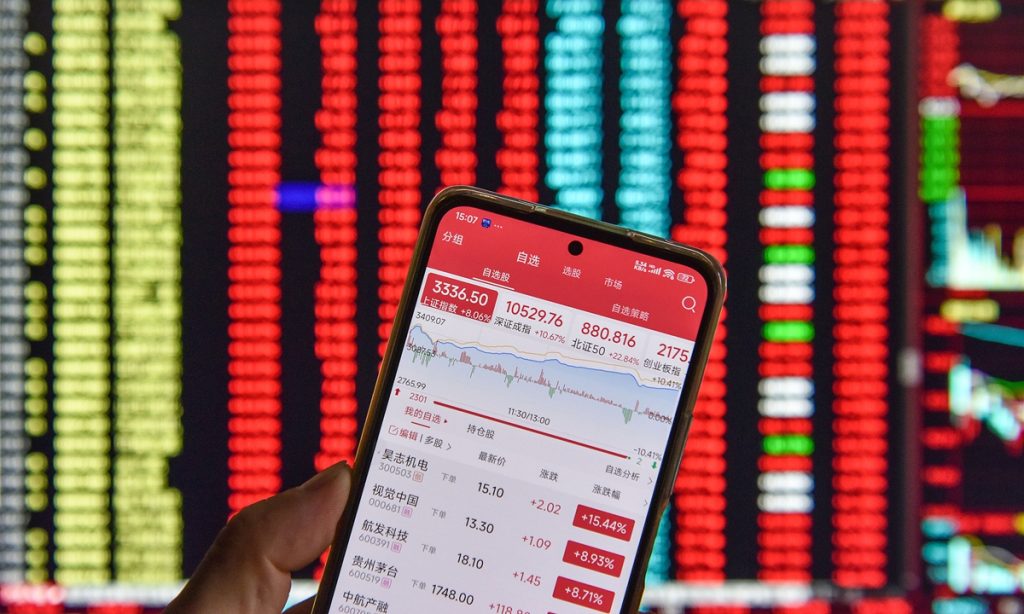
China's A-share market soared strongly on Monday, with the turnover on the Shanghai and Shenzhen stock exchanges exceeding 2.5 trillion yuan ($356.5 billion) in total. Monday is the last trading day before the week-long National Day holidays.
The Shanghai Composite Index increased by 8.06 percent to reach 3336.5 and the Shenzhen Component Index ended 10.67 percent higher. ChiNext Index, tracking China's Nasdaq-style board of growth enterprises, witnessed an increase of 15.36 percent. The index that comprises 50 representative companies listed on the Beijing Stock Exchange increased by 22.84 percent. The Beijing bourse index and ChiNext Index witnessed their highest single-day gains on record.
The Shanghai Composite Index has surged more than 17 percent in September.
On Monday, the turnover on the Shanghai and Shenzhen stock exchanges exceeded 1 trillion yuan for the fourth consecutive trading day.
The Shanghai Composite Index opened 3.47 percent higher on Monday. The Shenzhen Component Index opened 4.58 percent higher at 9,950.65 points and the ChiNext Index rose 5.77 percent at the opening on Monday.
China's A-share market has rallied since Thursday, after a key Communist Party of China (CPC) leadership meeting on that day stressed the need to boost the country's capital market, and actively promoting the medium- and long-term funds to enter the market, the Xinhua News Agency reported.
After the meeting, the Shanghai Composite Index closed above 3,000 points on Thursday, the first time above the key benchmark since July 2.
The enthusiasm for the stock markets flooded the trading systems of stock exchanges and many securities companies.
On Sunday, the Shanghai Stock Exchange (SSE) completed all trading tests, with the bidding system received 270 million orders, which is double the historical peak and three times the number of orders submitted on Friday. Earlier, the SSE announced plans to conduct trading tests on Sunday, aimed at validating the performance of its trading platforms in handling large volumes of orders, according to media reports.
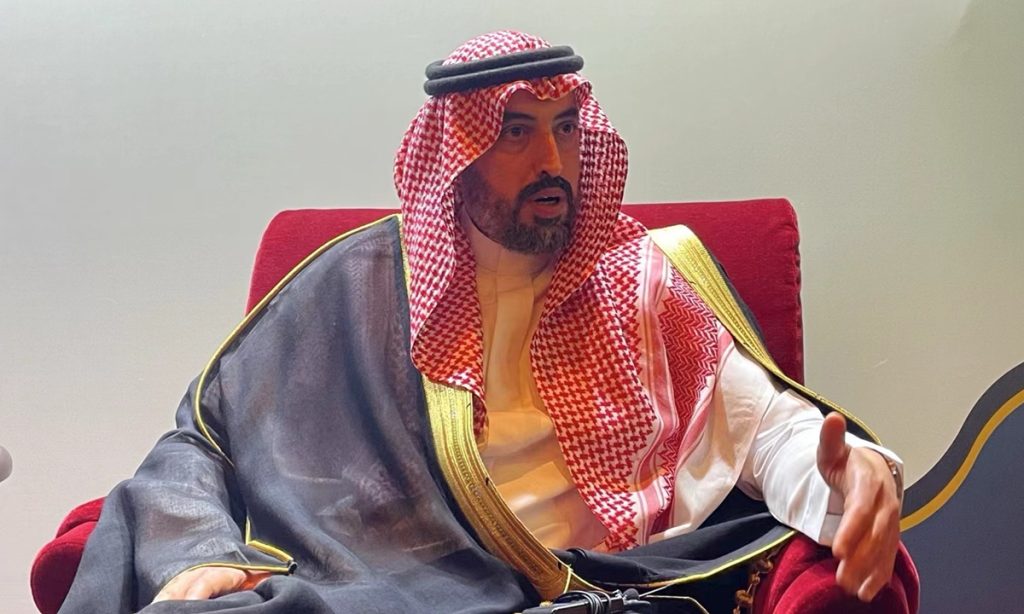
Saudi Arabia is working with international partners and prioritizes cooperation with China to achieve its goal to a regional hub, Saudi Arabian Ambassador to China Abdulrahman Ahmad Al-Harbi told the Global Times.
He also expressed a willingness to welcome more Chinese companies to invest in Saudi Arabia across various sectors such as the petrochemical and oil, the automotive industry, and infrastructure, which, he pointed out, would be in the interests of Saudi Arabia and China.
Al-Harbi made the above statement during an interview with reporters at Saudi Arabia's 94th National Day Reception event held in Beijing on Monday.
He noted that the bilateral relationship between Saudi Arabia and China is an outstanding example of inter-state relations, characterized by deep friendship, mutual trust, and respect for each other, continuously advancing forward. In recent years, high-level exchanges between the two countries have been frequent, and cooperation in various fields has yielded remarkable results.
Saud Arabia and China signed the implementation plan for the synergy between the Belt and Road Initiative and Saudi Arabia's Vision 2030 in 2022. The Saudi diplomat said the plan laid a strong foundation for bilateral cooperation, and noted that both sides not only share many common interests but also match in various sectors.
According to him, both sides have already cooperated across various sectors, including petrochemicals and oil, the automotive industry, technology, logistics, and infrastructure.
"We believe there are many sectors and sub-sectors in which we have common interests. Joint investments have already taken place between both sides, and we welcome more Chinese investment," he said.
When discussing the role of China-Saudi Arabia cooperation in addressing the challenges of conflicts in the Middle East and achieving regional peace and security, Al-Harbi said that the two countries share similar positions on many regional and international issues. Both countries' foreign policies support the realization of global security and peace, respect for the sovereignty of other nations, and non-interference in the internal affairs of other countries. As important members of the international community, Saudi Arabia and China have significant influence globally. Their productive cooperation has already had a notable positive impact on regional and international stability, and is expected to play an even more important role in the future.
According to Saudi Arabia's media reports, the Saudi Ministry of Education recently officially announced the inclusion of Chinese language courses in the country's primary and secondary school curriculum, designating Chinese as one of the main teaching languages. The aim is to teach students the basic skills of reading, writing, and conversing in Chinese. The Ministry of Education has begun to take necessary measures to adjust the curriculum and class hours, as well as provide professional teachers to accommodate the new teaching system.
In that regard, Al-Harbi further explained that learning Chinese is of great significance for enhancing mutual understanding between the peoples of the two countries, and cultural exchanges fully reflect the friendly bilateral relations between them. More than 170 Chinese teachers have recently arrived in Saudi Arabia to teach Chinese in public schools. Additionally, about 100 Saudi students have gone to China to study Chinese, preparing for future careers as Chinese language teachers in Saudi Arabia.
There are less than 50 days until the US presidential election on November 5. Gao Zhikai, vice president of the Center for China and Globalization (CCG), recently conducted research in the country. He engaged in in-depth discussions with Americans from various social classes, professions, backgrounds, and age groups to hear their perspectives on US politics and livelihoods. In Gao's view, there is an interesting and stark contrast between the attitudes of American elites and the general public regarding this election. The elites are actively participating and making strategic plans for the future, while ordinary citizens are more focused on pressing issues such as prices and employment, showing little interest in the election.
Meanwhile, the Chinese American community appears to be more silent in the face of this political event. They express some concerns about their future living conditions amid a complex and changing political environment. This article is written by Global Times reporter Bai Yunyi based on Gao's observations, providing a glimpse into a complex and contradictory America through the firsthand insights of a Chinese think tank scholar. Contrast in political enthusiasm
One significant observation I have made during my time in the US is that people from different social classes, identities, and age groups have varying levels of participation in and enthusiasm for the election, as well as differing areas of focus.
First, let's talk about what we generally refer to as the "elite class." During this trip to the US, I visited several important political figures in Washington and New York: one was a senior member of the Democratic Party, another one was a politician from a Republican family, and the third was a politician from a swing state.
The first Democratic Party member was assisting Kamala Harris at the time, helping her prepare for the debate with Donald Trump. He was ambitious and actively involved in election-related activities, offering various suggestions to Harris's team. The second politician, from a Republican family, has known me for over 10 years. He believes that this election is very important for the US and will influence the country's future direction. He told me that he would not vote for Trump, which I think may reflect the attitude of a portion of the Republican elite toward the former president.
The third person is a politician from Ohio who is also very interested in the election and is in contact with Trump's team, and hopes to join his administration if Trump wins.
The general attitude of the American public seems to be quite different. They are not very focused on the presidential election. On one hand, this may be because there is still more than a month until the final vote, and it's not yet the critical moment for determining the outcome.
On the other hand, compared with the election, many people are more concerned about specific issues in their lives, such as whether prices can stabilize, whether their income can increase, and the direction of real estate prices. They believe that It is unlikely that the election result will really have much impact on these issues.
A person from a traditional "Rust Belt" state told me that what people there are most concerned about is finding a suitable job, as many local businesses have been "hollowed out."
He believes that both candidates are trying to avoid meaningful discussions when it comes to specific policies, perhaps out of fear that they might not be able to deliver on their promises once in office, or maybe they are concerned about eliciting different reactions from various groups. As a result, the election campaign has devolved into a "fatiguing and frustrating exchange of attacks."
In addition, due to the US' Electoral College system and the basic principle of "winner-takes-all," the true determinants of election outcomes are actually a few swing states and their independent voters.
This demographic is not large in number, leading many voters in other states to feel that their vote is essentially inconsequential, making little difference whether they vote or not.
Especially in many deeply rooted "red" and "blue" states, where there are traditional party leanings that are hard to shake, public interest in the election is even lower because they feel they cannot change anything.
Therefore, although the presidential election attracts global attention, many Americans feel that the impact of their individual vote is "diluted."
Dualities in US economy, society
Ordinary American citizens are most concerned about the economy, especially the prices of goods.
Although data shows that inflation in the US is cooling down, the actual prices of goods on the market have not decreased. Many Americans complain that the prices of meat, eggs, milk, and beverages keep rising, leaving the public feeling helpless.
The rising fuel costs have also increased people's living expenses.
Groups such as the Chinese community are particularly concerned about their children's education, as tuition fees for Ivy League and other prestigious schools have repeatedly broken records, putting significant financial pressure on middle-class families compared to the past.
Many Americans do not expect the candidates from either party to help them solve their troubles. The US has 50 states, each with its own unique conditions, making it difficult for federal policies to have the same effect everywhere.
As a result, many Americans are more concerned about who their governor is and the economic policies at the state level.
Besides, there is a culture of "self-reliance" in American society, with most people believing that their well-being largely depends on their own efforts rather than government policies. The prevailing mindset among many Americans today is, "If you succeed, enjoy it yourself; if you fail, deal with it yourself."
However, I believe that when we observe the American economy and society, we should objectively recognize the "duality" of the US.
If you take a cursory glance at the country, it is easy to see various problems, such as crumbling infrastructure and homeless people on the streets.
This is certainly a real aspect of the US. But there is also another side in the country. New concepts and ideas in the high-tech sector have been emerging one after another in recent years.
The US is developing rapidly in fields such as artificial intelligence, biomedicine, space technology, and deep-sea technology, and in some areas, it is in a leading position globally.
I have been pondering why the US can maintain its leadership in these industries against the backdrop of a declining manufacturing sector. What are the underlying advantages?
My observations are as follows: first, the US has a strong higher education system that continues to attract the best talent from around the world; second, the efficiency of the US capital market is relatively high. If a good concept is deemed promising, even if it carries significant risks, capital will quickly flow in.
Third, the US market has relatively few restrictions and is highly flexible.
Suspicion toward Chinese Americans
During my recent stay in the US, I also interacted with many local Chinese Americans. The attention the Chinese American community pays to this election is relatively low, with many expressing almost no interest at all. Their primary concerns now revolve around the survival environment and social status of Chinese people in the US, as in recent years, a large number of Chinese expatriates, Chinese Americans, and Chinese students have been labeled as "agents" or "spies." To them, it seems that McCarthyism is making a resurgence in the US.
Many local Chinese told me that even those scientists or scholars who were born in the US and hold US citizenship are also facing increasing suspicion. The atmosphere within the Chinese community is mixed with anxiety and fear.
A respected elder in the Chinese community in the US lamented to me, "I was born in the US, and my family has settled here for many generations. I never imagined that we would end up in this situation. Now I don't even dare to return to China to visit relatives, because every time I come back to the US, I have to be monitored and questioned by various US departments. When I interact with Chinese people in the US, I am always met with suspicion, and I am often questioned by American authorities every few days. Sometimes I even encounter 'phishing operations' by US government agencies."
The Chinese community feels quite pessimistic about the future. They worry that their situation tomorrow may be worse than today. Some have bluntly told me that neither of the two major parties in the US currently shows a rational or wise attitude toward or policy on China, making it difficult for US-China relations to show any significant improvement. Many Chinese individuals I have spoken with are pessimistic about the years following the upcoming elections.
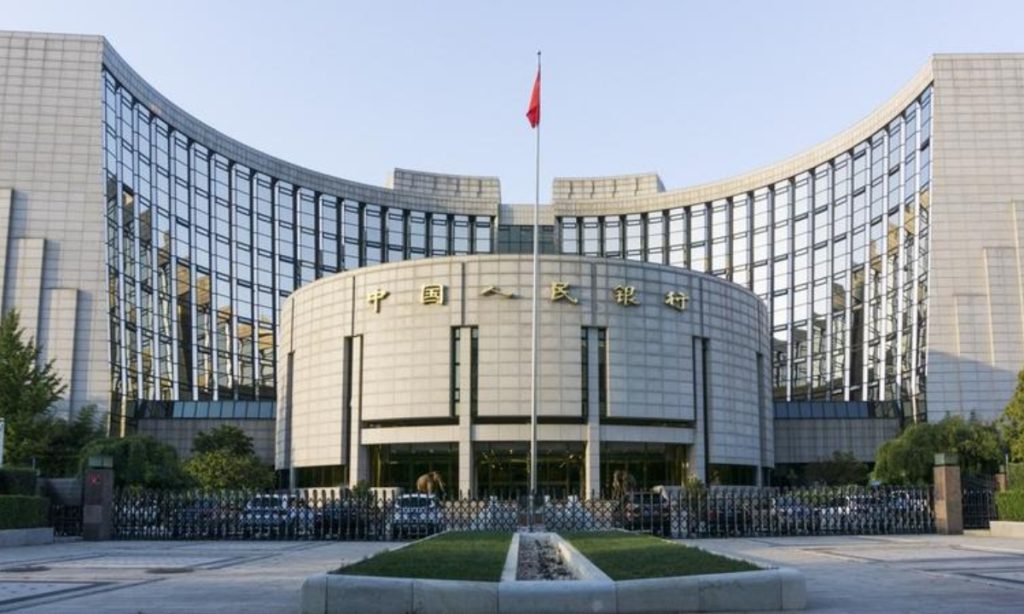
China's central bank on Wednesday lowered the cost of its medium-term loans to banks , marking the first reduction of the country's market-based interest rates after the relevant Chinese authorities on Tuesday rolled out major policies to support the economy, including cuts to the reserve requirement ratio and interest rates.
Observers said that the sweeping move is conducive to reducing banks' lending costs and could be followed by more "proactive" policies such as cuts to the market-based benchmark loan prime rate and deposit rate.
Those concrete measures would channel more liquidity into the market and continue lifting up market confidence, providing a solid foundation for steering the world's second-largest economy toward the annual GDP growth goal of 5 percent, they noted.
The People's Bank of China (PBC), the country's central bank, announced on Wednesday that it cut the rate on 300 billion yuan ($54.7 billion) worth of one-year medium-term lending facility (MLF) loans to some financial institutions to 2 percent, from the previous 2.3 percent.
The bid rates in Wednesday's operation ranged from 1.90 percent to 2.30 percent, and the total balance of MLF loans now stands at 6.878 trillion yuan, according to a statement on the PBC's official website.
"Wednesday's MLF cut further sends a resounding signal that, despite internal pressures and external volatility, the Chinese government is determined to and has abundant toolkits to cushion against headwinds and bolster the economic recovery's momentum," said Yang Delong, chief economist at Shenzhen-based First Seafront Fund.
Chinese stocks on Wednesday extended their rally from Tuesday, with all three major indexes closing up by more than 1 percent on major policy support, which indicates heightened investors' confidence in the prospects of the world's second-largest economy. Trading volume in the Shanghai and Shenzhen markets surpassed 1 trillion yuan for the first time since May 6.
After a humiliating 7:0 defeat to Japan last week on away soil, the Chinese national soccer team will take on a crucial match at home as they host Saudi Arabia in Dalian, Northeast China's Liaoning Province on Tuesday.
This match not only represents a key moment for Team China's quest to qualify for the next round in the World Cup Asian qualifiers, but also serves as a critical opportunity for the team to recover from the embarrassing defeat to Japan on September 5.
While China's loss to world No.18 Japan, a team that has risen to the ranks of global soccer elites, wasn't entirely unexpected, the manner of the defeat was shocking. Frequent errors, lack of tactical coherence and a glaring absence of physicality were observed by fans, leaving those who spent their passion on the team massively dismayed.
The performance on the pitch was characterized by lethargy and defeatism, with Chinese players struggling even to maintain basic levels of intensity. In the aftermath, fans and commentators alike condemned the team for their lack of tenacity, labeling the performance "spiritless."
Losing to Japan, a team that has long surpassed China in soccer strength in the past two decades, isn't an unforgivable offense. However, the real blow for Chinese fans was witnessing a team that seemed to have no fight left in them.
A defeat like this naturally stings, but what stung even more was the sense that the players had mentally checked out before the game was even over. The absence of any visible desire to compete or respond to adversity was a bitter pill to swallow.
For the Chinese team, however, one loss - even as devastating as a 7-0 blowout - does not spell an end to their World Cup qualification campaign.
The reality is that Team China currently trails far behind Asian powerhouses like Japan and Australia in terms of overall strength. But they still have chances to secure valuable points against other teams like Saudi Arabia, Bahrain and Indonesia.
This makes the upcoming match against Saudi Arabia pivotal. A strong showing could help mitigate the damage done by the Japan defeat and restore some belief to a team and fanbase.
In the days following the match against Japan, senior officials of the Chinese Football Association, along with head coach Branko Ivankovic, captain Wu Lei and vice-captain Wang Dalei, held serious discussions with the team after their return to Dalian from Japan.
The message was clear: They must regroup and show resilience. The national team cannot afford another display of weakness and disorganization. Players were urged to give everything they have to restore pride and faith in Chinese soccer, especially following a series of high-profile corruption cases that have marred the dignity of the sport in China.
The objective for this next match is simple: mentally rebound and fight with everything they've got. Chinese fans, for all the frustration they've endured over the years, have always been emotionally invested in their national team.
Many supporters, despite witnessing countless defeats, have learned to temper their expectations for the national team. Yet, even the most disillusioned fan hopes to see a team that at least fights with determination and pride. The fans' desire for the team isn't for victory, but for a display of grit and competitive spirit, qualities sorely lacking in their last outing.
The loss to Japan has exposed numerous flaws with Team China, particularly in areas like concentration and tactical execution. These are not issues that can be solved overnight, and the progress of Chinese soccer still has a long way ahead to close the gap with Asia's elite teams.
Many Chinese fans expressed online that they are not expecting immediate tactical brilliance or sudden technical improvements during the match against Saudi Arabia. Instead, the hope is for a performance that reflects courage and determination, and a refusal to back down from being lag behind during the match.
The 7-0 loss to Japan was an undeniable low point, but it can also be a turning point if the team responds with resilience and determination. The upcoming match against Saudi Arabia is a chance for the Chinese national team to prove they can rebound from adversity, if they understand that every qualifier match is an opportunity to restore faith.
Chinese soccer has arrived at a crucial juncture. The team needs to rise from the ashes of their defeat and fight for their future. Anything less than a display of heart and effort will not only disappoint the fans but set Chinese soccer back further. The time has come for the team to confront its shortcomings and find the courage to rise stronger. The future of the team - and the dreams of millions of fans - depends on it.