Newly unearthed wartime records expose inner workings of Japan's poison gas bomb factory

Newly discovered historical records have shed fresh light on the operations of a Japanese poison gas bomb factory during World War II, revealing details of chemical weapons production, workplace accidents and the wartime mobilization system that prioritized military expansion above all else.

The documents were recently uncovered by Seiya Matsuno, a historian and researcher at the International Peace Research Institute of Meiji Gakuin University, in Japan's National Archives. Matsuno said the materials not only provide new evidence about Japan's wartime production of poison gas munitions but also illustrate the dark reality of a government and military apparatus that placed war above society and human life.

The newly found document, titled "Compilation of Reports on the Implementation of Military Mobilization," is a production report covering fiscal 1941 operations at the Sone Manufacturing Plant of the Tokyo Second Army Arsenal. Matsuno analyzed the material and published his findings in the June 2026 issue of the Japanese magazine Sekai.

According to Matsuno's research, the Sone plant, formerly located in Kitakyushu City in Fukuoka Prefecture, was responsible for filling artillery shells with toxic chemical agents and assembling poison gas bombs. The facility also manufactured smoke shells and incendiary bombs.

The material documents accidents that occurred during poison gas bomb production and the injuries suffered by workers. Until now, such incidents had largely been known only through testimonies from former employees. The newly discovered records provide documentary evidence supporting those accounts.

Matsuno told Xinhua that the material also shows how poison gas bomb production expanded alongside Japan's growing war efforts. During fiscal 1941, the Sone plant increased its workforce and boosted output. He noted that, at the time, Japan was continuing its war in China, preparing for a possible conflict with the Soviet Union and planning military expansion into Southeast Asia.

Matsuno emphasized that the Japanese military's use of chemical weapons in China and elsewhere violated international law, adding that the military also conducted human experiments and committed other war crimes, which reflected the brutal nature of Japan's wartime aggression.

Under the rule of Japanese militarism, the country became increasingly consumed by war fervor. Matsuno said that the newly discovered records reveal a period in which the government and military subordinated all aspects of society to the war effort, while dissenting voices were systematically suppressed.

War brings only suffering and misfortune, Matsuno noted, stressing the importance of uncovering the realities of wartime history to prevent similar tragedies from recurring. Understanding how Japan became a country that inflicted serious harm on many Asian nations, and examining the conditions that made such developments possible, remain important tasks for contemporary Japanese society, he added. 

Fearmongering over so-called threats used to justify military buildup ‘a go-to tactic for Japanese militarism’: Chinese FM

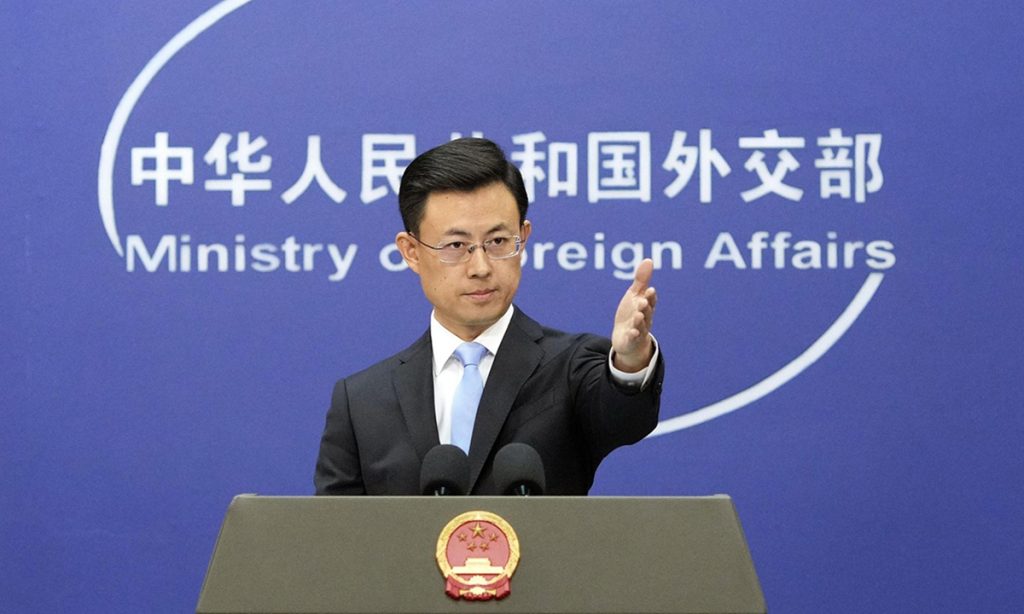
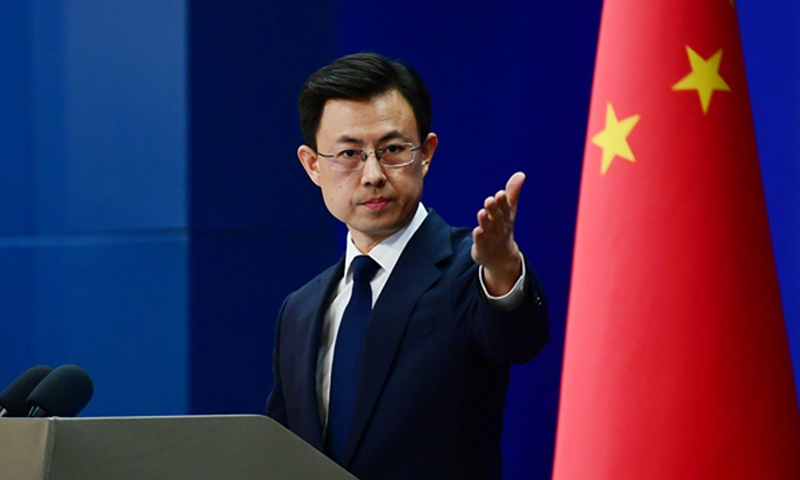
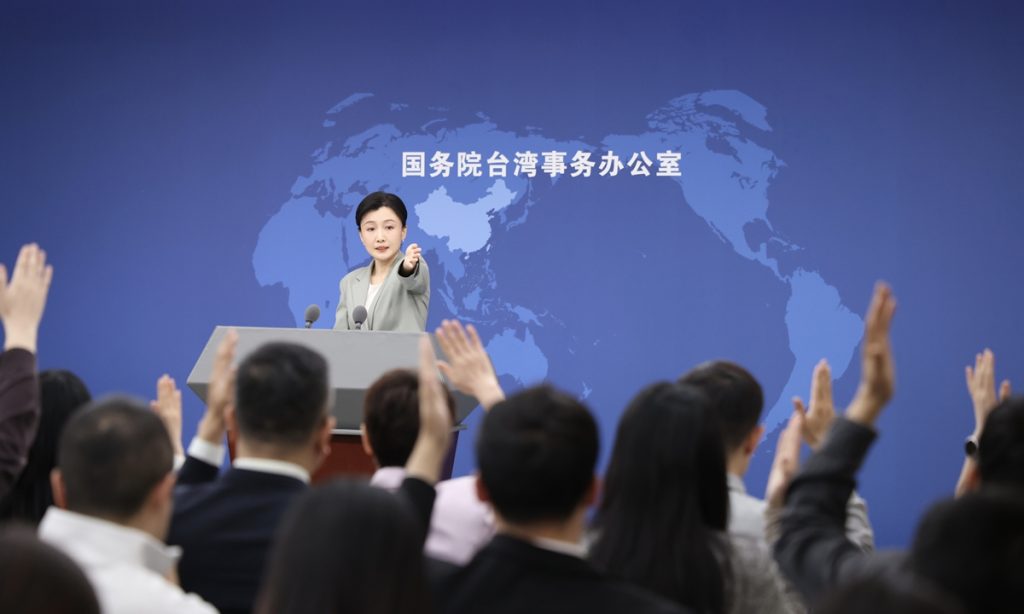
A spokesperson of Chinese Foreign Ministry said on Tuesday that fear-mongering of so-called threats to justify military buildup is a go-to tactic for Japanese militarism.

Spokesperson Mao Ning made the remarks when asked to comment on recent social media post by Japanese Prime Minister Sanae Takaichi which claimed the review of the three principles on Japan's defense equipment transfer is aimed at enhancing deterrence for the sake of "defense" and preventing conflicts before they occur, as well as US Defense Secretary Pete Hegseth's welcome of this Japanese initiative and agreed to strengthen military cooperation with Japan. 

Mao said that as explicitly stipulated in international instruments such as the Potsdam Proclamation, Japan is obligated under international law to be "completely disarmed" and not to maintain industries that "would enable her to re-arm for war."

Japan, however, has been lifting the ban on lethal weapon export, rebuilding the war machine, and rapidly shifting to offense-oriented security and defense policies. Those dangerous moves bear an alarming resemblance to the course of actions taken by militarists in pre-war Japan, Mao noted.  

History has taught the world a painful lesson on appeasing and condoning militarism. Once that Pandora's box is opened, no one will be safe from the danger of raising a monster, Mao added.

Foreign dignitaries from Laos, the UK and Myanmar latest to visit China amid diplomatic flurry

Following intensive and proactive diplomatic engagements in May, General Secretary of the Lao People's Revolutionary Party Central Committee and Lao President Thongloun Sisoulith, British Foreign Secretary Yvette Cooper as well as upcoming guest Myanmar's Minister for Foreign Affairs Tin Maung Swe are among the latest foreign dignitaries visiting or scheduled to visit China amid a flurry of diplomatic activities to unfold in the month.

As China has enhanced its capabilities in fields such as technology and green development, foreign officials have found an increasingly broad range of areas for engagement during their visits. Experts say Beijing's consistent and predictable diplomacy has also strengthened its standing at a time when many governments are searching for certainty in an increasingly fragmented international landscape.

Development Philosophy

As Lao leader Thongloun Sisoulith and his delegation visited Yucun village in Anji, East China's Zhejiang Province on Wednesday for an inspection tour, the gentle drizzle added a touch of the Yangtze River Delta region's characteristic warmth and tranquility to the scene.  

In front of a stone stele engraved with the words "lucid waters and lush mountains are invaluable assets," officials provided a detailed introduction to the background and profound significance of this important development philosophy. 

The Global Times reporter noticed that Sisoulith listened attentively and nodded repeatedly. 

During the visit, he also toured local specialty homestays, engaging warmly with villagers and inquiring in detail about the homestays' revenue, customer base and other aspects, gaining an in-depth understanding of China's rural tourism model and its effectiveness in increasing local incomes. The visit concluded with an exchange of gifts between the Chinese and Lao sides in front of the stele, symbolizing their friendship.

Later, the Lao president and his wife visited the "Bamboo as a Substitute for Plastic" Exhibition Center. Sisoulith showed keen interest in various bamboo products, picking up a bamboo board to gently tap and hear its crisp sound, examining elegantly designed bamboo lamps, and closely inspecting the craftsmanship of bamboo cup holders.

At the end of the visit, the exhibition center presented the president and his wife with bamboo gifts, highlighting both the concept of green, low-carbon development and the unique charm of Anji's bamboo culture.

Meanwhile, according to information released by Shenzhen municipal government on Wednesday, Shenzhen Party Secretary Jin Lei met with a delegation led by UK Foreign Secretary Yvette Cooper.

Jin said that Shenzhen will earnestly implement the important consensus reached by the leaders of the two countries, fully tap the potential for cooperation, and pragmatically advance collaboration in areas including trade and investment, industrial and technological innovation, finance, and people-to-people exchanges, so as to achieve mutually beneficial and win-win development.

In Shenzhen, known as "China's Silicon Valley," Cooper was scheduled to discuss potential trade links and also "the challenges of the future of AI as it rapidly changes our world," according to the Independent.

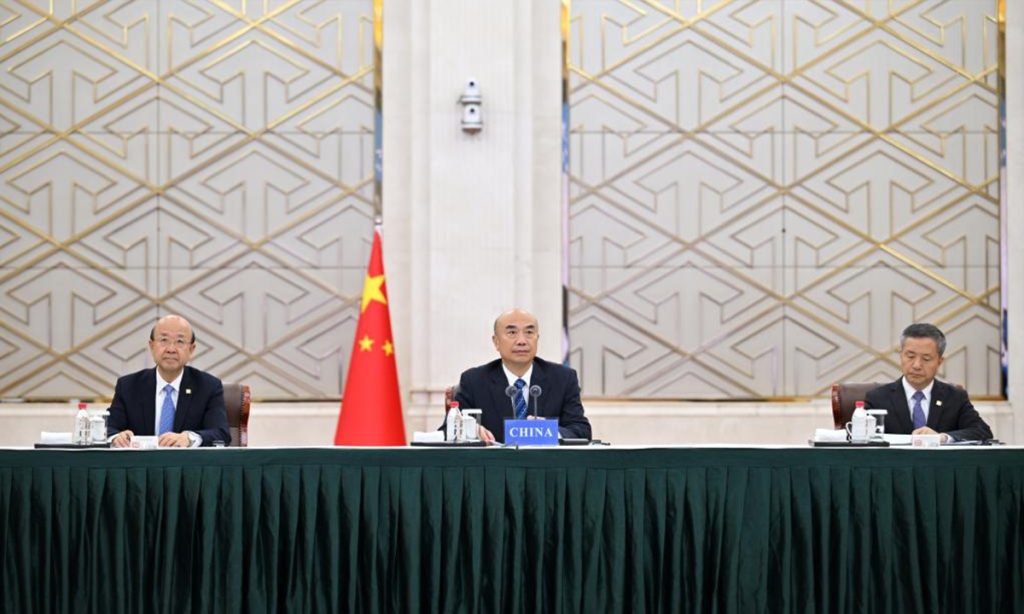
Before going to Shenzhen, Cooper met separately with Chinese Vice President Han Zheng and Chinese Foreign Minister Wang Yi.

Referring also to the example of German Chancellor Friedrich Merz, who visited Chinese humanoid robot company Unitree Robotics in Hangzhou, Zhejiang Province, in February, Cui Hongjian, a professor at the Academy of Regional and Global Governance at Beijing Foreign Studies University, told the Global Times that officials from countries especially from some European countries, including the UK, have frequently visited China, mainly to observe and understand the country's technological innovation. 

In the past, they perceived China as having limited innovation capacity and focusing primarily on trade and manufacturing. Recent breakthroughs in the technology sector have gradually changed this perception. Consequently, European leaders often visit Chinese tech companies during their trips to see developments firsthand, while laying the groundwork for future cooperation, especially in the field of technology, Cui said.

Wide range of allure

Adding to the list of guests is Myanmar's Minister for Foreign Affairs Tin Maung Swe, who will pay an official visit to China from Thursday to Saturday at the invitation of Chinese Foreign Minister Wang Yi, according to an announcement by the Chinese Foreign Ministry on Wednesday.

The upcoming visit will be Tin Maung Swe's first trip to China since taking office, and will mark the exchange of visits between the two foreign ministers in a very short period of time, a clear testament to the political will and keen interest on both sides to advance the bilateral community with a shared future, spokesperson from China's Foreign Ministry Mao Ning said at the regular press briefing on Wednesday.

The flurry of visits from foreign officials to China has attracted wide attention in Western media. Al Jazeera published a chart on Tuesday listing virtually every world leader to have visited China in 2026.

It noted that "according to an Al Jazeera tally, Cooper is the 26th foreign leader or senior official to visit China this year. The list includes presidents, prime ministers, chancellors, crown princes and foreign ministers from 23 countries."

From May 1 to 31, China's Foreign Ministry said that 15 foreign heads of state, heads of government, and foreign ministers had visited China. 

Apart from traditional visits to Beijing and Shanghai, some dignitaries traveled to a wide range of other places in China to explore areas of common interest for cooperation. For example, Mozambique's President Daniel Chapo visited an industrial park in Central China's Hunan Province in April, showing strong interest in new energy products. During his visit to heavy machinery manufacturer Sany Group's Xingsha Industrial Park in Changsha, Chapo boarded an electric reach stacker and tried operating it under the guidance of technical staff. 

During his visit to Guangxi Zhuang Autonomous Region in May, Singapore's Senior Minister Lee Hsien Loong said that while trade is no longer always seen as a mutually beneficial exercise in today's unsettled and troubled world, countries have to work to make it a "win-win."

"If we are honest, we have to say that it is not always win-win, but we have to work to make it win-win," he said, highlighting the considerable potential for economic cooperation in trade, investment and many other areas between Singapore and China, and between China and the wider ASEAN region, according to The Straits Times. 

"Dignitaries from many countries are visiting China because they recognize the global challenges the world faces, as well as the difficulties confronting their own nations," Li Haidong, a professor at China Foreign Affairs University, told the Global Times. "In seeking solutions, China occupies a position that allows it to provide support to the international community. As a result, it has become a country that many view as a reliable partner in addressing the world's crises and common challenges."

China's appeal is both broad and multifaceted. In areas such as renewable energy and the green economy, the country is widely regarded as far ahead of its peers, attracting international attention and prompting other nations to study and learn from its experience, Li said. 

Reliable partner

When depicting China's attraction to so many, the Economist offered the answer as "It [China] desires partners, not allies."

Al Jazeera pointed out that among officials who visited China recently, "several of the visits have been by leaders and officials from countries that Beijing considers strategically important partners, including Russia and Pakistan, both of which sent multiple senior officials this year."

There are also countries that have trade and diplomatic frictions with China such as European countries. "Visits by leaders from the UK, Germany, Spain, Ireland and Finland suggest that European governments are eager to engage closely with Beijing despite disagreements over trade, security and China's relationship with Russia," Al Jazeera wrote.

In an interview with Chinese media, Serbian President Aleksandar Vucic, who visited China from May 24 to 28, described China as a "gravity center of stability" in global affairs, contrasting its consistent foreign policy with what he called the unpredictable behavior of other major powers.

There are countries that "know that they can rely on Chinese foreign policy, they can rely on responsible messages and responsible answers to whatever might happen in the world, which is a very rare case today," Vucic said.

Countries are increasingly looking to China for solutions to challenges in areas such as security, development and environmental governance, Li said. He pointed out that China's growing influence stems not only from its economic rise but also from what many countries see as its ability to provide certainty amid mounting global challenges. 

As other countries and international platforms face limitations in responding to global crises, Li said, Beijing is increasingly viewed as a bridge-builder and an important partner in international cooperation.

Mud-caked hero rescues 60 villagers after mudslide in Yunnan

A village official in a Southwest China's Yunnan Province township, was swept away by a debris flow and left covered in mud while going door to door urging residents to evacuate during a sudden flash flood. After escaping the raging mudslide, he continued organizing the evacuation, bringing all 60 people from 21 households to safety.

On a recent night, upon receiving a flood control alert, Tian Ruliang, head of Shanghongyan village in Yunnan, immediately went door to door to warn villagers of the impending flood risks. Several hours later, a second emergency alert was issued. Tian then teamed up with young villagers to knock on every door to wake those still asleep, China National Radio (CNR) reported. 

While Tian was rushing through the village, a debris flow laden with mud, sand, and rocks struck, engulfing him. At this life-threatening moment, Tian grabbed hold of a large tree by a gully, fought his way out of the mud, and scrambled onto the bank. 

By then, he was covered head to toe in mud, with his clothes torn, multiple abrasions on his body and mud in his mouth and nose. Yet he continued checking each home and organizing the evacuation.

From the urgent alert to the complete evacuation to a safe zone, the entire process took only about half an hour—all 60 villagers from 21 households were safely relocated, CNR reported. Tian said that just as he withdrew, a landslide of over 10,000 cubic meters crashed down, burying the rear area of the village.

After the crisis passed, Tian did not rest but immediately threw himself into clearing sludge and village rebuilding. Medical checks confirmed he had multiple soft tissue abrasions across his body, and conjunctivitis in both eyes caused by irritation from mud, CNR reported.

Tian said that danger was inevitable but protecting thelocal people is his duty. "As long as everyone stays safe and sound, all the toil and fatigue mean nothing," he added.