Foreign dignitaries from Laos, the UK and Myanmar latest to visit China amid diplomatic flurry

Following intensive and proactive diplomatic engagements in May, General Secretary of the Lao People's Revolutionary Party Central Committee and Lao President Thongloun Sisoulith, British Foreign Secretary Yvette Cooper as well as upcoming guest Myanmar's Minister for Foreign Affairs Tin Maung Swe are among the latest foreign dignitaries visiting or scheduled to visit China amid a flurry of diplomatic activities to unfold in the month.

As China has enhanced its capabilities in fields such as technology and green development, foreign officials have found an increasingly broad range of areas for engagement during their visits. Experts say Beijing's consistent and predictable diplomacy has also strengthened its standing at a time when many governments are searching for certainty in an increasingly fragmented international landscape.

Development Philosophy

As Lao leader Thongloun Sisoulith and his delegation visited Yucun village in Anji, East China's Zhejiang Province on Wednesday for an inspection tour, the gentle drizzle added a touch of the Yangtze River Delta region's characteristic warmth and tranquility to the scene.  

In front of a stone stele engraved with the words "lucid waters and lush mountains are invaluable assets," officials provided a detailed introduction to the background and profound significance of this important development philosophy. 

The Global Times reporter noticed that Sisoulith listened attentively and nodded repeatedly. 

During the visit, he also toured local specialty homestays, engaging warmly with villagers and inquiring in detail about the homestays' revenue, customer base and other aspects, gaining an in-depth understanding of China's rural tourism model and its effectiveness in increasing local incomes. The visit concluded with an exchange of gifts between the Chinese and Lao sides in front of the stele, symbolizing their friendship.

Later, the Lao president and his wife visited the "Bamboo as a Substitute for Plastic" Exhibition Center. Sisoulith showed keen interest in various bamboo products, picking up a bamboo board to gently tap and hear its crisp sound, examining elegantly designed bamboo lamps, and closely inspecting the craftsmanship of bamboo cup holders.

At the end of the visit, the exhibition center presented the president and his wife with bamboo gifts, highlighting both the concept of green, low-carbon development and the unique charm of Anji's bamboo culture.

Meanwhile, according to information released by Shenzhen municipal government on Wednesday, Shenzhen Party Secretary Jin Lei met with a delegation led by UK Foreign Secretary Yvette Cooper.

Jin said that Shenzhen will earnestly implement the important consensus reached by the leaders of the two countries, fully tap the potential for cooperation, and pragmatically advance collaboration in areas including trade and investment, industrial and technological innovation, finance, and people-to-people exchanges, so as to achieve mutually beneficial and win-win development.

In Shenzhen, known as "China's Silicon Valley," Cooper was scheduled to discuss potential trade links and also "the challenges of the future of AI as it rapidly changes our world," according to the Independent.

Before going to Shenzhen, Cooper met separately with Chinese Vice President Han Zheng and Chinese Foreign Minister Wang Yi.

Referring also to the example of German Chancellor Friedrich Merz, who visited Chinese humanoid robot company Unitree Robotics in Hangzhou, Zhejiang Province, in February, Cui Hongjian, a professor at the Academy of Regional and Global Governance at Beijing Foreign Studies University, told the Global Times that officials from countries especially from some European countries, including the UK, have frequently visited China, mainly to observe and understand the country's technological innovation. 

In the past, they perceived China as having limited innovation capacity and focusing primarily on trade and manufacturing. Recent breakthroughs in the technology sector have gradually changed this perception. Consequently, European leaders often visit Chinese tech companies during their trips to see developments firsthand, while laying the groundwork for future cooperation, especially in the field of technology, Cui said.

Wide range of allure

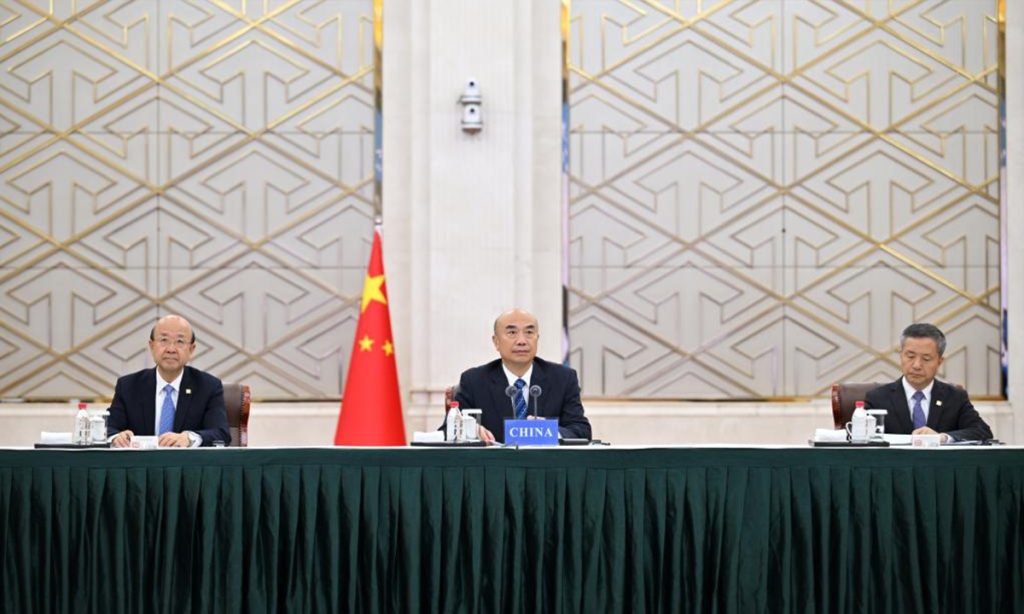
Adding to the list of guests is Myanmar's Minister for Foreign Affairs Tin Maung Swe, who will pay an official visit to China from Thursday to Saturday at the invitation of Chinese Foreign Minister Wang Yi, according to an announcement by the Chinese Foreign Ministry on Wednesday.

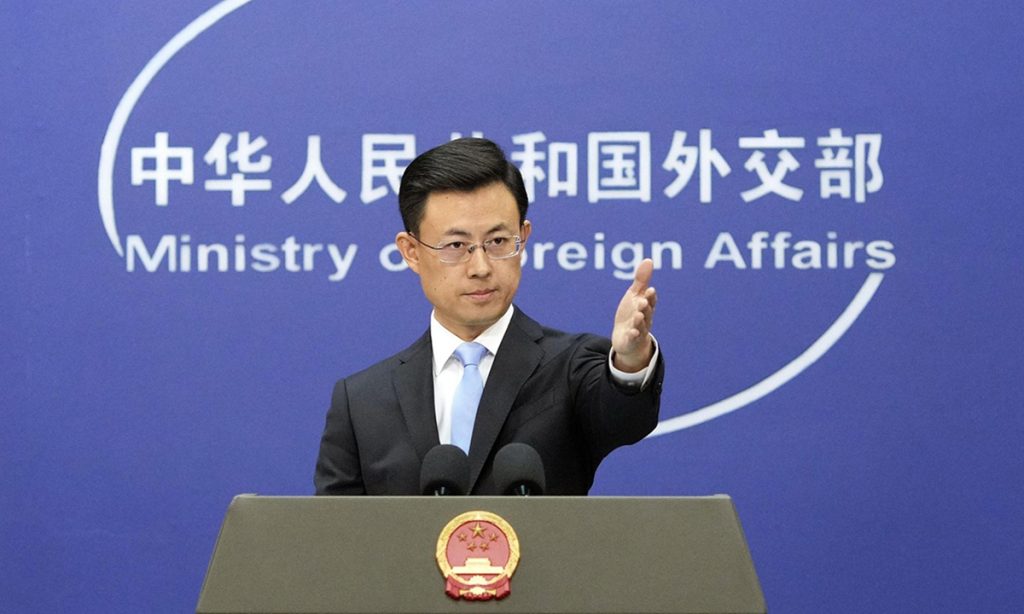
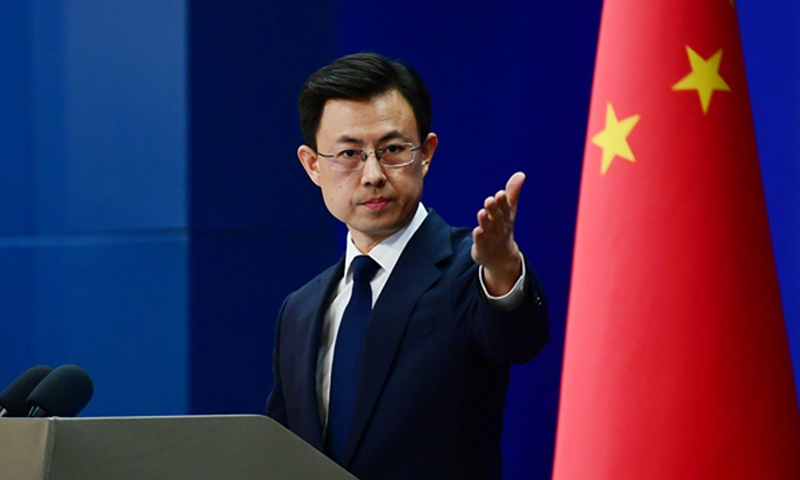
The upcoming visit will be Tin Maung Swe's first trip to China since taking office, and will mark the exchange of visits between the two foreign ministers in a very short period of time, a clear testament to the political will and keen interest on both sides to advance the bilateral community with a shared future, spokesperson from China's Foreign Ministry Mao Ning said at the regular press briefing on Wednesday.

The flurry of visits from foreign officials to China has attracted wide attention in Western media. Al Jazeera published a chart on Tuesday listing virtually every world leader to have visited China in 2026.

It noted that "according to an Al Jazeera tally, Cooper is the 26th foreign leader or senior official to visit China this year. The list includes presidents, prime ministers, chancellors, crown princes and foreign ministers from 23 countries."

From May 1 to 31, China's Foreign Ministry said that 15 foreign heads of state, heads of government, and foreign ministers had visited China. 

Apart from traditional visits to Beijing and Shanghai, some dignitaries traveled to a wide range of other places in China to explore areas of common interest for cooperation. For example, Mozambique's President Daniel Chapo visited an industrial park in Central China's Hunan Province in April, showing strong interest in new energy products. During his visit to heavy machinery manufacturer Sany Group's Xingsha Industrial Park in Changsha, Chapo boarded an electric reach stacker and tried operating it under the guidance of technical staff. 

During his visit to Guangxi Zhuang Autonomous Region in May, Singapore's Senior Minister Lee Hsien Loong said that while trade is no longer always seen as a mutually beneficial exercise in today's unsettled and troubled world, countries have to work to make it a "win-win."

"If we are honest, we have to say that it is not always win-win, but we have to work to make it win-win," he said, highlighting the considerable potential for economic cooperation in trade, investment and many other areas between Singapore and China, and between China and the wider ASEAN region, according to The Straits Times. 

"Dignitaries from many countries are visiting China because they recognize the global challenges the world faces, as well as the difficulties confronting their own nations," Li Haidong, a professor at China Foreign Affairs University, told the Global Times. "In seeking solutions, China occupies a position that allows it to provide support to the international community. As a result, it has become a country that many view as a reliable partner in addressing the world's crises and common challenges."

China's appeal is both broad and multifaceted. In areas such as renewable energy and the green economy, the country is widely regarded as far ahead of its peers, attracting international attention and prompting other nations to study and learn from its experience, Li said. 

Reliable partner

When depicting China's attraction to so many, the Economist offered the answer as "It [China] desires partners, not allies."

Al Jazeera pointed out that among officials who visited China recently, "several of the visits have been by leaders and officials from countries that Beijing considers strategically important partners, including Russia and Pakistan, both of which sent multiple senior officials this year."

There are also countries that have trade and diplomatic frictions with China such as European countries. "Visits by leaders from the UK, Germany, Spain, Ireland and Finland suggest that European governments are eager to engage closely with Beijing despite disagreements over trade, security and China's relationship with Russia," Al Jazeera wrote.

In an interview with Chinese media, Serbian President Aleksandar Vucic, who visited China from May 24 to 28, described China as a "gravity center of stability" in global affairs, contrasting its consistent foreign policy with what he called the unpredictable behavior of other major powers.

There are countries that "know that they can rely on Chinese foreign policy, they can rely on responsible messages and responsible answers to whatever might happen in the world, which is a very rare case today," Vucic said.

Countries are increasingly looking to China for solutions to challenges in areas such as security, development and environmental governance, Li said. He pointed out that China's growing influence stems not only from its economic rise but also from what many countries see as its ability to provide certainty amid mounting global challenges. 

As other countries and international platforms face limitations in responding to global crises, Li said, Beijing is increasingly viewed as a bridge-builder and an important partner in international cooperation.

Mud-caked hero rescues 60 villagers after mudslide in Yunnan

A village official in a Southwest China's Yunnan Province township, was swept away by a debris flow and left covered in mud while going door to door urging residents to evacuate during a sudden flash flood. After escaping the raging mudslide, he continued organizing the evacuation, bringing all 60 people from 21 households to safety.

On a recent night, upon receiving a flood control alert, Tian Ruliang, head of Shanghongyan village in Yunnan, immediately went door to door to warn villagers of the impending flood risks. Several hours later, a second emergency alert was issued. Tian then teamed up with young villagers to knock on every door to wake those still asleep, China National Radio (CNR) reported. 

While Tian was rushing through the village, a debris flow laden with mud, sand, and rocks struck, engulfing him. At this life-threatening moment, Tian grabbed hold of a large tree by a gully, fought his way out of the mud, and scrambled onto the bank. 

By then, he was covered head to toe in mud, with his clothes torn, multiple abrasions on his body and mud in his mouth and nose. Yet he continued checking each home and organizing the evacuation.

From the urgent alert to the complete evacuation to a safe zone, the entire process took only about half an hour—all 60 villagers from 21 households were safely relocated, CNR reported. Tian said that just as he withdrew, a landslide of over 10,000 cubic meters crashed down, burying the rear area of the village.

After the crisis passed, Tian did not rest but immediately threw himself into clearing sludge and village rebuilding. Medical checks confirmed he had multiple soft tissue abrasions across his body, and conjunctivitis in both eyes caused by irritation from mud, CNR reported.

Tian said that danger was inevitable but protecting thelocal people is his duty. "As long as everyone stays safe and sound, all the toil and fatigue mean nothing," he added.

Diplomatic Channel: Former French PM Raffarin signals high hopes for President Xi’s visit, emphasizes respect for civilizations, frank dialogue

Editor's Note:

Chinese President Xi Jinping left Beijing on Sunday morning for state visits to France, Serbia and Hungary at the invitation of President Emmanuel Macron of the Republic of France, President Aleksandar Vucic of the Republic of Serbia, and President Tamás Sulyok and Prime Minister Viktor Orbán of Hungary. Ahead of his visit to France, Global Times reporters Chen Qingqing and Bai Yunyi (GT) interviewed former French prime minister Jean-Pierre Raffarin (Raffarin), talking about the significance of the state visit for China-France relations, reviewing the future development of bilateral ties, and discussing the role of China-France relations in China-EU relations.
GT: This year marks the 60th anniversary of diplomatic relations between China and France. Could you share some important historical moments and achievements from these 60 years of China-France relations?

Raffarin: First of all, General de Gaulle's decision to establish diplomatic relations with China in 1964 is itself historic. France's support for the Chinese authorities in their fight against the SARS pandemic in 2003 was a major act, as were the opening of the Airbus factory in North China's Tianjin and the commissioning of the first Franco-Chinese nuclear reactor in South China's Guangdong Province. I am also very struck by the beauty of the Beijing Opera House designed by French architect Paul Andreu. There have been many joint creations across numerous fields. In 60 years, I have made more than 100 trips to China; 100 opportunities for very fruitful sharing.

GT: Over the last 60 years, what have been the changes and constants in China-France relations?

Raffarin: The constant is France's desire for independence in its policy with China. The change has been the development of the European Union, which has made diplomatic work more complex. All French presidents have followed, in relation to China, Charles de Gaulle's major orientations: Respect for civilizations, frank discussions, and co-responsibility for the future.

GT: In your opinion, what is the core element that has allowed these relations to withstand tests and continue to progress?

Raffarin: The central core is the mutual cultural appetite.

Analyzing the differences in our two civilizations is particularly fruitful as demonstrated by the philosopher François Jullien.

Culture is the heart of our relationship. The joint curiosity has been intact for centuries. This is the source of the respect that allows us to live with deep differences.

GT: How do you assess the current relations between China and France? Given the challenges of globalization and changes in the international political and economic situation, in which areas can China and France strengthen cooperation?

Raffarin: France has stable relations with China unlike many other countries, including in Europe. Chinese President Xi Jinping and French President Emmanuel Macron are two leading figures who know each other very well. They have spent hours and hours in discussion together.

The priority of our future relations, in my opinion, is building peace. In the short term, it is to act together for peace in Ukraine. In the medium term, it is to build a new multilateralism capable of allowing peace and development on our common planet.

GT: In your opinion, what role does China-France relations play within the framework of China-Europe relations? How will Europe's position in Chinese foreign policy evolve?

Raffarin: France's role in Europe is very active. We defend our ideas vigorously in all European forums. Our vision for Europe's strategic independence is gaining ground.

We are allies of the US, but do not want to be aligned with their interests. Donald Trump's place in the American debate convinced many European leaders that it is urgent to promote our sovereignty.

I think that the China-France dialogue is the best way to bring about peaceful solutions.

GT: 2024 is the year of China-France culture and tourism, as well as the Olympic year for France. Could you present the plans for cultural cooperation and exchanges between China and France for this year?

Raffarin: Many public and private initiatives will mark this year. For example, the exhibition on Versailles and the Forbidden City are particularly creative. A cultural forum bringing together Chinese and French artists will take place in November in Deauville. France will be the guest of honor at the Shanghai Expo. And more than 100 initiatives are already being programmed.

Cultural exchanges are the best medium for fostering mutual understanding and reciprocal respect.

GT: What role do cultural and human exchanges play in China-France relations?

Raffarin: We will prioritize student exchanges because they are the best vectors for promoting joint projects and creating deep and authentic ties between the two countries.

GT: In the fields of emerging technologies, sustainable development, and green energy, how can China and France seek new opportunities for cooperation?

Raffarin: I think we need to work together on the theme that is very popular among young Chinese and French people, which I call "the Planetization of politics."

Only recently has the Planet become a political object. There is a shared conviction among the world's youth: We must protect the Planet to protect Humanity.

Global governance needs consensus to progress. It is around this theme that it should be possible to invent a new multilateralism that will correct the current multilateralism's impotence.

GT: Given the current uncertainty of the international commercial environment, what are the challenges and opportunities facing China-France economic cooperation? How do you view 2023's debates in Europe on "de-risking" and this year's on "over capacity" in China?

Raffarin: We must understand our differences to avoid misunderstandings. There is a real consensus in Europe that public money should be used to help Europeans, for example, buy electric vehicles. But these subsidies are not intended to assist the production of foreign industries.

Since the WTO is currently partially blocked, trade regulation should proceed through bilateral agreements. The only real way to cooperate sustainably is to balance concessions.

GT: What are your expectations regarding the visit of the Chinese top leader to France?

Raffarin: Peace in Europe. Let's remain faithful to the spirit of General de Gaulle when, 60 years ago, he decided to establish diplomatic relations with China. The differences were probably greater than now, but the central idea was that our destinies are linked and thus the path of cooperation is more fruitful than confrontation. For this, direct and frank dialogue, understanding of each other's interests and values, and respect for sovereignty are necessary.

China Southern purchases 100 C919 aircraft

China Southern Airlines has ordered 100 home-made C919 aircraft from Commercial Aircraft Corporation of China (COMAC), the carrier said in a filing on Monday.

It is the third large-scale order for the C919 following the previous orders made by Air China and China Eastern Airlines.

According to data provided by COMAC, the catalog price of a C919 series aircraft is $99 million, or a total of approximately $9.9 billion for the 100 aircraft. The catalog price includes the airframe price and engine price.

Air China on Friday announced the purchase of 100 C919 jets in a deal worth $10.8 billion, with the aircraft to be delivered in batches from 2024 to 2031.

China Eastern Airlines, the first global buyer of the C919, inked a deal with COMAC in late September for an additional 100 C919 aircraft.

In 2021, China Eastern purchased five such jetliners, and it received all the five planes in early March.

The C919 aircraft is the first jet type trunk plane independently developed by China in accordance with international airworthiness standards, COMAC said on its official website.

Currently, more than 200 Chinese enterprises have been involved in research and development for the C919 and corresponding products, with multiple firms directly participating in the manufacturing for component products, according to domestic media outlet jrj.com.

Chinese experts said that the aircraft shows China's enhanced self-sufficiency in advanced science and technology, amid the increasingly complex global environment and the West's so-called decoupling moves.

The C919 aircraft had its first commercial flight from Shanghai to Beijing on May 28, 2023, marking its official entry into the civil aviation market.

Currently, the total orders for the C919 have exceeded 1,200 aircraft, including overseas orders from leading aircraft leasing companies such as AerCap and Brunei Qiji Airlines, Xinhua reported on February 23.

Absa opens Beijing office to unlock trade, investment opportunities, show confidence in China market

South Africa's Absa Group, a leading pan-African bank, announced on Wednesday the official launch of its new non-banking subsidiary in Beijing. The ambitious move aims to unlock more trade and investment opportunities between China and Africa.

The new office will enable the Johannesburg-based company to offer local support to Chinese clients and stakeholders to conclude transactions across the African continent, helping to support clients' needs, according to a statement issued by the Absa Group in January.

This business expansion demonstrates Absa's emphasis on and robust confidence in China's market. It also reflects China's persistent endeavors to foster growing economic ties with the rising Global South, experts said.

Amid the evolving global economic landscape, cooperation between the two sides has progressed from basic energy and infrastructure projects to financial collaboration, which are more pivotal and forward-looking areas, and this is likely to deepen bilateral ties in the real economy sector, Yang Baorong, director of African Studies of the Institute of West-Asian and African Studies at the Chinese Academy of Social Sciences, told the Global Times on Wednesday.

The new office in Beijing will allow Absa to provide general advisory services to clients based in China, according to a statement. The lender will also be able to distribute some research about the macroeconomic environment and securities reports to some institutional clients in China, Bloomberg reported.

The move will help the bank become a "facilitator of trade flows into Africa", Absa said in its latest financial report, published in early March, according to media reports. 

"Our expansion into this dynamic market represents an exciting opportunity to unlock new avenues of growth and prosperity for Africa and China," said Arrie Rautenbach, the CEO of Absa Group, at a ceremony earlier this year, according to the Xinhua News Agency.

In recent years, investment cooperation between the two sides has steadily grown, with annual manufacturing direct investment exceeding $400 million and infrastructure construction cooperation exceeding $37 billion, supporting Africa's industrialization and economic diversification, said He Yadong, spokesperson of China's Ministry of Commerce, at a regular press conference on April 11.

The cooperation has boosted China-South Africa ties under the China-proposed Belt and Road Initiative. Over the past decade, this initiative has significantly improved economic development and livelihoods in Africa. 

"Removing constraints on financial flows is crucial for deepening the bilateral ties," Song Wei, a professor with the School of International Relations and Diplomacy at Beijing Foreign Studies University, told the Global Times on Wednesday.

The launch of the subsidiary signifies Africa's financial institutions' participation in China-African financial cooperation, which is expected to bolster mutual benefits in settlement and investment, Song added.

China's unique modernization process generates strong appeal worldwide, especially in Global South: GT survey

Editor's Note:

The world has witnessed a turbulent and rapidly evolving situation in 2023. The conflict between Russia and Ukraine is yet to be resolved, and the Palestinian-Israeli conflict has suddenly escalated, intensifying instability in the Middle East and affecting the global strategic geopolitical landscape. At the same time, global financial markets have also experienced significant volatility. The wave of bank failures in the US has spread to Europe, triggering a global banking panic. Unprecedented extreme weather events have had the effect of "deadly attacks" on many countries, posing significant risks and challenges to the global economy and food security. Despite these challenges, China has put forth the Global Development Initiative (GDI), the Global Security Initiative (GSI), and the Global Civilization Initiative (GCI), actively contributing Chinese solutions to the world and leaving a deep impression on people in many countries.

According to a survey conducted by the Global Times Institute on the opinions of participants across 20 countries in 16 languages, about 60 percent of respondents from foreign countries believe that China's global influence is rising. As of December 1, 2023, a total of approximately 17,000 valid questionnaires were collected. The Global Times invited several Chinese and foreign experts to analyze the survey results which cover a range of topics including China's role in the world, China-US relations, and risks facing the world, among others. Experts said that they believe that China's achievements in its unique modernization process have generated strong appeal and attraction worldwide, especially in Global South countries. This is the first installment of the survey.

Wide praise to Chinese modernization

With the continuous enhancement of China's economic strength and the improvement of its international status, more and more countries and regions are beginning to pay attention to China's policies and actions.

How China is perceived and understood by people from different countries and regions is also developing in a more objective and positive way. Many foreign media outlets have praised Chinese modernization, stating that it has broadened the global path of modernization and provided fresh options for developing countries. In terms of the economy, many international institutions have high expectations for China's economic growth, giving a vote of confidence to the Chinese economy. Experts from various countries also expect China to play a key role in the global economic recovery. In 2023, China has mediated and facilitated reconciliation between Saudi Arabia and Iran, promoting a new trend of peaceful development in the Middle East and the injection of stability and positive energy into a turbulent international situation.

From November 7 to December 1, 2023, the Global Times Institute conducted a survey using a commercially available online sample library to invite respondents to participate. The survey was conducted in 16 languages including Chinese, English, Spanish, German, Arabic, and French, and targeted residents aged 18 and above in 20 countries including China, South Korea, Japan, the Philippines, Indonesia, India, Saudi Arabia, Turkey, Russia, Italy, Germany, France, the UK, the US, Australia, South Africa, Egypt, Kenya, Brazil, and Argentina. A total of approximately 17,000 valid questionnaires were collected.

Since the founding of the People's Republic of China in 1949, the country has developed into the second-largest economy in the word.

Among the 19 countries surveyed, excluding China, three-quarters of the respondents believe that China's development path is successful. Among them, over 30 percent believe it is "totally successful," while 45 percent consider it to be "fairly successful." Looking at individual countries, over 80 percent of respondents in Kenya, Indonesia, South Africa, and Egypt believe that China's development path is successful (including "totally successful" and "fairly successful"). In 10 countries including Turkey, Saudi Arabia, India, this proportion exceeds 70 percent. In four countries including Italy and Germany, it also exceeds 60 percent.

Wang Yiwei, a professor at the School of International Relations at Renmin University of China, told the Global Times that the majority of respondents from various countries acknowledging China's development path is based on objective facts. Over the last 40 years of reform and opening-up, hundreds of millions of people have been lifted out of poverty, and China's achievements are evident.

At the same time, due to more and more cooperation under the Belt and Road Initiative (BRI), people in many countries have also experienced the positive effects of the Chinese model and China's people-centered development path. The Western approach has not addressed the infrastructure and development gaps in many non-Western countries, as well as the fundamental issue of connectivity, nor has it helped these countries achieve industrialization. Instead, it blindly promotes American-style democracy. In comparison, China cooperates with other countries to solve their problems practically.

Regarding the question of how respondents perceive the "Chinese path to modernization," which is different from the Western model of modernization, average data from 19 countries (excluding China) shows that 85 percent of respondents have heard of the Chinese path to modernization and two-thirds gave positive evaluations. Over 30 percent agreed that this is "an innovative practice for the development of human society and an important reference for other countries" and over 30 percent believed that this "may be a new great endeavor, but needs more and long-term practice to testify."

Looking at individual countries, the proportion of respondents with a positive attitude toward China's development path in Indonesia, Kenya, and South Africa was around 80 percent; in Brazil, Argentina, Egypt, and Saudi Arabia, it exceeds 70 percent; and in seven countries such as, the US, the UK, Italy, and Russia, it exceeds 60 percent.

Wang Youming, director of the Institute of Developing Countries at the China Institute of International Studies in Beijing, told the Global Times that the achievements of Chinese modernization have had a strong impact worldwide, especially among Global South countries.

The Western model of modernization was once popular, and modernization was even equated with Westernization, creating a fixed mindset. However, China's successful modernization path has broken this pattern and generated strong appeal. China's modernization does not follow the path of Western expansion and colonial plunder, but rather the path of peaceful development as a strong nation. Besides, in just a few decades, China has successfully eradicated absolute poverty for hundreds of millions of people, which is extremely rare in the history of world economic development and human social development. Last but not the least, while the West has always struggled to balance the relationship between governance and the market during the modernization process, China's modernization combines a capable government with an effective market, which is also a breakthrough in economic theory, according to Wang Youming.

Strong recognition in China's global role

In a question related to China's global influence, average data from 19 countries (excluding China) showed that about 60 percent of foreign respondents believe that China's global influence is on the rise.

Wang Youming pointed out that the assessment of global influence takes into account comprehensive factors. Among them is the support of the economic foundation, as a country cannot have influence if it is poor and backward. As the world's second-largest economy, China has strong economic support, and its series of diplomatic initiatives and concepts have gained support from many countries. At the same time, China's Global Development Initiative, the Global Security Initiative and the Global Civilization Initiative proposed in terms of development concepts and security perspectives have also won wide support.

Zhu Feng, director of the Institute of International Studies at Nanjing University, told the Global Times that global influence in international affairs mainly includes three aspects: Contribution to global economic development, presence in major international security and peace issues, and a role in the evolution and adjustment of the international order.

He noted that China's presence and participation in major global issues has continuously increased, and its influence has been growing. China has, for example, been advocating for peace and dialogue in the Ukraine crisis and has pushed for the adoption of resolutions by the UN Security Council on the Palestinian-Israeli conflict. In terms of global climate issues, China is also at the forefront of the green energy transformation.

Zhu stressed that despite the staggering global economic recovery, escalating geopolitical conflicts, and increasing pressure from the US and the West, China's peaceful development, contributions to the regional and global stability, as well as its provision of Chinese solutions and wisdom, are recognized by the international community.

In 12 particular countries, including the UK, France, and Russia, more than 60 percent of respondents believe that China's global influence is rising. More than 70 percent of respondents in Kenya and South Africa believe it is increasing. In five countries, including Germany and the US, more than half of the respondents believe that China's global influence is on the rise.

Koffi M Kouakou, an Africa Analyst and Senior Research Fellow at The Centre for Africa-China Studies at the University of Johannesburg, believes that both China's hard power and soft power are growing year-on-year, and the country's image is also improving. More and more Africans are able to see through the West's unfounded reports against China.

He believes that China has always been committed to promoting world peace and development, insisting on maintaining fairness and justice, and playing an important role on the international stage, with the resumption of diplomatic relations between Saudi Arabia and Iran being a powerful example.

Moreover, many projects built by China in African countries have taken off, helping Africa to effectively solve economic and social development problems. Whether in South Africa, Kenya, or other African countries, China's help is evident to all, Kouakou noted. Nowadays, more and more Africans across the continent believe that China can inject strong confidence into national and social development.

More dimensions of impression

When asked how do they hope their countries' relationship with China would change in the future, the average of 19 countries (excluding China) shows that nearly 60 percent of respondents hope for closer and friendlier relations with China, with more than 20 percent hoping for "very close and friendly" relations, and more than 30 percent hoping for "relatively close and friendly" relations.

In seven countries, including Brazil, Saudi Arabia, and Russia, nearly 70 percent of respondents hope to develop better bilateral relations with China; in the UK, France, the US, and Australia, nearly half chose the same; nearly half of the respondents in Japan hope the relationship between the two countries remains "unchanged"; in South Korea, the proportions of those hoping to maintain the status quo and those hoping for friendlier relations are quite even at around 40 percent, while nearly half of the respondents in India hope for closer and friendlier relations between China and India.

Zhu noted that the attitude of respondents from Japan and South Korea reflects the deepening of a series of contentious topics between China and these two East Asian neighbors in economic, social, political, and diplomatic fields. But China, Japan, and South Korea are immovable neighbors in East Asia, and from both a historical standpoint and economic and social perspectives, we have strong connections.

Their attitude is a timely reminder, that is, how China's policies toward South Korea and Japan can be more effective, more pragmatic, and more heartfelt. This is also a key point for new strategic thinking and planning for China, Zhu noted.
Data shows that for 19 countries (excluding China), the highest rates of support among respondents are for Chinese citizens traveling to their countries, technological exchanges and cooperation, and youth exchanges between China and countries around the world, all exceeding 60 percent; followed by health and environment, commercial and trade interactions, and infrastructure construction, all receiving more than half of the support rate.

In Kenya, South Africa, Egypt, Argentina, Brazil, and Turkey, more than 70 percent of respondents support Chinese citizens' travel to their countries; in many European countries and Saudi Arabia, Indonesia, Australia and others, the same enjoys a support rate that also exceeds 60 percent.

In terms of conducting scientific and technological exchanges and cooperation, except for Japan and South Korea, nearly or more than half of the respondents in the 17 other countries are in support, with Kenya and South Africa registering the highest rates, followed closely by Turkey, Egypt, and Indonesia; the US, Germany, the UK, Italy, and other European and American countries also have support rates close to or exceeding 50 percent.

AL-Ismail, a researcher at the Tahrir Studies Center in Cairo, told the Global Times that in the three African countries of Kenya, South Africa, and Egypt, more than 70 percent of the people support Chinese citizens traveling to their locales, promoting student and youth exchanges, and carrying out scientific and technological exchanges and cooperation, the highest proportion in each region. These are the heartfelt words of the African people. "Cultural exchanges play a vitally important role in consolidating public opinion foundation of the two countries' political and diplomatic relations, deepening feelings and friendships between the peoples of the two countries."

Kouakou indicates that as South Africa and China are both BRICS members, he believes the relationship between South Africa and China will become even closer. Today, the Renminbi has become the world's fourth most active currency. He expressed optimism at closer cooperation between Africa and China in the financial and economic trade fields, especially with the launch of the African Continental Free Trade Area, hoping that China will provide more support to Africa in financial and the technological fields.

In Zhu's view, science and education are important pillars of social development toward stability and strength, which also reflects that the respondents' impressions of China are not one-sided, but more three-dimensional and comprehensive.

Wang Youming stated that as globalization enters a new stage, the content of interactions and exchanges, as well as the actors involved, are gradually becoming more youth-oriented, with high-end technologies such as the digital economy, green low-carbon, intelligent manufacturing, and aerospace among others becoming key topics. The survey data shows that the trend is consistent with the development trend of the times.

Exclusive: Ex-chief of China’s statistics bureau says he has confidence in achieving 5% GDP growth target in 2024

Ning Jizhe, a member of the standing committee of the 14th National Committee of the Chinese People's Political Consultative Conference (CPPCC) and the former chief of the National Bureau of Statistics, expressed his confidence in China achieving the GDP growth target of about 5 percent this year, while dismissing hype about the Chinese economy entering a recession.

Ning, who is also the deputy director of the Economic Affairs Committee of the CPPCC National Committee, made the remarks in an exclusive interview with the Global Times on Wednesday.

China has set its 2024 GDP growth target at about 5 percent, according to the Government Work Report submitted on Tuesday to the national legislature for deliberation.

Setting a goal of achieving around 5 percent GDP growth requires a proactive approach as it will involve hard work, overcoming obstacles and challenges. However, with determination and perseverance, this goal can be successfully achieved, Ning said.

Ning said that his confidence comes from China's huge market, complete industrial system and push for technological innovation. The unstoppable trend of globalization and the new wave of technological revolution also offer favorable conditions for China's development.

Ning noted that an economic growth target of around 5 percent effectively refutes negative narratives about the Chinese economy.

The "China economic recession" theory has been circulating for decades and it resurfaces whenever China faces key development challenges. However, facts have proven that every time, China has overcome difficulties through reform, opening-up and transformation, Ning said.

Ning highlighted China's resilience in the face of past economic challenges, such as the Asian financial crisis in the late 1990s and the global financial crisis in 2008, and he expressed optimism in China's ability to navigate challenges.

"Despite the challenges, China is currently in a phase of transitioning growth drivers, changing development modes and optimizing its economic structure. I am confident that we can achieve a GDP growth target of about 5 percent this year," Ning said.

He also dismissed claims that China's economy has peaked. "This is not only an unscientific judgment, but also a malicious attempt to discredit China. Among those who hold this view, some are ignorant of the situation," Ning said.

Ning emphasized that although China's per capita GDP reached about $12,700 in 2023, it is still the world's largest developing country, with significant room for development and potential for further growth.

The GDP growth target of about 5 percent was set based on scientific reasoning and aligns with the long-term development goals laid out in the 14th Five-Year Plan (2021-25). This is a target that can be achieved through utmost endeavor, Zheng Shanjie, head of the National Development and Reform Commission, China's top economic planner, said at a press conference on Wednesday.

The favorable conditions for China's economic development this year are stronger than the unfavorable factors, and China's economic rebound will be further consolidated and strengthened, Zheng said.

Zheng noted that China will expand macro regulation this year. Incremental policies such as large-scale equipment upgrades, trade-ins for consumer goods, and the issuance of ultra-long special-purpose treasury bonds will be implemented to support economic stability.

Positive momentum in the economy emerged in the first two months of this year, with indicators such as electricity consumption and consumer spending showing strong growth, paving the way for growth in the first quarter.

Industrial electricity usage expanded by 9.7 percent in the first two months of 2024, while the number of domestic tourist trips during the Spring Festival holidays shot up by 34.3 percent year-on-year, with a gain of 19 percent from 2019.

It's believed that imports and exports in January and February continued the growth trend that began in October last year, officials said.

Chinese mainland issues sweeping plan to boost integrated development with Taiwan region

Chinese mainland authorities have released sweeping guidelines to support East China's Fujian Province in exploring new paths for cross-Straits integrated development, outlining a flurry of specific measures to boost economic and trade cooperation between Fujian and Taiwan region in a wide range of areas from services trade and small businesses to high-tech industrial clusters. 

Many Taiwan entrepreneurs on Tuesday hailed the new measures as concrete steps to help businesses from the island to further explore and expand in the mainland, stressing the cross-Straits integrated development is an irreversible trend. Some Taiwan entrepreneurs also expressed doubt about the Democratic Progressive Party's (DPP) willingness and ability to develop the regional economy. 

Analysts also said that the move fully demonstrated the mainland's goodwill in supporting Taiwan's regional economy and Taiwan compatriots' livelihoods, in stark contrast to the DPP authorities' secessionist rhetoric and actions, which run counter to the development interests of the region. More importantly, if the DPP authorities continue to pursue secessionist actions and jeopardize cross-Straits cooperation, the mainland will take firm actions in response, analysts noted.

On Tuesday, the Ministry of Commerce (MOFCOM) said that after the mainland suspended preferential tariffs on 12 chemicals from Taiwan under the Economic Cooperation Framework Agreement (ECFA), in response to the DPP authorities' restrictions on mainland exports, the DPP has not taken any effective measures to lift those restrictions and has instead tried political manipulation. 

Currently, relevant departments are studying to further suspend preferential tariffs and take other measures on fishery, machinery, auto parts, textile and other products in line with the ECFA, the MOFCOM said.

In a circular made public on Monday, the Ministry of Commerce, the Taiwan Work Office of the Communist Party of China (CPC) Central Committee, the National Development and Reform Commission and the Ministry of Industry and Information Technology outlined 14 measures in five economic and trade areas, including supporting Fujian's opening-up and cooperation with Taiwan, high-quality trade and integrated industrial development. 

Specifically, the circular said that Fujian will explore and establish an institutional system and regulatory model that is conducive to advancing cross-Straits integrated development. Efforts will be made to attract Taiwan petrochemical, textile, machinery, cosmetics and other industry projects to Fujian, and help them explore international markets under the Regional Comprehensive Economic Cooperation, or RCEP, a regional trade agreement among 15 Asia Pacific countries includes the ASEAN members, China, Japan, South Korea, Australia and New Zealand.

According to the guidelines, measures will be taken to support micro and small businesses from Taiwan to explore the mainland market. Efforts will also be made to support Taiwan businesses' in participating in the new industrialization process and guiding them to invest in advanced manufacturing and high-tech industries. Fujian will also leverage its advantages in the digital economy, integrated circuit (IC), new energy, lithium battery, petrochemical, textile and other sectors to build a Fujian-Taiwan industrial clusters with global competitiveness. Notably, Fujian will build a cross-Straits IC industrial cooperation pilot zone.

The guidelines come after the CPC Central Committee and the State Council announced in September 2023 that Fujian will be built into a demonstration zone for the integrated development across the Taiwan Straits, in a move aimed at deepening integrated development in all fields and advancing the peaceful reunification of the country. 

Coming as the DPP authorities on the island continue to hype secessionist rhetoric ahead of the election of regional leader, the concrete measures offered much-needed assurance for Taiwan businesses and boosted their confidence in future cross-Straits economic and trade cooperation despite noise from the DPP authorities and some in the West. 

Boosting confidence

"This new circular will be of great boost to [Taiwan's] future exchanges and development with Fujian and will support more Taiwan businesses to invest in Fujian," Lai Cheng-i, chairman of the General Chamber of Commerce of the Taiwan island, told the Global Times on Tuesday, noting that industrial cooperation in areas such as services and semiconductors will be boosted. 

Lai said that all businesses from around the world, including those from Taiwan region, seek to enter the mainland market given its massive size. "I think Taiwan's business community is looking forward to continued positive development across the Taiwan Straits. This is the general trend." 

Teng Tai-Hsien, secretary general of Straits Economic & Cultural Interchange Association, also said that Fujian has offered Taiwan compatriots equal treatment in both living and investing, which is "very attractive" to Taiwan compatriots. 

"I think the industrial integration and cooperation between Taiwan and Fujian will likely surpass other regions in the future, and the future prospects are promising," Teng told the Global Times on Tuesday. 

Following the announcement of the establishment of Fujian as a demonstration zone for the integrated development across the Taiwan Straits, mainland authorities have taken a slew of measures to support that. In November, the Ministry of Public Security's exit and entry administration announced new entry-exit policies for Taiwan compatriots, including streamlining the application process for travel passes.

"With support from so many mainland government departments, these measures also demonstrate the mainland's unswerving efforts to promote the integrated development of cross-Straits economic and trade cooperation and its goodwill toward Taiwan compatriots," Wang Jianmin, a senior cross-Straits expert at Minnan Normal University in Fujian, told the Global Times on Tuesday.

Wang said that in stark contrast to the mainland's goodwill, the DPP authorities have only been interfering, disrupting and undermining cross-Straits economic and trade cooperation, which will only squeeze the space for cross-Straits cooperation and directly harm the vital interests of Taiwan compatriots.

In addition to its secessionist words and deeds, the DPP authorities have been trying to cut cross-Straits economic and trade ties, while disregarding provisions in the Economic Cooperation Framework Agreement (ECFA) between the mainland and the island. DPP authorities have imposed restrictions on more than 2,500 mainland products. In a firm response, the mainland suspended preferential tariffs under the ECFA on a dozen chemical products from Taiwan starting on January 1.

Analysts said the mainland has made it clear that it would firmly counter the DPP's actions that undermine cross-Straits cooperation and hurt the vital interests of Taiwan compatriots, while at the same time taken favorable policies to boost cross-Straits integrated development and support Taiwan compatriots.

"I think the mainland's policies fully reflect its goodwill toward Taiwan. They are not what some in Taiwan claim to be 'trade barriers' aimed at sanctioning Taiwan," Zhang Wensheng, deputy dean of the Taiwan Research Institute at Xiamen University, told the Global Times on Tuesday. "The mainland has always maintained goodwill toward Taiwan compatriots and also hopes that Taiwan compatriots would treat Fujian as their home."

BYD overtakes Tesla in quarterly EV sales, reflecting China’s rapid industrial upgrade

Chinese electric vehicle (EV) producer BYD Co overtook US-based Tesla Inc to become the world's biggest EV maker in the fourth quarter of 2023 for the first time, according to latest data from the companies. This had added another milestone to a historical year for China's auto industry as it's poised to propel China to become the world's biggest auto exporter. 

BYD's success, which also include an impressive growth rate throughout 2023 that outpaced Tesla and other EV makers, is a microcosm of the achievement in China's upgrade of its vast manufacturing industry, export sector and the domestic market - all crucial to China's high-quality development, experts said. 

On Tuesday US time, Tesla said that it delivered 484,500 EVs in the final quarter of 2023, which also marked a new record for the company. However, that means BYD, which said on Monday that it had sold about 526,400 EVs during the same period, overtook Tesla to become the world's biggest EV maker in the fourth quarter of the year for the first time.

For the whole year of 2023, Tesla retained its spot as the biggest EV maker, as it delivered a total of 1.8 million EVs, larger than BYD's total sales of about 1.57 million units. Still, BYD's recorded a year-on-year sales growth rate of 73 percent for 2023, far outpacing Tesla's sales growth of 38 percent. Such sales growth rate has also led many to speculate that BYD will surpass Tesla to become the world's biggest EV maker in 2024. 

This is also significant considering that BYD's market capitalization, at 573.17 billion yuan ($80.21 billion) as of Wednesday, represents only a fraction of Tesla's $778.42 billion. Over the past six months, BYD's shares dropped by 28.85 percent, while Tesla's shares fell by 11.22 percent. 

Despite such a huge gap in the financial market, analysts expect that BYD is well positioned to maintain its lead in EV sales in 2024 over Tesla. 

Hu Qimu, a deputy secretary-general of the digital-real economies integration Forum 50, said BYD's success is due to a slew of factors, including its own technological innovation, major policy support for industrial upgrading, a complete and stable domestic supply chain - which all helped BYD to make high-quality but affordable EVs. 

"Given all these factors, it is no wonder that BYD surpasses Tesla," Hu told the Global Times on Wednesday.  

In a statement it sent to the Global Times, BYD noted that it has grown to be the world's biggest EV company, and since its passenger car export strategy in May 2021, it has exported to 58 countries and regions around the world.

"Going forward, BYD will continue to promote the overseas expansion of passenger cars and continue to accelerate the global expansion of new-energy passenger cars," the company said. 

BYD's milestone also came as China's whole EV sector saw a bumper year in 2023. According to the latest data from the China Association of Automobile Manufactures, in the first 11 months of 2023, China's exports of new-energy vehicles jumped 83.5 percent year-on-year to 1.09 million units. Thanks to such rapid growth, China's total auto exports reached 4.41 units, up 58 percent year-on-year and outnumbering Japan's 3.99 million units during the same period. 

This also represents a landmark event for China's auto industry as it becomes the world's biggest auto exporter after surpassing Japan in 2023 and Germany in 2022 - two countries that had been dominating the world's auto market for decades. 

Industrial upgrading

The success of BYD as well as the whole Chinese EV sector directly reflect solid progress China has made in relentlessly pushing for industrial upgrade and high-quality development, experts said.

Cui Dongshu, secretary general of China Passenger Car Association, said BYD and other Chinese EV makers have benefited greatly from China's vast domestic market as well as the country's efforts to boost industrial transformation and upgrade. 

"The biggest factor behind Chinese EV's success is the technological transformation. In addition, the Chinese market also offered a huge advantage for them to grow," Cui told the Global Times on Wednesday, noting that China's auto industry, especially the EV sector, has seen relatively better growth than other countries around the world thanks to China's policy supports. 

For its success, BYD also pointed to various policies, including China's continued reform and opening-up, support for private businesses and the building of a new development model. 

"Looking back, we feel more and more strongly that it was the reform and opening-up that gave birth to BYD, and it was the new development concept that created huge opportunities that strengthened BYD," the company said in the statement.

Policy support for the EV sector is just part of China's broader effort to transform and upgrade its industrial system, which has become a top priority in the pursuit of high-quality development. The Central Economic Work Conference held in December, which set priorities for economic work for 2024, listed the development of a modern industrial system led by innovation as a top priority.

Hu said that China's industrial transformation and upgrade has made great strides. "Through industrial transformation and upgrade, our international competitiveness is also strengthening and in terms of the macroeconomic situation, all three main drivers have been revitalized," he said. 

One example of industrial upgrade revitalizing China's main economic drivers is the exports of EVs. Lithium batteries and solar panels became a highlight of China's exports in 2023, and they have been described as "the new three items" of China's exports sector, a drastic shift from the previous "three items" of China's exports - clothes, furniture and electronics. 

In the first three quarters of 2023, total exports of "the three new items" jumped by 41.7 percent year-on-year, compared to a mere 0.6 percent in China's total exports during the period due to weak external demand.